
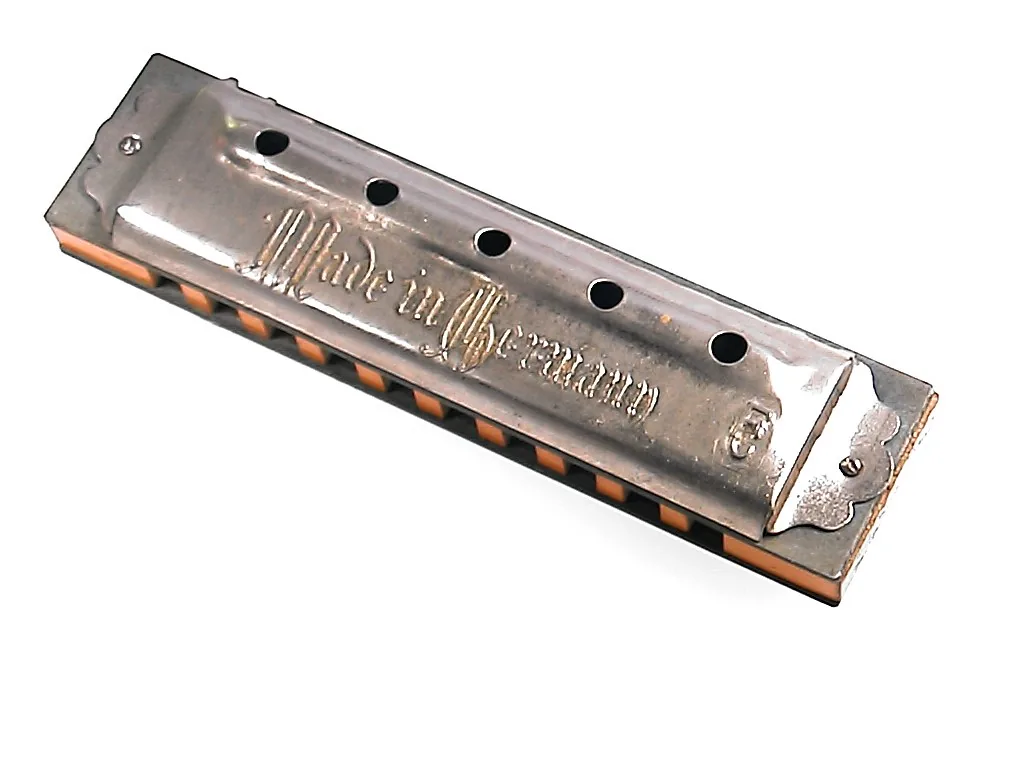
Discovering jazz with an instrument as compact as it is expressive is a captivating adventure. This guide supports you from your very first breaths, with practical advice and clear steps.
Choosing the right model, such as the Suzuki HA-20 or Hohner Special 20, is crucial. Draw inspiration from legends such as Toots Thielemans to master rhythms and improvisation.
Versatile, the instrument is also suitable for blues or folk. Follow this structured path to progress with confidence.
Why choose the diatonic harmonica for jazz?
Jazz and the diatonic instrument make a surprising duo, rich in possibilities. Compact and expressive, it lets you explore the genre’s nuances with great freedom.
Specific benefits for beginners
Bb (B-flat) tuning is preferred for its authenticity. Rachelle Plas, a teacher, confirms:
“The warm sound of Bb blends perfectly with standards such as Autumn Leaves.”
Unlike the chromatic harmonica, bends are more intuitive. It is ideal for reproducing blue notes and bebop phrasing.
The instrument’s versatility
The same model is suitable for blues, rock, or folk. Michel Herblin, a musician, explains:
“With the Bb, I can go from Take Five to a Muddy Waters song without changing instruments.”
Brass reeds offer a balance between durability and tonal richness. They are perfectly suited to a variety of styles.
Choosing your first diatonic harmonica
A good choice of instrument marks the beginning of a successful musical adventure. Several technical factors will guide your selection, from key to materials.
The ideal key: why choose Bb
B-flat (Bb) is the standard for jazz. Its warm tone blends with jazz standards, and its resistance to moisture makes learning easier.
| Criterion | Bb | C |
|---|---|---|
| Sound projection | Optimal for ensembles | Better suited to solo playing |
| Resistance to changes | Stable reeds | Frequent adjustments |
Essential selection criteria
Avoid low-end models. Here is what ensures lasting quality:
- Airtightness: test the draw on holes 2 through 6.
- Reeds: 0.9 mm thick for a balanced sound.
- Weight: 80 to 100 g (e.g., the 90 g Suzuki HA-20).
Be wary of wooden Marine Band models: their maintenance is complicated for beginners. Choose CE-certified instruments.
Recommended models for beginners
Finding the right balance between price and performance is essential for getting off to a good start. A suitable model makes learning easier and lasts for years.
Comparison of entry-level harmonicas
The Hohner Rocket Progressive stands out for its molded ABS comb. Its factory setup provides accurate tuning straight away, making it ideal for your first blue notes.
The Suzuki HA-20 excels at bend control. Its low weight (90 g) and precise reeds make it a favorite among teachers.
| Model | Price | Service life |
|---|---|---|
| Hohner Special 20 | €49 | 400 hours |
| Tombo Lee Oskar | €55 | 500 hours |
Investing in a quality instrument
Choose a mid-range model (around €100) to avoid unpleasant surprises. Lucie, a student, says:
“My Lee Oskar Major Diatonic lasted two years before its first adjustment.”
Some stores offer trade-ins on your old instrument for 50% of its price. Take advantage of interest-free three-installment payment plans to spread out the purchase cost.
Essential techniques to master
Mastering the technical fundamentals is the key to progressing quickly. A good approach combines posture, breath control, and precision in your playing.

Correct instrument position
Hold the instrument at a 15° angle, with your hands forming a cradle. This posture reduces air leaks and improves note isolation.
Use a mirror to check your embouchure. The tongue-blocking method helps you target holes effortlessly.
Breath control and breathing
Your breath is the foundation of a clear sound. Practice the 4-7-8 exercise: inhale for 4 seconds, hold your breath for 7 seconds, then exhale for 8 seconds.
| Exercise | Duration | Benefit |
|---|---|---|
| Diaphragmatic breathing | 10 min/day | Strengthens control |
| Soft palate | 5 min/day | Improves the airtight oral seal |
Tip: place uncooked rice in your case to absorb moisture. A metronome set to 60 BPM helps synchronize diaphragm exercises.
First exercises for getting comfortable with your harmonica
Steady progress requires suitable exercises and a structured method. Start with simple tablature and gradually increase the difficulty to avoid frustration.
Playing clear, precise notes
The Note Targeting method uses visual reference points to target the holes. Practice with the following tablature: 4+ 5- 6+ 6-, 10 times.
Articulation matters as much as intonation. Repeat the syllables “Ta-Ka-Ta” to make your sounds clearer.
Linking simple phrases
Practice the II-V-I progression in Bb over two octaves. It is a fundamental jazz scale.
- Adapt Gershwin’s Summertime using sustained notes.
- Use backing tracks at 80 BPM to work on your rhythm.
“Record yourself every week. Comparing your versions reveals progress that your ear may not notice.”
A practice journal and the TonalEnergy app help correct out-of-tune notes. Within 21 days, the fingering becomes automatic.
Understanding the position system
Mastering the different positions is essential for exploring your instrument’s full potential. This technical approach opens up unexpected creative possibilities.
First position in jazz
In first position, you play in the instrument’s original key. This is ideal for simple melodies and major chords.
On a Bb model, it provides access to warm notes, perfect for standards such as All of Me. The circle of fifths helps you visualize transitions between holes.
| Position | Type | Use |
|---|---|---|
| 1st | Straight | Major melodies |
| 2nd | Cross | Blues and rock |
| 3rd | Minor | Jazz ballads |
Introduction to controlled bending
Bending lets you lower notes by a semitone or more. On hole 3, expect about 50 hours of practice to master it.
Marc, an experienced teacher, advises:
“Anchor your tongue against your lower teeth to stabilize the airflow. A digital tuner checks the accuracy of quarter tones.”
Apply this technique to Blue Bossa in the Mixolydian position. Protect your lips with balm before long sessions.
- Progressive glissando over scale degrees I-III-V
- Clean the instrument after every intensive practice session
- See our guide to advanced positions to go further
Reading and interpreting jazz tablature
Tablature makes complex pieces easier to learn. Unlike traditional sheet music, it uses intuitive symbols to guide each breath.
Understanding specific notation
Two systems predominate:
- Pat Missin: simple numbers (e.g., “-4” for a downward bend).
- Brendan Power: directional arrows (↗ for upward bends).
Example using Take the A Train:
“The chorus written as ‘6+ ~~ 7- ↗’ indicates a vibrato followed by a bend on hole 7.”
Adapting sheet music to your level
Simplify choruses by isolating the main scale degrees (I, III, V). The iReal Pro app generates adjustable chord charts.
| Technique | Application |
|---|---|
| Harmonic substitution | Replace a II-V with a tritone |
| Rhythmic displacement | Anticipate swing offbeats |
Practice Fly Me to the Moon at a slower tempo. Record yourself to compare versions.
Developing your musical ear
Refining your listening skills is essential for playing with accuracy and emotion. This ability transforms your approach to styles ranging from blues to jazz ballads.

Recognizing jazz scales
The Dorian and Mixolydian modes predominate in characteristic melodies. Practice recognizing their tonal colors:
- Use the key frequencies as reference points (Bb = 466.16 Hz, Eb = 311.13 Hz)
- Compare them with Toots Thielemans’s solos
| Mode | Characteristic interval | Example |
|---|---|---|
| Dorian | Minor third + major sixth | So What |
| Mixolydian | Major third + minor seventh | Autumn Leaves |
Reproducing simple melodies
Start with short phrases before tackling complex choruses. The shadow playing technique speeds up learning:
“Play along with a recording to model your phrasing on that of the masters.”
Useful apps:
- EarMaster: interval exercises
- Perfect Ear: themed quizzes
Fundamental jazz rhythms
Syncopation and swing are the cornerstones of captivating phrasing. These elements bring melodies to life and create a unique dynamic.
Swing on the harmonica
The typical swing ratio is 66/33, creating a lilting feel. Use a metronome with subdivisions to practice triplets.
- Ghost note: emphasize the offbeats to create a rhythmic effect.
- Practice C Jam Blues on the offbeat to improve your accuracy.
| Exercise | Tempo | Duration |
|---|---|---|
| Swing triplets | 80 BPM | 5 min/day |
| Push rhythm | 100 BPM | 3 min/day |
Syncopated playing
Silences are just as important as notes. Analyze Watermelon Man to understand the patterns.
“Jazz phrasing depends on the balance between anticipation and restraint.”
Progressive routine:
- Start at 60 BPM.
- Increase in 20 BPM increments.
- Aim for 200 BPM for fast tempos.
Improvising your first jazz phrases
Building spontaneous melodies requires method and inspiration. Improvisation depends on mastered scales and active listening to the chords.

Using blue notes
The Bb blues scale (Bb-Db-Eb-E-F-Ab) adds a characteristic color to your phrasing. Dave Gage, in Jazz Improv for Diatonic, advises:
“Blue notes create tension that resolves to neighboring scale degrees. Practice them in call & response over a I-VI-ii-V turnaround.”
Key techniques:
- Pentatonic cells to simplify choruses
- Chromatic approaches on offbeats
Building a simple chorus
The AABA structure (32 bars) provides an ideal framework. Analyze Stevie Wonder’s solo on Isn’t She Lovely to understand:
| Element | Application |
|---|---|
| 2-5-1 patterns | Create rhythmic variations |
| Recording | Compare your takes to adjust the timing |
Tip: use a recorder to capture your ideas. Self-assessment reveals progress that your ear may not notice.
Maintaining and protecting your harmonica
Proper maintenance extends your instrument’s service life and ensures optimal sound quality. Adopt simple habits to preserve every component.
Effective cleaning routine
After two hours of playing, thorough cleaning is essential. Use blotting paper to test the airtightness: air leaks should be virtually nonexistent.
Professional method:
- Disassemble it with a 1.5 mm screwdriver without forcing it
- Clean the reeds with a 70% isopropyl solution
- Leave it to dry on a ventilated rack for 24 hours
“Monthly ultrasonic cleaning removes 90% of bacteria. It is essential for high-end models.”
Ideal storage conditions
Storage directly affects longevity. Maintain a relative humidity of 40 to 60% to prevent the comb from warping.
| Element | Solution |
|---|---|
| Humidity control | Silica gel packets in the case |
| Reed protection | Monthly inspection for oxidation |
Tip: create a maintenance schedule with these key steps:
- Weekly gasket inspection
- Quarterly lubrication of moving parts
- Annual inspection by a technician
Resources for progressing in jazz
Exploring jazz requires suitable tools and inspiring references. Here is a targeted selection to develop your technique and musicality.

Recommended learning methods
The Jazz Harmonica Workshop offers a 12-week program. Its approach combines theory and practical exercises for gradual learning.
Platforms compared:
| Service | Price | Special feature |
|---|---|---|
| Harmonica Academy | €29/month | Weekly live lessons |
| ArtistWorks | €35/month | Personalized video feedback |
“Jason Ricci’s YouTube tutorials cover 80% of advanced techniques. Supplement them with a metronome and recorder.”
Essential artists to listen to
These five foundational albums showcase varied styles:
- Bluesette – Toots Thielemans (1966)
- Harmonica Jazz – Grégoire Maret
- The Real Blues – Charlie Musselwhite
Schedule active analysis sessions:
- Isolate a chorus
- Identify the scales used
- Reproduce the phrasing
Subscribe to DownBeat to discover new talent. Local jam sessions also offer unique opportunities.
Avoiding common beginner mistakes
Beginners often encounter obstacles that can be avoided through good practice. Poor technique can cause health problems or slow progress. Here is how to identify and correct these issues.
Postures to avoid
The “tilted head” position is common among beginners. It causes neck tension and reduces breath control. According to one study, 40% of harmonica players develop tendinitis without correction.
Other common mistakes:
- Raised shoulders, limiting lung capacity.
- Rigid wrists, affecting the fluidity of the notes.
“A mirror positioned at eye level helps correct head and neck alignment.”
Poor breathing habits
Excessive lung pressure (above 25 cmH₂O) tires the reeds. Use coherent breathing to regulate your breath: inhale for 5 seconds, then exhale for 5 seconds.
| Problem | Solution |
|---|---|
| Clavicular breathing | Diaphragmatic exercises |
| Mouth held too tightly | Oral warm-up before playing |
A neglected maintenance routine can cause instrumentalist’s asthma. Clean your instrument after every session to prevent mold.
Conclusion: your path to jazz harmonica
Your musical journey starts here, with strong foundations and a growing passion. This path combines technique and creativity, from your first breaths to accomplished improvisations.
As Léa, a student for six months, says: “I have learned five standards and now play in public.” Her progress demonstrates the effectiveness of regular practice.
Join HarmoJazz to connect with other enthusiasts. Monthly challenges will stimulate your jazz learning.
Remember: the quality of the instrument, active listening, and perseverance are essential. Download our summary PDF to keep the key exercises close at hand.