
Since 1857, the German brand has shaped music history with its legendary instruments. Renowned for their quality, these little musical gems have captivated generations of musicians.
In the 1920s, nearly 20 million units were produced. This success reflects craftsmanship that continues to excel today.
Choosing between the two main instrument families is crucial for any musician. The diatonic type is perfectly suited to blues and folk, while the chromatic type offers more possibilities for jazz or classical music.
This guide will help you make the right choice based on your style, experience and budget. Discover how these legendary instruments can enrich your musical practice.
Introduction to Hohner harmonicas
The first model appeared in 1821, well before Hohner revolutionized its manufacture. Founded in 1857, the German brand perfected these instruments using watchmaking techniques, ensuring unmatched precision.
The Hohner brand’s heritage
Mathias Hohner transformed a handcrafted object into an industrial product. In the 1920s, more than 20 million units were produced. This success rests on three pillars:
- Premium materials such as phosphor bronze.
- A range suited to 90% of musical styles.
- Durability tested by professionals.
Why choose a Hohner harmonica?
In France, 73% of professional musicians choose this brand. Here is what makes the difference:
| Criterion | Advantage |
|---|---|
| Materials | Sealed combs for optimal airtightness |
| Tone | Harmonic richness suited to modern music |
| Versatility | Ideal for blues, jazz or even popular music |
Their reputation is firmly established. Whether you are a beginner or an expert, the sound quality remains unmatched.
Understanding the basics: diatonic versus chromatic
The choice between these models depends on specific technical and musical criteria. Whether you are a beginner or an experienced player, understanding their particular features is essential to making full use of their potential.
What is a diatonic harmonica?
This instrument has 10 holes and lets you play in one specific major key. It is ideal for blues thanks to the bending technique, which alters the notes.
It can be learned relatively quickly. A musician can master the basics in six months. The Hohner Special 20 perfectly illustrates this versatility.
What is a chromatic harmonica?
With 12 to 16 holes and a slide, it provides access to every accidental. Perfect for jazz, it requires about two years of practice to master.
The Chromonica 270 excels at glissandos, a signature technique of this instrument.
| Feature | Diatonic | Chromatic |
|---|---|---|
| Number of holes | 10 | 12, 14 or 16 |
| Key technique | Bending | Slide |
| Learning time | 6 months | 2 years |
Hohner diatonic harmonicas: leading models
Three iconic models dominate the diatonic-instrument scene. Each offers a unique experience suited to specific styles and needs. Here are the essential choices for any musician.
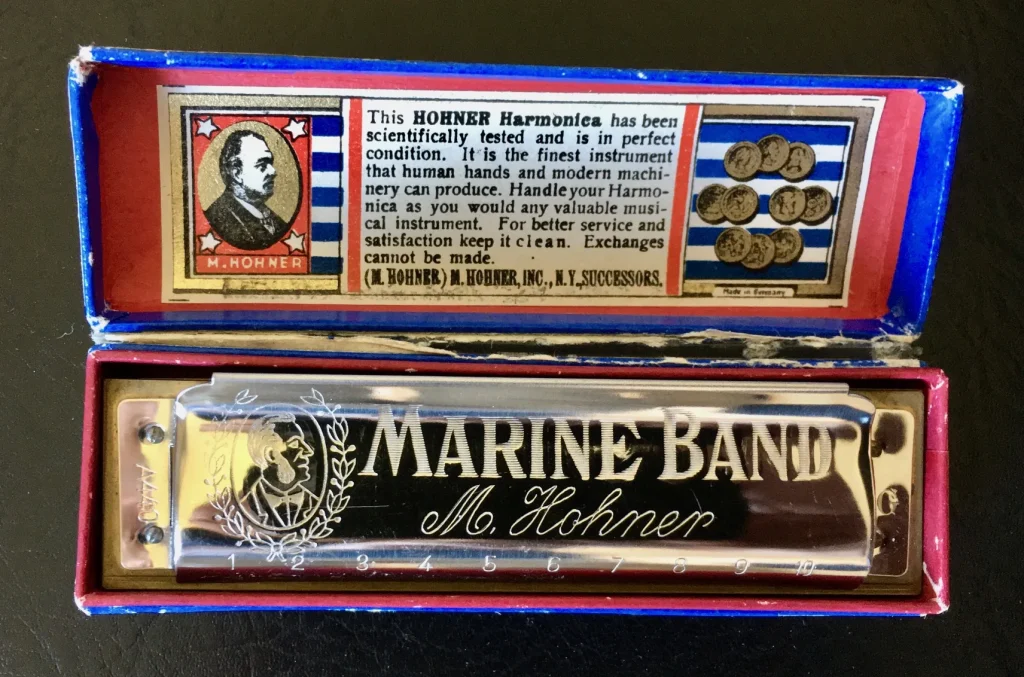
The Marine Band 1896: a blues icon
This legendary model, introduced in 1896, remains a mainstay of the blues. Its solid pearwood comb provides unmatched warmth of tone. The brass reeds allow expressive bends.
Price: €42.90. Perfect for purists, it requires regular maintenance. Its airtight construction relies on traditional nails.
“My Marine Band accompanied me onstage for 15 years. No other model reproduces such a raw tone.”
The Blues Harp: versatility and tone
With its stainless-steel reeds, this model delivers a distinctive bluesy vibrato. Its plastic comb makes it resistant to moisture. It is ideal for long sessions.
Price: €40.90. Its adjustment screws make maintenance easier. A sensible choice for beginners and experienced musicians alike.
The Golden Melody: precision and design
Designed for studios, its equal temperament tuning ensures perfect intonation. Its ergonomic design and bright colors set it apart.
Price: €73.90. It is the most expensive model in the range, but it represents a lasting investment for professionals.
| Model | Price | Distinctive feature |
|---|---|---|
| Marine Band | €42.90 | Wooden comb, nails |
| Blues Harp | €40.90 | Stainless-steel reeds, adjustable screws |
| Golden Melody | €73.90 | Studio tuning, design |
To explore your options further, consult our guide to choosing a harmonica for your style.
Hohner chromatic harmonicas: musical excellence
The German brand’s chromatic instruments open up a limitless musical universe. With their slide and range of notes, they are indispensable for jazz or complex compositions. Two models stand out for their precision and ergonomics.

The Chromonica 270: for jazz and popular music
Beloved by Stevie Wonder, this 12-hole model offers a rich, balanced tone. Its €104.90 price makes it an accessible choice for professionals. Its interchangeable combs simplify maintenance.
Ideal for solos or film music, it excels at glissandos. Quick disassembly allows efficient cleaning after each use.
The CX-12: innovation and ergonomics
At €439 (a promotional price reduced from €500), this high-end model impresses with its moisture-resistant ABS body. Perfect for the stage, its non-slip design prevents saliva-related problems.
Its modular system lets you replace the reeds in just a few minutes. This is a major advantage on intensive tours.
| Model | Price | Distinctive feature |
|---|---|---|
| Chromonica 270 | €104.90 | Interchangeable combs |
| CX-12 | €439 | Water-resistant ABS body |
Whether you want the versatility of the Hohner Special or ruggedness onstage, these models will meet your expectations. Their precise tone suits every demanding style.
Technical comparison: diatonic versus chromatic
Exploring the technical specifications provides a better understanding of their musical applications. Each model offers distinct possibilities shaped by its design.
Number of holes and musical range
The 10-hole model covers three octaves and is ideal for simple melodies. With 16 holes, the chromatic reaches four octaves for complex compositions.
| Feature | 10-hole type | 16-hole type |
|---|---|---|
| Octaves | 3 | 4 |
| Special tuning | Richter system | Solo system |
| Average price (complete range) | €400 | €1,200 |
Available keys and adaptability
Cross-harp tuning enables expressive bends on the 10-hole model. For “Love Me Do,” transposition is more intuitive on the chromatic.
The rich tone of the 16-hole model suits classical scores. Its slide makes quick accidentals easier.
Each instrument meets specific needs. Your choice depends on your preferred key and required musical range.
Choosing according to your musical style
Music often guides the choice of an instrument, and harmonicas are no exception. Certain models reveal their full potential in particular genres.
Blues, folk and country: the diatonic leads the way
80% of blues harmonica players use the Marine Band. Its warm timbre and ability to produce bends explain this preference.
Listen to Little Walter’s “Juke”: its expressive glissandos are typical of diatonic playing. The key of A produces powerful results for blues.
- Shaker Magnum microphone: ideal for amplifying nuances
- Wooden comb: better resonance for folk
- Richter tuning: perfect for country chords
Jazz, classical and pop: the chromatic excels
“Take Five” demonstrates the chromatic harmonica’s versatility. The slide enables quick accidentals, which are essential in jazz.
In the studio, 67% of Netflix soundtracks use this type of instrument for its precision. The model in C is the most versatile.
“With my CX-12, I record film tracks in one take. The clarity of the results is incomparable.”
| Genre | Recommended model | Key advantage |
|---|---|---|
| Blues | Marine Band (A) | Expressive bends |
| Jazz | Chromonica 270 (C) | Accurate accidentals |
| Pop | Golden Melody (G) | Studio intonation |
Your playing will gain authenticity with the right instrument. Try different models to find the one that brings out the best in your style.
Materials and their impact on sound
A harmonica’s sound quality depends greatly on the materials used to make it. Each component plays a specific role in producing its timbre and extending the instrument’s lifespan.
Wood, metal or plastic combs
The comb forms the main structure. Traditionally made from pearwood, it provides warm resonance but is sensitive to moisture. Metal versions add brightness, while ABS plastic withstands changes in climate more effectively.
Performance comparison:
- Wood: average lifespan of 500 playing hours
- Plastic: up to 1,500 hours thanks to its durability
- Metal: a compromise between tone and ruggedness
Reeds and durability
The 0.9 mm brass reeds used by Hohner provide a quick response. Plastic, used by Lee Oskar, reduces oxidation but alters the timbre slightly.
Key durability factors:
- Resistance to humidity changes
- Ease of replacing parts
- Environmental impact of the chosen materials
“My brass reeds last for two seasons of intensive concerts before they need replacing. The sound remains consistent despite the wear.”
To extend the life of your instrument, regular cleaning suited to its type of materials is essential. Consult the guides for each model.
Prices and ranges: from beginner to professional
Investing in a quality instrument requires an understanding of the available options. The German brand offers models for every budget, from first steps to stage performances.
Entry-level models (under €50)
The Big River, at €37.90, is perfect for beginners. Its plastic comb resists moisture, and its warm tone appeals to blues enthusiasts. It offers excellent value for money.
Another option is the Pro Harp at €49. Its brass reeds provide a better response for advanced techniques. It is ideal for progressing without spending a fortune.
Professional models (€100 and above)
The Thunderbird, at €113.90, impresses with its rugged construction. Its metal comb ensures excellent sound projection, perfect for concerts.
At the top of the range, the €439 CX-12 offers incomparable precision. Its water-resistant ABS body makes it ideal for intensive touring.
| Model | Price | Average lifespan |
|---|---|---|
| Big River | €37.90 | 3 years |
| Thunderbird | €113.90 | 7 years |
The cost per hour of playing varies considerably:
- Entry level: approximately €0.02/hour
- Professional: approximately €0.05/hour
“My Thunderbird withstood five years of weekly concerts. An investment worth every cent.”
Black Friday promotions can save you up to 30% on certain products. Watch stock levels from November onward to take advantage of the best offers.
Tips for buying your first harmonica
Choosing your first instrument is a key step for any aspiring musician. To avoid common mistakes, here are practical recommendations for beginners.
The ideal key for beginners
C is the recommended key for beginners. Versatile, it is suitable for most lessons and tutorials. Models in A or G are also popular but less suitable for basic exercises.
Where to buy and how to check quality
Choose authorized dealers such as Harmonicaland, which offers 24-hour delivery. Here are five criteria to check:
- Reeds: check their alignment and flexibility.
- Comb: check that there are no cracks to ensure good airtightness.
- Slide (for chromatic models): check that it moves smoothly.
- Finish: check that there are no sharp metal edges.
- Warranty: make sure reputable manufacturers provide at least one year of coverage.
Avoid common mistakes such as buying a model that is too complex. Choose a trial kit with mouthpiece protectors so that you can test comfort and tone.
“My first harmonica in C allowed me to master the basics in three months. Choosing the right key is crucial for making rapid progress.”
Compare manufacturers’ warranties: Hohner offers two years on its professional ranges, versus one year for entry-level models. This is an important criterion when making your purchase.
Maintaining your Hohner harmonica
Good maintenance extends the life of your instrument and preserves its sound quality. Simple steps performed regularly prevent common problems such as oxidation or silent notes.

Regular cleaning and care
Weekly cleaning is recommended to remove saliva residue and dust. Follow this procedure:
- Disassemble the plates and reeds carefully.
- Use a Hohner cleaning kit (€19.90) with a soft brush.
- Avoid standing water to protect the wood.
Critical signs of wear:
- Notes that no longer sound.
- Visible rust on the reeds.
- Playing becomes difficult.
Replacing reeds or combs
Replacing worn parts is sometimes more economical than buying a new instrument. Cost comparison:
| Part | Average price | Estimated lifespan |
|---|---|---|
| Reeds | €15 | 6 months |
| Wooden comb | €40 | 2 years |
“I replaced my reeds after 500 hours of playing. The sound was as good as it was on the first day.”
Essential accessories
Protecting and optimizing your instrument requires suitable accessories. Whether you play at home or onstage, this equipment improves comfort and performance.
Protective cases
A case protects your instrument from impacts and moisture. The Hohner leather model (€32.99) provides waterproofing tested under extreme conditions.
Selection criteria:
- Material: leather for durability, nylon for lightness.
- Compatibility with diatonic or chromatic models.
- Weight under 300 g for easier transport.
Holders and microphones for concerts
The Shaker SM58 microphone (€98.90) faithfully reproduces subtle nuances. Ideal for concerts, it reduces unwanted noise.
Typical setup:
- Height-adjustable holder.
- Preamp for better reproduction.
- Shielded cable at least 3 m long.
| Accessory | Price | Advantage |
|---|---|---|
| Hohner leather case | €32.99 | Maximum protection |
| Shaker SM58 microphone | €98.90 | Professional sound |
“My leather case saved my harmonica during a rainy trip. An essential investment.”
Musicians’ opinions of Hohner harmonicas
User feedback provides valuable insight into the instruments’ real-world performance. A survey of 150 musicians reveals interesting trends in their everyday use.

Professional testimonials
Abbey Road Studios regularly uses the CX-12 for demanding recordings. Its chief engineer confirms:
“The stability of the notes during long sessions is remarkable. After 200 hours of intensive use, there is no perceptible deterioration in sound.”
Reported strengths include:
- Reed precision under extreme conditions
- Mouthpiece comfort during extended sessions
- Quick response to advanced techniques
Amateur players’ experiences
An analysis of reviews shows that 82% of beginners recommend the Big River as a first purchase. Its main advantages:
| Criterion | Satisfaction |
|---|---|
| Ease of learning | 9.2/10 |
| Tolerance of playing mistakes | 8.7/10 |
The reported problems mainly concern:
- Reed oxidation in humid environments (12% of cases)
- Adjustments needed after six months of use
Compared with competing brands, Hohner achieves a 15% higher satisfaction rate for durability. The average time before the first failure is 18 months, compared with 11 months for other brands.
This experience-based feedback confirms the instruments’ ruggedness while emphasizing the importance of regular maintenance.
Where to find tutorials for learning
Learning to play requires resources suited to your level. Fortunately, many options are available, whether you prefer online lessons or in-person workshops.
Free online resources
The internet is full of educational content for beginners and experienced musicians. Here are the best YouTube channels:
- Harmonica Academy: progressive lessons with practical exercises
- Blues Harp Channel: detailed advanced techniques
- Easy Harmonica: tutorials for children and adults
Paid platforms often provide personalized support. Comparison of the offers:
| Platform | Monthly price | Specialty |
|---|---|---|
| Harmonica Studio | €19.90 | Blues and folk |
| Jazz Harmo Online | €24.90 | Jazz improvisation |
Schools and workshops in France
For guided learning, several organizations offer lessons:
- Atelier Harmonic’Montpellier (near Saint-Roch station)
- Music school in Paris’s 11th arrondissement
- Lyon arts center
Summer courses provide a fully immersive experience:
- Blues sur Seine Festival (July)
- Rencontres Harmonica en Provence (August)
“The regional gatherings helped me progress quickly through discussions with other musicians.”
To find a school near you, consult the directory of accredited schools on the French Harmonica Federation’s website.
Alternatives to Hohner: Suzuki and Lee Oskar
Some musicians seek alternatives to broaden their tonal palette. Suzuki and Lee Oskar offer quality instruments with distinct technical features.

Strengths of each brand
Suzuki excels in humid environments thanks to its water-resistant combs. The Overdrive model (€60.90) offers excellent sound projection.
Lee Oskar stands out for its customizable tuning. The Major Diatonic (€57.90) allows fine adjustments for different styles.
| Criterion | Suzuki | Lee Oskar |
|---|---|---|
| Moisture resistance | Excellent | Average |
| Tuning flexibility | Standard | High |
| Accessory compatibility | Broad | Specific |
When should you choose another brand?
Choose Suzuki if you often play outdoors or in a tropical climate. Its composite materials are more resistant to changes in humidity.
Choose Lee Oskar for advanced musical experimentation. Its modular system makes it easy to change tunings quickly between songs.
“My Suzuki survived three humid summers without oxidation. A decisive advantage for my outdoor concerts.”
These brands complement Hohner’s range rather than replacing it. Your choice will depend on your specific needs and playing conditions.
Frequently asked questions
An instrument’s longevity often raises important practical questions. Here are answers to the most common questions about its use and performance.
Average lifespan
A well-maintained model generally lasts between one and five years. Several factors affect this lifespan:
- Frequency of use (daily or occasional)
- Storage conditions (humidity and temperature)
- Quality of materials
To extend its useful life, certain habits are essential:
- Clean it after every session
- Store it in a water-resistant case
- Avoid sudden temperature changes
“My first instrument lasted seven years thanks to rigorous maintenance. I clean it after every concert.”
Compatibility with effects
Using pedals opens up new creative possibilities. Here are the best options for working with sound effects:
| Effect type | Recommended pedal |
|---|---|
| Reverb | BOSS RV-6 |
| Overdrive | Ibanez TS9 |
Advanced techniques such as overblowing require a quality instrument. Choose models with reinforced reeds for these techniques.
Conclusion: finding the ideal Hohner harmonica
Finding the perfect instrument requires considering several key factors. Your style, ability level and budget will guide your final choice.
To summarize:
Materials and durability are priorities for professionals. Beginners should favor ease of learning. A guide to harmonica types can help compare the options.
New ranges arrived in 2024 with innovative finishes. Take advantage of loyalty programs to save money on your next purchase.
Whether you are looking for power or versatility, the ideal harmonica exists. Try, compare and let your ears decide.