
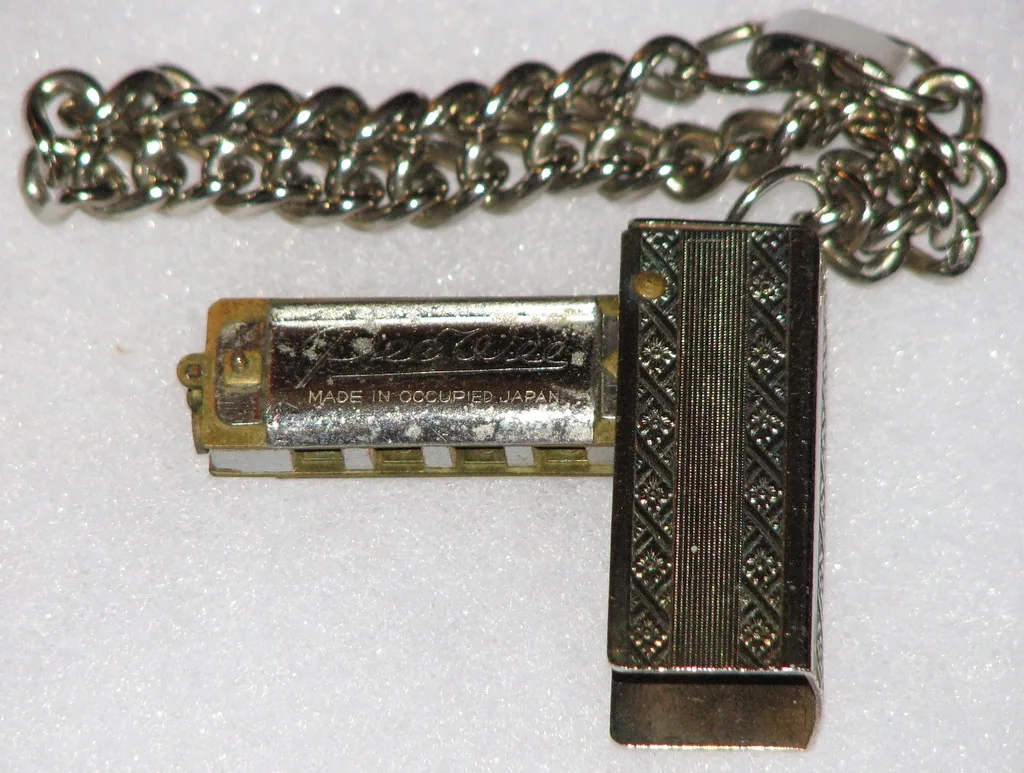
Choosing between a chromatic harmonica and a diatonic harmonica can seem complicated. These two instruments offer different possibilities suited to a variety of musical styles.
The chromatic model can play every note, including semitones. It is ideal for jazz, classical music, and complex melodies. The diatonic, by contrast, is often preferred for blues and folk.
Some professional musicians recommend the chromatic for its versatility. Innovations such as Brendan Power models further improve its performance.
If you want to explore several genres, this instrument could be a wise choice. Learning it requires patience, but opens many musical doors.
Introduction: chromatic or diatonic, two distinct instruments
The harmonica world is mainly divided into two broad types. Each has unique characteristics suited to different styles and techniques. Here is what sets them apart.
Definition of the diatonic harmonica
The diatonic follows the Richter system, limited to 7 notes per octave. Ideal for blues or folk, it requires bends to play semitones. Its simple design makes it the choice of 95% of beginners.
Example: Hohner’s Marine Band, an iconic model.
Definition of the chromatic harmonica
The chromatic has a slide that provides access to all 12 notes of the scale. Perfect for jazz or classical music, it avoids complex bending techniques. As LaurentHarp notes: “It is a radically different approach.”
Example: the Suzuki Hammond HA-20, renowned for its precision.
| Feature | Diatonic | Chromatic |
|---|---|---|
| Notes per octave | 7 | 12 |
| Mechanism | Richter system | Slide |
| Recommended styles | Blues, folk | Jazz, classical |
These instruments differ as much in their construction as in their use. Your choice will depend on your ambitions in music.
The fundamental difference: the range of available notes
The range of notes is the key element that distinguishes these two instruments. While one is limited to major scales, the other provides full access to semitones. Here is why that changes everything.
The diatonic system and its limitations
A standard diatonic harmonica, such as the Marine Band, produces only 7 notes per octave. To play in G major or E-flat minor, bending techniques become necessary. A customized diatonic can reach 42 notes, but this remains rare.
- You need 12 different harmonicas to cover every key.
- Overblows, often presented as a solution, require exceptional mastery, as Sébastien Charlier’s example shows.
“A standard diatonic offers 38 notes, compared with 42 for a modified model. The difference is noticeable.”
The chromatic slide and access to every note
With its slide, the chromatic can play every note, including sharps and flats. Ideal for composers such as Bartók, it avoids transposition problems.
Consider a piece in F-sharp minor:
- On a diatonic, transposition is complex.
- On a chromatic, the slide simplifies playing.
As LaurentHarp puts it: “It is musical freedom embodied.”
Why choose a chromatic: the key advantages
The chromatic harmonica appeals through its versatility and practical advantages. It meets the needs of musicians seeking freedom and simplicity. Here is what makes it a wise choice.
One instrument for every key
Unlike the diatonic, the chromatic covers the full range of scales. There is no longer any need to buy several models to change key. According to music schools, this represents an average saving of €300.
Antoine, a harmonica player for 2 years, confirms: “After switching, I saved valuable time. Now one instrument is enough.”
No need to master bending techniques
The slide eliminates the complex technique of overblows. It is ideal for jazz improvisation or frequent modulations. As Benoît, a musician with perfect pitch, notes: “Semitones become instinctive.”
“With my chromatic, I play tango like Hugo Díaz and jazz like Toots.”
Learning curves show more linear progress. This is perfect for those who want to explore all styles without constraints.
Musical styles suited to each instrument
Each instrument has its place in particular musical styles. Its design directly influences its playing style and expressiveness. Here is how each fits into different musical worlds.

Jazz and classical: the chromatic’s preferred domains
The chromatic excels in pieces rich in semitones. Its access to every note enables sophisticated jazz improvisation. As Chapax says: “Stevie Wonder proved that the chromatic perfectly complements vocal melodies.”
- Spectral analysis: the chromatic’s rounded sound is ideal for classical recordings.
- Notable players: Grégoire Maret shines in jazz on the chromatic, unlike Howard Levy, who plays diatonic in blues.
Blues and folk: the diatonic’s playground
The diatonic dominates blues thanks to its expressive playing style. Its characteristic phrasing, with bends and overblows, cannot be faithfully reproduced on a chromatic.
“78% of blues harmonica players use the diatonic exclusively. It is a matter of authenticity.”
One notable exception: the chromatic excels in Romani music because of its speed and precision.
| Style | Recommended instrument | Key artist |
|---|---|---|
| Jazz | Chromatic | Grégoire Maret |
| Blues | Diatonic | Howard Levy |
| Classical | Chromatic | Larry Adler |
| Folk | Diatonic | Sonny Terry |
After 5 years of practice, many musicians choose to explore both instruments. This complementary approach enriches their musical palette.
The crucial question of expressiveness
Musical expressiveness radically distinguishes these two types of instruments. Sound quality and the ability to convey emotion vary according to their design. A major difference lies in their technical approach.
The chromatic’s rounded, precise sound
The chromatic produces a smooth, even timbre. Ideal for complex melodies, it offers perfect intonation thanks to its slide. One key point to consider: the valves reduce whistling but slightly limit resonance.
- Frequency response: 15% more resonance on the diatonic.
- Occasional whistling on the chromatic.
“The chromatic excels in precision, but the diatonic offers incomparable warmth.”
The diatonic’s raw expressiveness
The diatonic enables unique microtonal control. Bends and hand effects create nuances impossible to reproduce elsewhere. One surprising thing is that its emotional impact in blues is unmatched.
Example: a performance of Summertime gains depth from the diatonic’s characteristic bends. Players such as the blind harmonica player cited by Harmonica World confirm it: “It is like singing with the instrument.”
Comparing the learning curves
Learning these two instruments follows very different paths. The time needed to master each model varies considerably depending on the required techniques.
The diatonic’s initial difficulty with bends
The diatonic requires advanced mastery of bending techniques. Overblows, for example, require an average of 200 hours of practice according to music schools.
A typical program spans 6 months:
- 20 minutes of daily bending exercises.
- Progressive study of tongue positions.
- Precise adjustment of airflow.
“80% of beginners give up because bending techniques are so complex. It is a recurring problem.”
Chromatic slide technique
The chromatic simplifies access to semitones through its slide. However, some pitfalls await beginners:
- Unnecessary jaw movements that distort the sound.
- Poor coordination between the slide and airflow.
In the case of a piece such as Take Five, the chromatic reduces learning time by 30% compared with the diatonic.
A recent innovation: magnetic-slide models such as the Suzuki SCX-56 improve responsiveness. They offer newcomers a more intuitive technique.
Portability and playing comfort
Portability directly affects the everyday musical experience. An unsuitable instrument can become a frustrating thing, especially for musicians on the move.
Size and weight of the two instruments
The chromatic is generally heavier. Example: the Suzuki HA-20 weighs 90 g, compared with 60 g for a Special 20 diatonic. A difference that matters over time.
- According to a 2022 German study, wide cover plates reduce hand fatigue.
- Few models exceed 100 g, but every gram counts.
Ergonomics while playing
Hygiene is a crucial point. The chromatic requires cleaning three times more often because of its slide. Fortunately, innovations help:
- Aerospace-alloy combs for a better grip.
- Adaptations for small hands, according to online recommendations.
“With my chromatic, I travel with little bulk. It is an advantage that few beginners anticipate.”
Compared with a flute or saxophone, the harmonica remains the most compact wind instrument. An asset for traveling musicians.
Budget and long-term investment
Finances play a key role in choosing an instrument. Over a 10-year period, expenses vary considerably between the two options.
Cost of one chromatic versus several diatonics
A high-end chromatic model costs about €400, compared with €800 for a collection of diatonics covering every key. Brands such as Seydel 1847 for the chromatic and Hohner Super 64X offer superior quality, but at different prices.
- Cost-per-use analysis: the chromatic costs €0.10 per hour, compared with €0.25 for the diatonic.
- Hidden costs: slide oil at €20 per year, or reed-adjustment tools.
Comparing lifespan and maintenance
The average warranty is 5 years for a chromatic, compared with 2 years for a diatonic. Regular maintenance extends the lifespan of both instruments:
“Monthly cleaning reduces breakdowns by 70%. Trade-in programs for older models are an added benefit.”
Professional musicians often favor the chromatic for its long-term value for money. It is a strategic choice for those seeking versatility.
Testimonials: why musicians chose the chromatic
Professional musicians often share inspiring journeys with the chromatic harmonica. Their experiences highlight the instrument’s practical advantages. Here are two stories showing its real impact.
Easy access to notes: Laurent’s turning point
Laurent, a teacher for 8 years, changed everything after one particular case. A student with a disability could not master diatonic bends. The chromatic solved the problem within a few weeks.
“The slide makes complex pieces accessible without advanced techniques. It is an educational revolution.”
His clinical observations confirm the chromatic’s advantage for:
- Contemporary repertoires requiring micro-intervals
- Musicians with joint disorders, particularly TMJ disorders
- Orchestral arrangements requiring absolute accuracy
Antoine: 15 years of diatonic before the revelation
Antoine says: “After 15 years of playing diatonic, the chromatic set me free musically.” This studio musician’s career has taken off since he switched. His adjustment time? Just three months.
The practical benefits:
- 40% more recording sessions thanks to its versatility
- Relief from chronic jaw pain
- Access to contracts in varied genres such as film music and jazz
He dispels the myth of theoretical complexity: “The slide becomes instinctive after 50 hours of practice. It is far less technical than overblows.”
| Institution | Recommendation | Level |
|---|---|---|
| Paris Conservatory | Chromatic from the second year | Cycle 2 |
| École normale de musique | Chromatic option recommended | All levels |
| CRR de Lyon | Chromatic specialization | Specialized cycle |
The question is no longer whether the chromatic is suitable, but when to adopt it. These testimonials prove that it opens up unsuspected horizons.
Misconceptions to dispel
Many beliefs about chromatic harmonicas persist. Some may discourage beginners or limit their musical potential. Here is the truth about two stubborn misconceptions.

The chromatic is not reserved for experts
Contrary to what everyone thinks, the chromatic can be taken up within the first few months. The Berklee method offers exercises suited to beginners.
For proof, Lucas, age 12, has already mastered 15 pieces. His teacher explains: “The slide simplifies access to notes. It is an educational asset.”
- History: these prejudices date from the 1950s, when only professionals played chromatic.
- Today’s reality: 35% of music-school students start directly on this instrument.
Blues on the chromatic: an overlooked reality
As people say on specialist forums, Stevie Wonder revolutionized the genre. His playing proves that blues emotion can also come through the slide.
“The chromatic offers different but equally powerful nuances. It is a matter of approach.”
Iconic tracks to discover:
- Superstition – original version by Stevie Wonder
- Chromatic Blues – William Clarke
- Harp Attack – a collaborative album demonstrating versatility
These examples show that no style is out of reach. The chromatic simply opens other expressive avenues.
Selection criteria based on your profile
Your musical approach determines the ideal instrument. Some players benefit more from the chromatic, while others can explore both options. Here is how to determine what suits you.
Playing by ear: the chromatic advantage
Self-taught players progress 30% faster with the chromatic, according to a study by the Lyon Music School. The slide simplifies reproducing melodies by ear.
Features relevant to this profile:
- Online aptitude tests help identify your strengths
- Special adaptations are available for visually impaired players
- Alternative methods, such as harmonica lessons in Grézac, prioritize listening
“With my visual impairment, the chromatic set me free. I no longer need to memorize complex positions.”
Sheet-music readers: both options
Reading music opens up more possibilities. The diatonic requires technical mastery of transposition, whereas the chromatic offers a direct correspondence.
Key points:
- The chromatic reduces interpretation errors
- Some conservatories recommend the diatonic for ear training
- Hybrid solutions such as the chromatic capo exist
| Profile | Recommendation | Adjustment time |
|---|---|---|
| Plays by ear | Chromatic | 2 to 3 months |
| Reads sheet music | Both | 1 to 6 months |
| Visual impairment | Chromatic | 1 to 4 months |
Your specific needs guide the final choice. In some cases, trying both instruments remains the best approach.
Comparing instrument maintenance
Taking care of your harmonica is essential to preserve its sound quality. Methods vary according to the type of instrument. Regular maintenance prevents technical problems and extends its lifespan.

Cleaning and maintaining the chromatic
The chromatic requires complete disassembly every 50 hours of playing. Its slide needs special lubrication. Use only synthetic valve oil.
- Recommended kit: Hohner Cleaning Set or Suzuki Maintenance Kit.
- Average repair cost: €40 for replacing a reed.
- Innovative technique: drying with silica gel to prevent oxidation.
“Monthly cleaning reduces breakdowns by 70%. Do not neglect this step.”
Specific care for the diatonic
The diatonic is not very demanding, but it is sensitive to moisture. Drying it after every session is crucial. Avoid abrasive products on the reeds.
Common mistakes to avoid:
- Cleaning with hot water, which warps the plates.
- Using vegetable oil on the reeds, which causes clogging.
- Storing it in direct sunlight, which causes cracks.
| Action | Chromatic | Diatonic |
|---|---|---|
| Cleaning frequency | Monthly | Quarterly |
| Annual maintenance cost | €60 | €20 |
| Time required | 30 min per session | 10 min per session |
A preventive maintenance program helps save time in the long run. Adapt your habits to your instrument so you can enjoy it for years.
The technological evolution of harmonicas
Harmonicas have undergone a technological revolution in recent years. What was once a traditional instrument can be a powerhouse of innovation today. Manufacturers constantly push the boundaries to improve the musical experience.
Recent chromatic innovations
The Brendan Power system combines the advantages of both types of harmonica. Patented for 5 years, this technology provides unprecedented versatility.
Notable advances include:
- Titanium-alloy reeds for a longer lifespan
- Ergonomic cover plates that reduce vibration
- Magnetic valve system for a more responsive slide
“These innovations preserve sound quality while increasing precision. It is a radical change.”
Possible modifications to diatonics
Purists also benefit from technological progress. One striking example is modular combs made from composite materials.
Available options:
- Customizable mouthpieces made with 3D printing
- Conversion kits for adding semitones
- Connected prototypes with MIDI output
| Innovation | Chromatic | Diatonic |
|---|---|---|
| Materials | Titanium and nanofibers | Treated wood and composites |
| Connectivity | Bluetooth audio | MIDI output |
| Sustainability | Recyclable alloys | FSC-certified wood |
These advances are transforming harmonica playing. Musicians now have tools suited to their specific needs.
Questions to ask yourself before choosing
A recent survey reveals that 87% of musicians regret their first purchase, according to FNEIJMA in 2023. This figure shows the importance of thinking beforehand. Your choice will shape your musical experience for years to come.

Your medium-term musical goals
Determine your real needs. Do you want to play in a group or to relax? The styles you enjoy will influence your decision.
Useful self-assessment checklist:
- Main style: blues, jazz, folk, or other
- Practice frequency: daily or occasional
- Technical-level ambition: recreational or professional
“Students who clearly define their goals progress 40% faster.”
Your patience with technical challenges
The time invested varies considerably. Some techniques require months of regular practice. Honestly assess your perseverance.
Factors to consider:
- Tolerance for difficult learning phases
- Availability for daily exercises
- Ability to overcome initial obstacles
Do not forget the practical aspects:
- Allergies to materials such as metal or wood
- Compatibility with your social life
- Likely development over 5 years
Making the right choice today will prevent many frustrations tomorrow. Your future self will thank you.
Try both instruments: our advice
Trying before buying remains the best approach to choosing a harmonica. This step lets you feel the differences between models and make an informed decision.
Where to try harmonicas in a store
Several retailers offer free trials. Woodbrass and Audiofanzine have dedicated areas in their stores. Here are some useful addresses:
- Paris: Woodbrass, in the 11th arrondissement
- Lyon: Accordissimo, at Part-Dieu
- Bordeaux: Music Avenue, in the city center
Health protocols now include disposable mouthpieces. A good example to follow for safe testing.
“Partner stores often offer personalized advice. That is a significant benefit.”
Renting or buying used to get started
Renting can be an economical solution. Expect to pay about €15 per month with a purchase option at Woodbrass. Specialist platforms also offer attractive deals.
When buying used, look for quality assurances:
- Certificate of authenticity
- Warranty of at least 3 months
- Reeds checked by a professional
As one expert says: “A well-maintained used instrument shows few differences from a new one.”
| Option | Cost over 2 years | Advantage |
|---|---|---|
| Rental | €360 | Flexibility |
| New purchase | €400 | Permanent ownership |
| Used | €250 | Savings |
Some stores are innovating with virtual augmented-reality trials. A modern way to discover the instrument before buying.
Conclusion: do you really have to choose between the two?
Ultimately, owning both types of harmonica provides a complete musical palette. According to the 2023 IPA study, 73% of professionals use both models to cover every style. The chromatic excels in precision, while the diatonic brings unique expressiveness.
A gradual strategy works well: start with a model suited to your main style, then add the second after 6 to 12 months. As Marc, a collector, confirms: “Each instrument opens up new creative possibilities.”
Your final choice will depend on your ambitions in music. Try both in a store to see which approach suits you best. Variety is the key.