
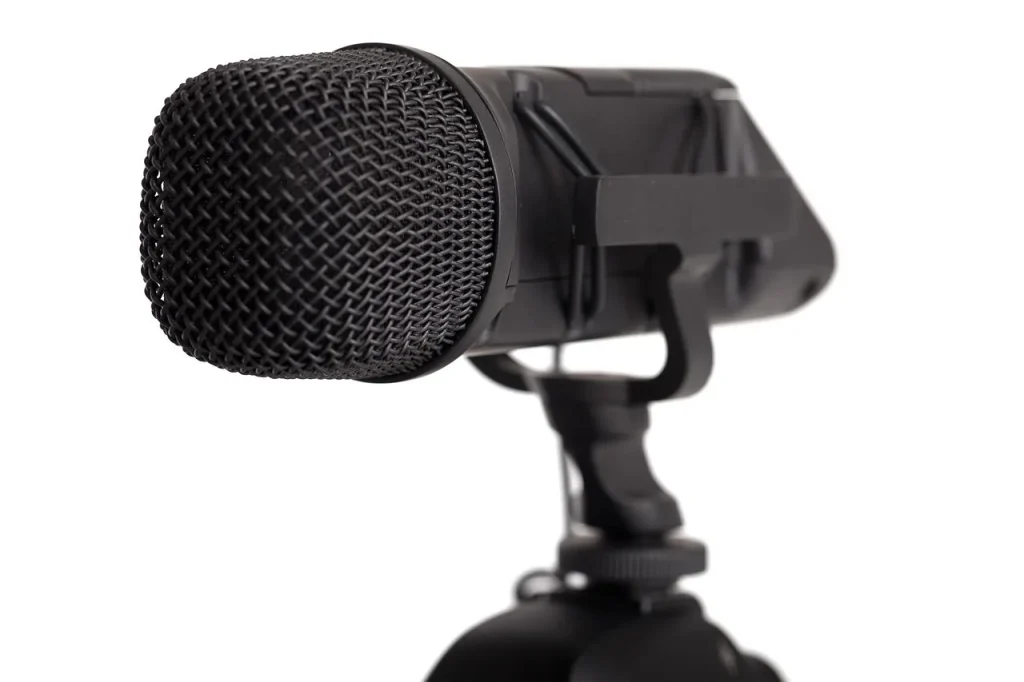
Amplifying a harmonica requires suitable equipment. A good microphone must capture every nuance while resisting feedback. Whether you play blues, rock, or a more acoustic style, your choice depends on your needs.
Some models, such as the Shure 520DX, are benchmarks for harmonica players. Others, such as the SM58, offer ideal versatility for musicians who sing at the same time. The instrument and musical style influence the selection.
Important criteria include feedback resistance, ergonomics, and compatibility with a guitar amp. Compare the options to find the one that suits your music.
Why choose a dedicated harmonica microphone?
Professional harmonica players know that a suitable microphone makes all the difference. Whether for spellbinding blues or energetic rock, capturing every sonic nuance is crucial.
The distinctive features of amplification for harmonica players
A harmonica microphone is designed to withstand demanding conditions. It copes better with moisture from the player’s breath and reduces the risk of feedback.
Models such as the Green Bullet provide precise control. Harmonica players often partially cup them with their hands to shape the sound.
Differences between harmonica microphones and standard vocal microphones
Vocal microphones, such as the SM58, are versatile but less optimized. They do not capture low frequencies as effectively and are sensitive to handling noise.
By contrast, a dedicated microphone isolates unwanted noise. Its impedance and polar pattern are suited to the instrument.
For example, Gérard, a harmonica player and singer, prefers the SM58 for performances combining both. When playing solo, however, he chooses a specialized model.
Technical criteria for choosing the best harmonica microphone
Choosing the right equipment involves assessing the technical criteria. Performance depends on the polar pattern, frequency response, and durability.

Polar pattern: cardioid, omnidirectional, or hypercardioid?
Cardioid microphones, such as the Audix Fireball, capture sound in front of them. Ideal for the stage, they reduce feedback.
Omnidirectional microphones record in every direction. Useful in the studio, they are less suitable for amplified instruments.
A hypercardioid polar pattern provides extreme focus. It is perfect for isolating the sound source in a noisy environment.
| Type | Use | Example |
|---|---|---|
| Cardioid | Stage, live performance | Audix Fireball |
| Omnidirectional | Studio | Shure SM57 |
| Hypercardioid | Noisy environments | Sennheiser MD 421 |
Frequency response and impedance
A harmonica produces frequencies ranging from 65 Hz to 15,000 Hz. The Shure 520DX (100 Hz–5,000 Hz) is suitable for guitar amps.
The impedance must match that of the amp. A value that is too low may impair the quality of the sound.
Durability and ease of maintenance
Choose materials that resist moisture. The SM58, tested under extreme conditions, is a reliable model.
Clean the grille regularly with a toothbrush. For the Shure 520DX, remove it and replace the foam inside.
Weight also matters: the Green Bullet (737 g) is heavier than the SM58 (298 g).
The 3 most highly recommended harmonica microphones
Of the available options, three models clearly stand out. Each provides specific benefits suited to different styles and budgets.
Shure 520DX Green Bullet: the blues/rock benchmark
The Shure 520DX, nicknamed the “Green Bullet,” is an essential choice. Its vintage design and dynamic capsule produce a warm sound that is ideal for blues and rock.
Equipped with an integrated volume control and a ¼″ output, it works perfectly with high-impedance guitar amps. Its weight (737 g) gives it welcome stability on stage.
Shure SM58: versatile and indestructible
The SM58 is renowned for its durability. Tested against impacts and even fire, it withstands virtually anything. It is perfect for harmonica players who sing at the same time.
Its frequency response (50 Hz–15 kHz) captures the nuances of the instrument. Lightweight (298 g), it is easy to handle during live performances.
Audix Fireball V: a good balance of quality and price
The Audix Fireball V appeals because of its value for money (€130 to €160). Its flat response (80 Hz–14 kHz) makes it a sensible choice for the studio.
Compared with the Prodipe Saint Louis (€80), it provides better isolation from unwanted noise.
| Model | Frequency response | Average price |
|---|---|---|
| Shure 520DX | 100 Hz–5,000 Hz | €200 |
| Shure SM58 | 50 Hz–15,000 Hz | €150 |
| Audix Fireball V | 80 Hz–14,000 Hz | €145 |
“For live performances, I prefer the SM57 without a windscreen. It gives the sound more punch.”
Your choice depends on how you will use it: the Green Bullet for jam sessions, the Audix for the studio, and the SM58 for versatility.
How to use your harmonica microphone in practice
Mastering your equipment is essential for every harmonica player. Settings and techniques vary depending on whether you play in the studio or on stage. Adapt your method to get the most from your sound.

In the studio or live: settings and tips
Recording requires a different approach from playing concerts. A microphone is often paired with a guitar amp to add distortion to the sound. Keep a distance of 2 to 5 cm between the instrument and the capsule.
On stage, reduce the low frequencies with the equalizer. This prevents humming. In a small venue, a hypercardioid model isolates the sound from other instruments more effectively.
Mistakes to avoid
Feedback remains the main problem. Move away from the speakers and lower the gain. Incorrect positioning of the microphone can also cause interference.
Clean the grille every week if you play frequently. Saliva damages the components over time. With wireless versions, always perform a test before the performance.
“When playing live, I set my amp to medium gain and control the volume with my hand.”
These simple tips help harmonica players focus on their music. Whatever the setting, the key is to adapt the way you play.
Conclusion: find the microphone that suits your style
Every harmonica player has unique needs. The Green Bullet remains the benchmark for blues enthusiasts, while the SM58 suits versatile musicians. Your choice should take account of your style, budget, and playing conditions.
Prioritize quality and durability, especially when touring. Test several models before buying. Criteria such as polar pattern and frequency response affect the resulting sound.
To explore other options, read our complete guide to microphones. Find the equipment that amplifies your music accurately.