
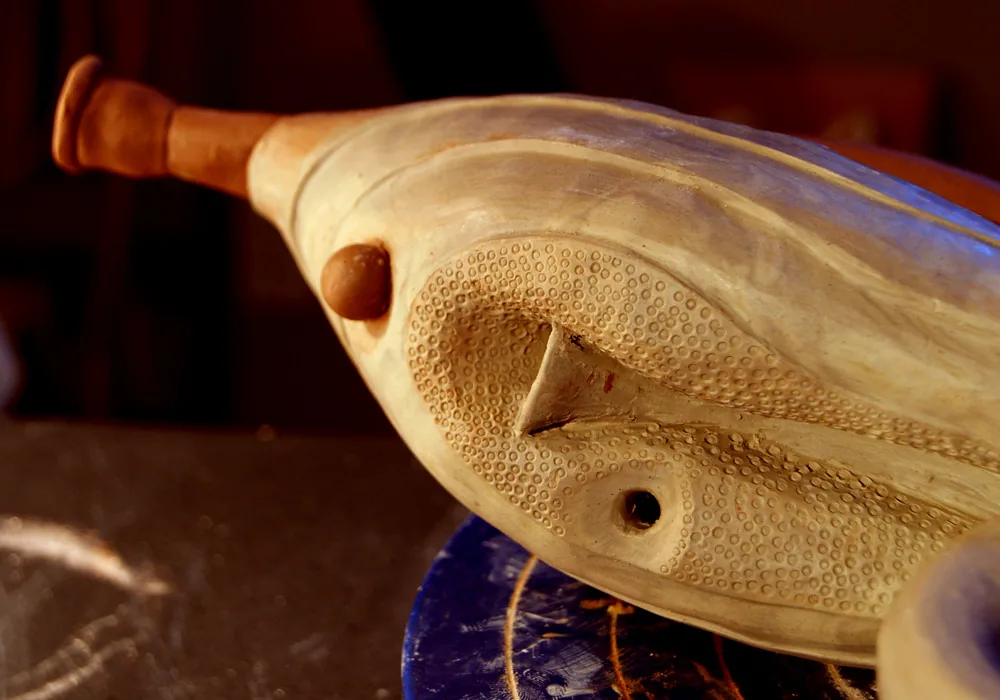
This simple guide teaches you, step by step, the iconic melody from The Legend of Zelda: Ocarina of Time. It is intended for beginners and musicians who want to improve without jargon.
The method focuses on clear steps. You will learn to keep your eyes on the sheet music and play accurately.
Each step is short and practical. The advice collected here makes the piece accessible and rewarding.
To explore the subject further, see this ocarina guide, which complements our article with exercises and technical tips.
Introduction to the iconic desert melody
From its opening notes, this musical theme transports players to a hot and mysterious desert. It accompanies a famous area of the video game and remains instantly recognizable to fans.
The melody of this piece is among the most famous from the game. Its crisp rhythm and Latin accents recreate the arid atmosphere of the desert.
While exploring Gerudo Valley, players hear rhythmic music that left its mark on an entire generation. Learning this theme helps you understand how composers blend Latin influences with adventure.
For musicians, this piece is both a real challenge and a fine addition to their repertoire. It provides an opportunity to explore rhythmic phrasing and tonal colors characteristic of the game.
“A simple melody can define the identity of an entire area.”
Gerudo Valley on the ocarina: tips for playing it well
From the opening measures, a crisp beat can be felt structuring the entire piece. This pronounced rhythm draws on flamenco and demands precise articulation.
Rhythm fundamentals
Understanding the score means identifying strong beats and rests. Practice slowly with a metronome to stabilize every beat.
The original video game version emphasizes the accents. Follow these rhythmic markers to recreate the energy of the area being explored.
The spirit of the piece
The piece combines energy with nuance. Comments on the tablature often remind players to preserve the coherence of the musical phrase.
- Go over the same measures several times.
- Pay close attention to note accuracy during every repetition.
- Compare different versions to find the one that suits you.
“Rhythmic accuracy brings this piece to life.”
Choosing the right instrument for this piece
Choosing the right instrument immediately transforms the interpretation of this theme. The right choice helps produce clear notes and controlled breath.
Before you begin, consider the desired level and the range of the piece. A suitable instrument reduces effort and improves accuracy.
Differences between a 12-hole and a double ocarina
The 12-hole version is suitable for beginners. It simplifies fingerings and makes learning the rhythm easier.
The double model offers a wider range. It makes it possible to reach the melody’s upper register without compromising transitions.
| Feature | 12-hole | Double |
|---|---|---|
| Accessibility | Easy for beginners | More technical |
| Range | Limited | Wide, with better transitions |
| Suitable for the piece | Yes, in most cases | Ideal for extended versions |
| Comfort | Simple and centered | Requires precise central positioning |
- Try each instrument several times before buying it.
- Make sure the comparison points match your playing style.
“Place the instrument at the heart of your practice to make the most of each session.”
Technical preparation before you begin
Before you start practicing, careful preparation prevents many hours of frustration. First check that your 12-hole ocarina is properly tuned before tackling the score. An in-tune instrument prevents wrong notes and makes every repetition more useful.
Whenever you begin a session, gently warm the mouthpiece. This habit stabilizes your breath on long notes and protects the instrument.
Technical preparation also involves isolating melodic cells in the tablature. Practice sequences in groups of three to five notes until they become automatic.
- Active listening: compare your performance with the original theme to adjust the piece’s tone color and pitch.
- Method: proceed slowly, then increase the metronome speed.
- Routine: repeat the passages that hold you back instead of playing the entire piece.
“Simple preparation turns technique into confidence.”
Understanding the theme’s rhythmic structure
Identifying the strong beats is essential for bringing the melody to life. Begin by finding them while tapping the beat by hand.
Practice with a metronome and increase the tempo gradually. Whenever you stabilize one passage, move on to the next.
Rhythmic reference points keep you from losing your place during fast notes. Mentally mark the accents and return to them often.
Approach the piece in micro-loops of three to five notes. This method helps stabilize your breath and maintain equal note lengths.
One crucial point is articulation. Use short attacks such as “tu” or “du” for each note and monitor your level of accuracy.
“Rhythmic stability turns a sequence of notes into a musical phrase.”
For tablature and practical examples, see these guided tabs.
Mastering fingerings for note leaps
To master leaps, structure your practice around micro-movements. Start by identifying each position and pay close attention to anticipating each movement.
Memorization exercises
Keep your fingers suspended above the holes so you can anticipate changes. Repeat each pattern slowly until the position becomes automatic.
- Repetition: play each pattern 10 times at a slow tempo.
- Memory: associate a short syllable with each fingering to reinforce the sequence.
Sequences in groups
Practice in groups of three to five notes. Whenever you practice, isolate the transition points and slow them down.
- Begin with three notes, then add one to each series.
- Gradually increase the tempo once the passage is stable.
| Exercise | Benefit | Recommended tempo |
|---|---|---|
| Micro-movements above the holes | Anticipation and fewer mistakes | Slow (60–70 BPM) |
| Groups of three to five notes | Fluidity and muscle memory | Moderate (80–90 BPM) |
| Transitions practiced separately | Fingering accuracy | Varies with difficulty |
“Accurate fingering opens the way to the most technical leaps.”
For suitable tablature, see a guided version and apply these exercises regularly.
Practicing register transitions
Register changes should be practiced as short phrases, with calm, controlled breath.
Transitions require precise breath management. Maintain constant air pressure so the notes remain stable and in tune.
Whenever you change register, anticipate the movement. Take a light breath before the passage, then release your breath and continue without a break.
The transition points between low and high notes require a gentle attack. Aim for fluidity to preserve the musical quality of the theme.
By repeating these passages, you will gain confidence and expression. Good breath control lets you anticipate the fingerings without interrupting the flow.
- Practice slowly to reduce mistakes.
- Isolate micro-phrases and repeat them several times.
- Record yourself to identify breaks or weaknesses.
| Technique | Benefit | Recommended tempo |
|---|---|---|
| Micro-phrases (three to five notes) | Better anticipation and fewer mistakes | Slow (60–70 BPM) |
| Prepared breathing | Continuous flow and clean attacks | Moderate (80–90 BPM) |
| Looped transitions | Fluidity and expressiveness | Gradual, according to your comfort |
“Controlled breath connects the notes and brings the phrase to life.”
Using community resources and tablature
Drawing on feedback from other musicians speeds up the process of learning the score. Forums and sharing pages collect useful versions and specific comments.

Using user comments
The 12-hole C version, posted by ocarinale on December 29, 2012, received 12 likes and 15 comments. This feedback contains practical advice for beginners.
Also consult the melycat STL files to adapt your fingerings to your instrument’s ergonomics. These models can help you print or modify supports.
- Always read the comments before using a tablature.
- Compare several versions, such as the Gerudo Desert versions by Coach or Link016, to vary your interpretation.
- Leave constructive feedback: it enriches the community and helps other musicians.
| Resource | Use | Advice |
|---|---|---|
| 12-hole C version (December 29, 2012) | Simple guide and user feedback | Read the 15 comments before beginning |
| melycat STL files | Ergonomic adaptation | Download and test them with your model |
| Coach and Link016 variants | Alternative interpretations | Compare them and choose the best version |
“An active community reduces mistakes and enriches learning.”
Comparing the available versions
Comparing several arrangements helps you find the version that best suits your style and instrument.
The Double C version, posted by zeldale on March 7, 2018 (one like), is ideal for practicing register transitions on a suitable instrument.
Six other versions of this tablature are available. Each offers different ornamentation and varied fingerings.
- Compare the sound and difficulty before choosing a score.
- Include melycat versions to discover ergonomic options.
- Always check the comments to ensure the fingerings are reliable.
Gerudo Valley offers interpretations ranging from the classic arrangement to more complex adaptations. Using tablature checked by the video-game community provides a solid foundation and reduces mistakes during practice.
“Comparing, testing, and then selecting the most reliable version speeds up progress.”
Incorporating the nuances of flamenco style
Flamenco phrasing demands precise accents that turn every breath into musical expression.
The attacks must be clean. Lightly emphasize the strong beats to recreate the passionate spirit of this desert theme.
Pay attention to articulation points: short, clear attacks capture the rhythmic nuances associated with this area of the game.
Adding these elements enriches the piece. An expressive performance better recreates the original atmosphere of Gerudo Valley.
Finally, work on flexible phrasing. Alternate fast passages with calmer moments to maintain musical tension faithful to the valley.
“A well-placed attack distinguishes a simple melody from a true performance.”
A daily routine for rapid progress
A few focused minutes each day are more effective than hours of disorganized practice. Adopt a simple, repeatable method to gain confidence and accuracy.
Warm-up
Begin with a five-minute warm-up using long notes. These exercises prepare the embouchure and stabilize your breath.
Metronome practice
Spend five to ten minutes practicing the main motif with a metronome. This period stabilizes the beat and makes your transitions more secure.
Recording your progress
Finish with five minutes of recording to assess your areas of progress. Listening to your takes helps identify rhythm and breath mistakes.
- Recommended method: 10 to 15 minutes per day.
- Every time you practice, begin with the warm-up.
- Assess your level by comparing recordings over successive sessions.
To improve your fingering, consult a dedicated guide such as this six-hole ocarina fingering guide.
“Short, regular practice builds lasting mastery.”
Avoiding common breath-control mistakes
Unsteady breath is often the cause of hesitant passages in this piece.
Avoid leaving the holes partly covered: air leakage changes the tuning and makes notes inaccurate.
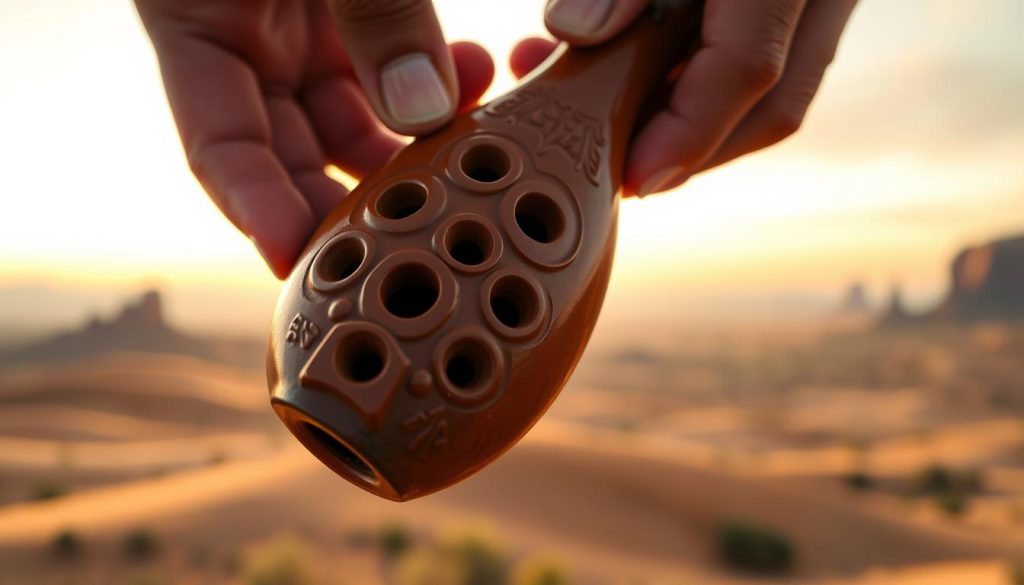
Whenever you practice, check that the airflow remains steady so you do not drift away from the tempo.
A common mistake is speeding up too quickly before mastering the basic fingerings. Approach passages slowly at first, then gradually increase the tempo.
- Plan short breaths to preserve the melodic thread.
- Practice micro-phrases until they become automatic.
- Avoid overly forceful attacks, which cause unnecessary fatigue.
The most important thing is patience: repeat calmly and correct one mistake at a time.
“Steady breath supports every phrase and makes the result more musically convincing.”
To explore breathing techniques further, consult this dedicated online method: effective breathing.
Recording and self-assessment
Recording yourself turns a private practice session into a precise diagnostic tool.
Recording your practice is a powerful tool. It reveals rhythmic mistakes and uneven breath.
Whenever you listen to yourself, note the weak points. Focus on fluid transitions and clean attacks.
This period of self-assessment helps confirm what you have learned in complex passages. Compare several takes and measure your progress.
Consistency maintains motivation. Make a short recording at the end of every session to track your development over time.
- Listen calmly and note two or three areas for improvement.
- Record yourself again after making corrections to confirm your progress.
- Share a take with a fellow musician to obtain an outside opinion.
| Action | Duration | Purpose |
|---|---|---|
| Quick recording | 1–2 minutes | Detect rhythmic mistakes |
| Critical listening | 5 minutes | Note areas for improvement |
| Comparison | Weekly | Measure progress |
“Listening to yourself is the most reliable tool for making progress.”
Taking part in discussions about scores
Discussions between musicians highlight technical details that are invisible on the page.
Joining a forum or group devoted to Gerudo Valley helps you discover tablature variants and useful corrections.
Whenever you find a clear version, leave a comment to thank the author and explain what works.
Discussions often highlight fingering or breath-control points that do not appear on the page. Asking a precise question helps you receive faster answers.
Share your progress and recordings. This enriches the community and helps other players choose the best score.

“A well-annotated score is often born from active collaboration between musicians.”
- Compare several versions of the tablature before adopting an interpretation.
- Report errors and suggest constructive corrections.
- Reply to newcomers: a simple comment can make all the difference.
Advice for specific ocarina models
An instrument’s ergonomics often determine how quickly you progress.
STL models, such as those by melycat, have shapes and holes that change how the instrument balances in the hands.
Before every session, check the position of the holes so you can adjust your fingers. A slight offset affects your ease in fast passages.
- melycat’s STL files offer different ergonomics that may help improve your level.
- Whenever you change models, adjust the air pressure to remain in tune.
- The Valley Ocarina sometimes requires gentler breath in certain registers, especially on a 12-hole model.
- Consult guides for your model to optimize resonance and clarity.
By adapting your technique to the instrument, you will gain accuracy and expressiveness. Test it several times and note what improves your performance.
“A suitable instrument quickly reveals your true abilities.”
Conclusion
In summary, adopt a short, regular method to turn learning into mastery.
This guide has helped you complete every essential step toward playing Gerudo Valley on the ocarina confidently. Practice for 10 to 15 minutes a day and focus on the score and tablature.
Keep an eye on your progress, note what works, and leave a comment whenever you wish. The most important thing is enjoyment: every time you practice, you improve.
With time, method, and this article as your guide, your takes will become more confident and your interpretation more faithful to the spirit of the video game.