
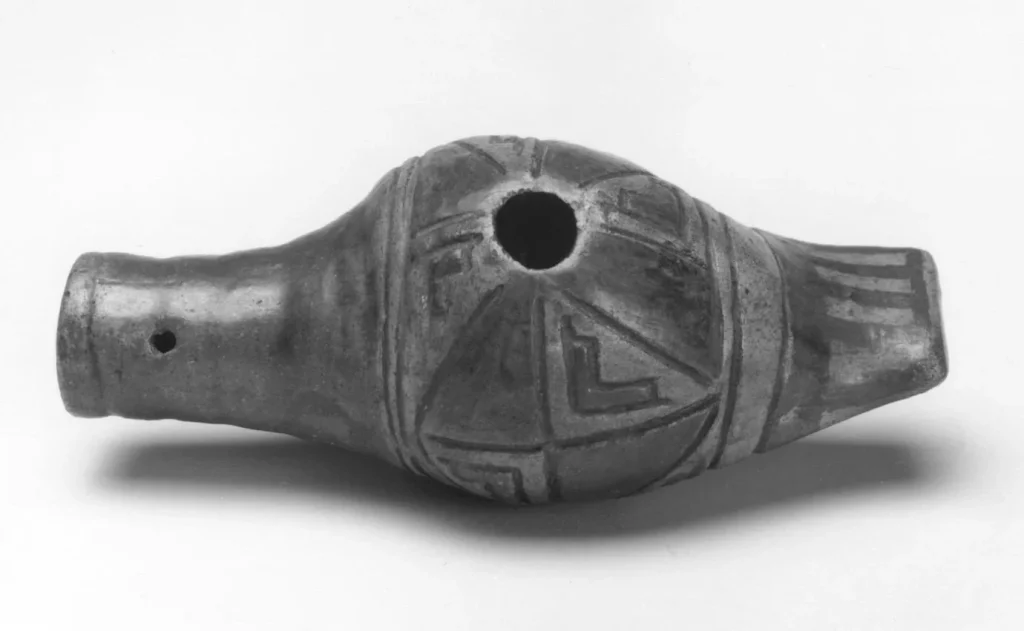
This text presents the essential concepts for analyzing an ocarina and its tone. It is intended for beginners who want to understand the basics before buying.
We explain the range, the role of breath, and the importance of the chamber volume in simple terms. The shape of the holes and the quality of construction influence the tuning and accuracy of the notes.
Whether you are considering a soprano or tenor model, this short article provides practical guidance. It makes choosing easier by listing the criteria to check: material, ergonomics, number of holes, and note range.
To learn more about its acoustic operation, see this dedicated page: how an ocarina works.
In summary: this article aims to simplify your choice. It combines technical information with practical advice so every musician can find a suitable instrument.
Understanding the world of the ocarina
From Asia to the Andes, the ocarina stands out for its rich history and distinctive sounds.
This ancient wind instrument occupies a unique place in the world of traditional and contemporary music. Models vary widely and include globular, transverse, and multi-chamber ocarinas.
Exploring the world of ocarinas reveals their cultural diversity. Each region of the world has developed its own forms and playing techniques.
Its popularity has endured through the ages: once an object of curiosity and later a means of artistic expression, it is now played by amateurs and professionals.
“By studying this instrument, you join a worldwide community of enthusiasts who share a love of distinctive tones.”
- Local variants: different styles and names across cultures.
- Evolution: from traditional pottery to modern models.
- Community: discussions, festivals, and online tutorials.
Ocarina: a complete guide to choosing the right instrument
The earliest traces evoke musical breath dating back more than twelve thousand years.
This long history explains the variety of forms and types found today. Each model influences resonance and note accuracy.

The instrument’s origins
The earliest discovered pieces are made of clay. They show that this wind instrument accompanied rituals and folk music.
Acoustic operation
The principle is simple: air vibrates inside a hollow chamber. The holes alter the pitch and make it possible to play melodies.
“The shape and volume of the chamber determine the color of the sound.”
- Shape: oval, globular, or transverse.
- Holes: their number and size alter the range.
- Breath: technique affects the attack and sustain of the note.
| Shape | Resonance | Use |
|---|---|---|
| Globular | Rounded, warm | Solos, slow melodies |
| Transverse | Clear, projecting | Ensembles, fast passages |
| Multi-chamber | Polyphonic | Exploring tone colors |
For a closer look at how it works in detail, see our dedicated article.
The importance of the number of holes and chambers
The arrangement of the holes and chambers alters the tone, pitch, and note range.
Four- and six-hole models
Four- and six-hole versions remain compact. John Taylor popularized six-hole models in the 1960s.
They offer a simple scale that is ideal for casual playing and learning basic fingerings.
The versatility of twelve holes
The 12-hole model is often recommended for beginners. It can play about 22 notes across an octave and a half.
Its design offers logical fingerings and a gentle learning curve.
Features of multi-chamber instruments
Multi-chamber versions made of plastic, ceramic, or wood extend the range across several octaves.
These additional chambers alter the resonance and provide more harmonic possibilities.
“The number of holes directly affects the pitch and versatility.”
- 4–6 holes: simplicity and a compact size.
- 10–12 holes: extended range and logical fingerings.
- Multi-chamber: several octaves and advanced playing.
| Type | Number of holes | Approximate range | Recommended use |
|---|---|---|---|
| Compact | 4–6 | 7–12 notes | Beginners and casual playing |
| Standard | 10–12 | 18–22 notes | Instruction and light concert use |
| Multi-chamber | 12+ | Several octaves | Experienced performers |
Choosing the right range and tuning
An ocarina’s range directly influences its tone, playing comfort, and preferred register.
Soprano, alto, and bass models offer different tonal colors. An alto in C remains an excellent starting point for beginners. It provides a good balance between low and high notes and makes learning easier.
Pitch depends mainly on size and material. Plastic and ceramic versions may be designed for different scales. A small tuning chart illustrates these variations by size and type.

Mastering a model with 12 holes gives access to an octave and a half. This makes playing more flexible and allows you to explore additional chambers.
- Advice: choose the tuning according to your repertoire and your ear.
- Tip: try several types to compare their tone.
“The tuning should serve both your enjoyment of playing and your musical needs.”
To learn more about selecting a suitable tuning, see this page: choosing the ideal tuning.
Comparison of construction materials
The construction material determines the tone, durability, and feel in the hands.
Ceramic and clay: rich harmonics and a warm, precise tone. Handmade models often offer better pitch and uniquely colored glazes. However, their fragile form requires special care.
Plastic and wood: practical uses
Plastic is lightweight and impact-resistant. It is suitable for travel and regular outdoor playing.
Wood provides a more earthy tonal color. It is more sensitive to humidity but offers beautiful natural resonance.
- Durability: plastic > wood > ceramic.
- Sound quality: ceramic ≈ wood > plastic.
- Appearance: handcrafted ceramic > other materials.
| Material | Advantage | Disadvantage |
|---|---|---|
| Ceramic and clay | Rich harmonics, attractive appearance | Fragile, requires careful maintenance |
| Plastic | Durable, lightweight, suitable for travel | Less tonal warmth |
| Wood | Warm tonal color | Sensitive to humidity |
“Each material changes how the notes sound and how easy the instrument is to play.”
To compare models and find ocarinas suited to your playing, see our dedicated selection: best ocarinas.
Matching your choice to your playing level
A good match between your level and the model speeds up learning and makes playing more rewarding.
For beginners, a 12-hole ocarina is often the best point of entry. It offers logical fingerings and enough range to practice basic notes.
Advanced players benefit from multi-chamber versions to enrich their sound. These models open up new harmonic possibilities and require more practice time.
The material matters too. A plastic model is durable and suitable for lessons and travel. A ceramic or handmade ocarina provides a richer tonal color but requires more care.
The decisive factor remains the time devoted to regular practice. Steady progress helps prevent discouragement caused by complex fingerings.

To choose suitable first sheet music, see which sheet music to choose as a beginner and match your equipment to your level.
Care and longevity tips
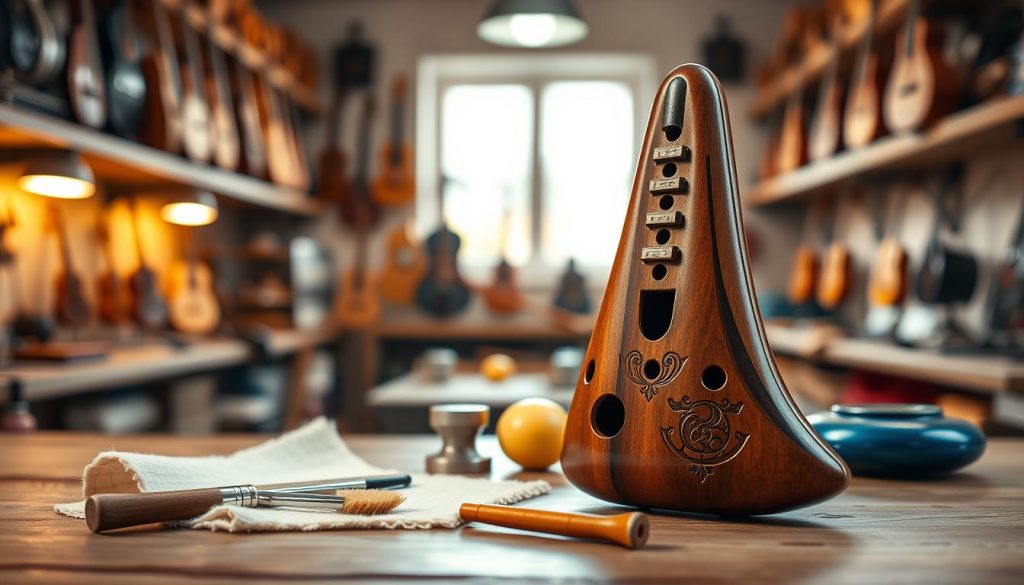
Simple steps after each session preserve the tuning and keep the holes clean. They ensure a long life for your ocarinas, whether they are made of plastic, ceramic, or crafted by hand.
Cleaning and hygiene
After each session, blow gently to remove moisture. Wipe the mouthpiece with a clean, dry cloth.
For deeper cleaning, use a flexible pipe cleaner or small brush. Avoid harsh products that damage the glaze or varnish.
Storage precautions
Store fragile models in a padded case. This protects them from impacts and temperature changes.
Avoid prolonged humidity: let the instruments air-dry before storing them. If you own several ocarinas, keep them separate to prevent rubbing.
“Regular care turns every ocarina into a reliable partner for your future compositions.”
- Tip: establish a weekly routine for checking the holes and mouthpiece.
- For beginners: a simple case is enough; prioritize protection over appearance.
| Action | Frequency | Materials concerned |
|---|---|---|
| Blow out and wipe the mouthpiece | After every session | Plastic, ceramic, handcrafted instruments |
| Lightly clean the interior with a brush | Monthly | Plastic, ceramic |
| Check the holes and make adjustments | Quarterly | All models |
Where to buy a quality instrument
Finding a reliable retailer often improves both product quality and the playing experience. It is best to choose specialist shops that understand pitch, holes, and manufacturing techniques.
Distinguishing specialist shops from general marketplaces
Specialist shops provide technical advice, opportunities to try instruments, and often handmade models. They sell ceramic, wooden, and plastic ocarinas and understand the particular features of multiple chambers.
General marketplaces offer a broad selection but sometimes lack rigor regarding tuning. Check the reviews, return policy, and description of the number of holes.
| Type | Advantage | Disadvantage |
|---|---|---|
| Specialist shop | Advice, trials, handcrafted models | Sometimes higher prices |
| General marketplace | Broad selection, low prices | Less quality control |
| Reputable manufacturers | Reliable tuning and tone | Limited availability |
Recommendations: favor established makers such as Olivier Gosselink (30 years), STL Ocarina (15 years), Sarawut Bugkhuntod (Dinda, Thailand), or artisans such as Spencer Register. A carefully considered purchase helps you avoid low-end models and ensures accurate notes and comfortable fingerings.
Choosing a reliable seller ensures that the shape, number of holes, and pitch meet your musical expectations.
Conclusion
Completing your buying journey requires you to summarize your real needs and musical preferences.
The right ocarina depends on your level, budget, and intended repertoire. A 12-hole model remains an excellent starting point for beginners, while multi-chamber versions give advanced players access to more octaves.
Mastery takes time: practice regularly to consolidate your fingerings, notes, and attack. Investing in a quality model ensures years of enjoyment and musical exploration.
To read tablature suited to 12-hole models and make learning easier, see our resources on 12-hole tablature.