
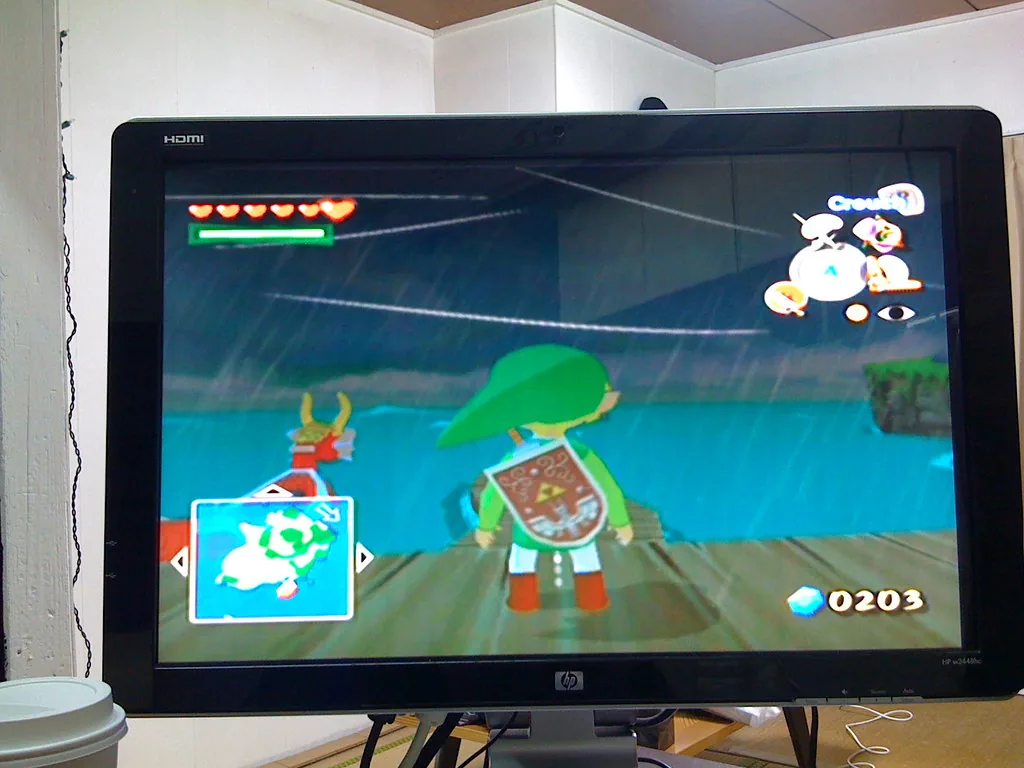
Introduction: This entry explores how an instrument changes the course of a great adventure. Ganondorf threatens Hyrule, and the hero must act quickly.
Link travels through varied regions to save the princess and thwart dark plans. Controlling the character is at the heart of this quest and guides every decision.
This guide provides a clear list of the items and equipment needed to progress through the game. You will find advice on the best equipment and when to use the songs.
Each section examines how this item influences the game’s story and the hero’s progress. To learn more about the central item, see the dedicated page on the Ocarina of Time.
The legacy of Ocarina of Time: the role of the ocarina in Zelda
The Japanese release on November 21, 1998 marked a turning point for the series and the video game landscape. This game established new foundations for immersion and design.
The musical device became the heart of the experience, transforming how players interact with the world, the characters, and the equipment. The mechanics tied to this item guided progression and gave meaning to the player’s actions.
Many specialist articles regard this installment as the starting point for the modernization of action-adventure games. Technical advances shaped the NPCs and environments, making the world feel more alive.
This short guide examines exactly what this system changed. For a deeper look at its meaning and use, see this dedicated resource: detailed guide.
A revolution in action-adventure gameplay
The arrival of 3D made it possible to explore larger, more complex dungeons. The move to three dimensions freed the player: movement, cameras, and jumping opened new avenues for exploration.
Each dungeon became a playground filled with monsters and puzzles. Specific items, such as the sword and other equipment, are used to solve puzzles and reach bosses.
Character control remains crucial during combat. In the dark corridors of the forest or the kingdom’s open chambers, managing time and space often makes all the difference.
The transition to 3D
- Greater freedom of movement for the player.
- Detailed exploration of environments and dungeons.
- More dynamic battles against varied monsters.
The importance of dungeons
Dungeons present challenges that combine puzzles, treasures, and bosses. They form the heart of the adventure and redefine gameplay for subsequent games.
“The management of space and time in this video game redefined the genre’s standards.”
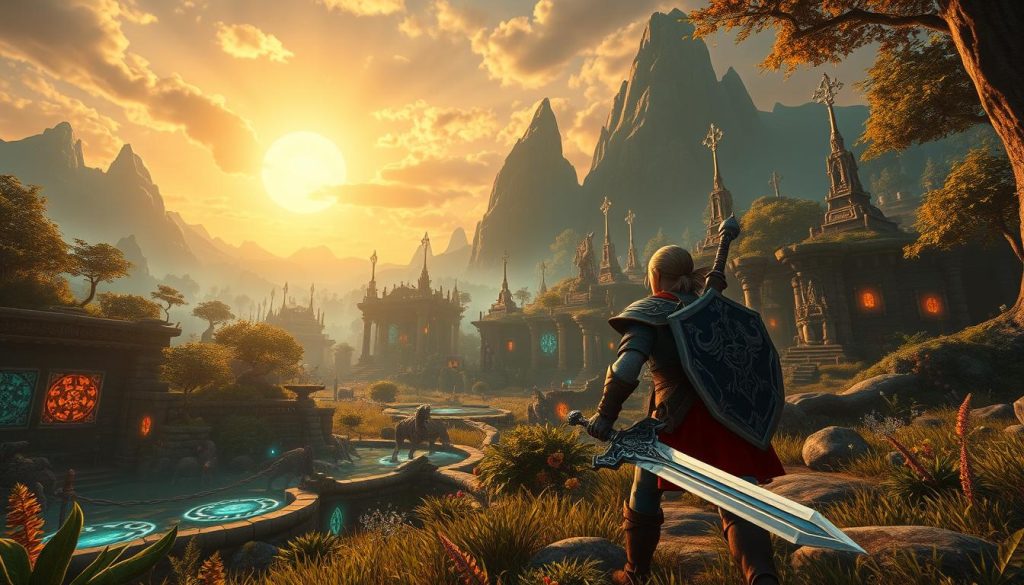
For a historical overview of the evolution of games, see this dedicated article: history and revolutions.
Music as a central pillar of immersion
The musical themes weave an atmosphere that follows the player at every step. The music does more than embellish locations: it defines the stakes and draws attention to what matters.
The emotional impact of the compositions
Each melody produces a distinct effect on the environment. Some notes open doors, while others calm creatures or awaken memories in the characters.
The sound elements, particularly the compositions played on the central instrument, strengthen the bond between the player and the heart of the adventure.
“Music acts as a language: it commands, comforts, and reveals.”
Technical articles show that this musical equipment changes how the world is perceived. Learning a melody thus becomes a useful skill for solving puzzles linked to elements of the environment.
The essential melodies for progressing through Hyrule
Some melodies serve as keys and radically change progression through Hyrule. This brief guide lists the indispensable songs and their effects on the world.
Zelda’s Lullaby and the Song of Time
Zelda’s Lullaby, learned from Impa, opens doors marked with the princess’s symbol.
The Sun’s Song, found in Kakariko Village’s graveyard, manipulates time and can paralyze monsters.
Warp songs
Several tunes allow fast travel. The player must first collect the three Spiritual Stones to gain access to the Temple of Time.
These melodies make it easier to travel between the village and the dungeons.
The Scarecrow’s Song
In the Lost Woods, Saria’s Song lets you communicate with the spirit of the forest.
The Song of Storms, learned at the windmill in Kakariko Village, illustrates how a melody alters the environment and the available equipment.

To view a complete list of songs, refer to the dedicated resource.
Link’s Awakening’s lasting influence on development
In September 2019, Eiji Aonuma confirmed that a small 1993 title had strongly influenced the design of the major 3D project.
Simple mechanics—such as item trading and automatic jumping—were reused to enrich the gameplay. These ideas made the game far deeper than earlier experiments.
The remake reintroduced direct references to the N64 installment’s characters and dungeons. This shows how small innovations on a handheld console nourish the series.
The early presence of the ocarina in the Game Boy installment also illustrates this continuity. The instrument went from a simple item to a central control tool for the player.
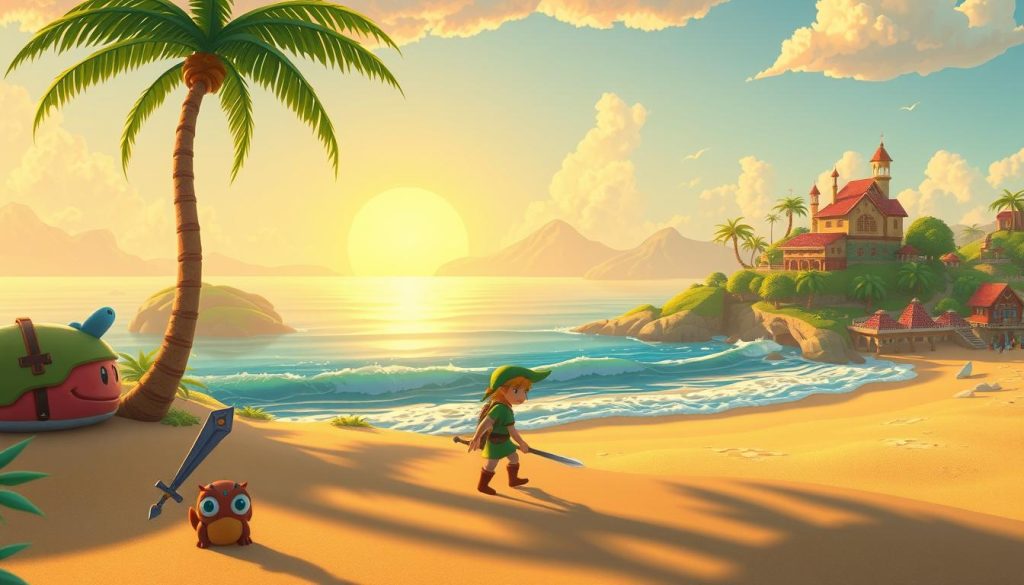
| Inherited element | Effect on gameplay | Example in the remake |
|---|---|---|
| Item trading | Strengthens strategy between NPCs and the quest | Merchants and side quests |
| Automatic jumping | Simplifies navigation in 3D | Platforms and dungeon traversal |
| Presence of the instrument | Control mechanics and puzzles | Melodies that activate doors and events |
“The small ideas from Koholint shaped major choices for the series.”
Analysis of iconic characters and their development
The key characters bring the world to life and guide every decision the hero makes. Their development accompanies the passage of time and enriches the story.
The role of Navi and the spiritual guides
Navi serves as a constant guide. She helps with navigation in the Kokiri Forest and points out important elements in the environment.
The Great Deku Tree represents the spirit of the forest and begins the initial quest. Its presence establishes the context and motivates the search for equipment.
- Malon and Talon bring rural life to life and offer useful side quests in the game.
- Princess Zelda develops from a fugitive into a source of strategic support.
- The remake gave these characters greater depth, making their motivations clearer.
“Spiritual guides turn mechanical actions into narrative moments.”

To learn more about adaptations and the treatment of the characters, see this article about manga and adaptations.
Conclusion
Through melodies and puzzles, the game established new rules for exploration. This guide shows how the central instrument and the management of time put the heart of the adventure at the player’s service.
The characters, dungeons, and forest form a coherent whole. Items, equipment, and the sword serve the quest. Controlling dungeons and monsters turns every moment into intense action.
Several articles have examined its historical impact. From September 1998 to the remake, the series remains a benchmark. Ultimately, the story of this game is much more than a simple example: it continues to guide modern games in the realm of heroes.