
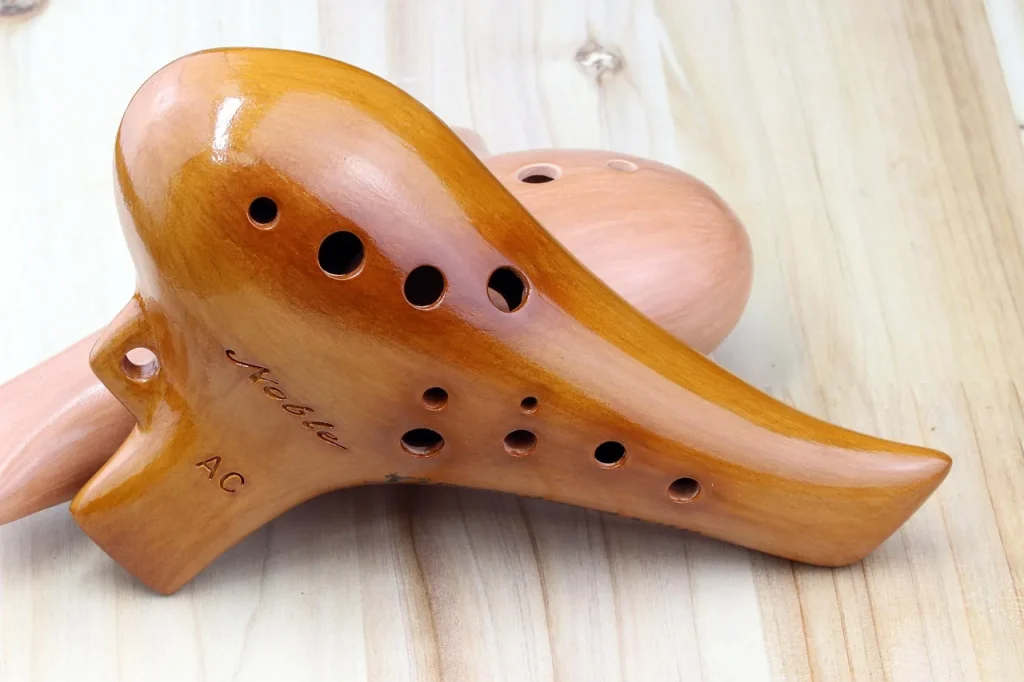
The release of The Legend of Zelda: Ocarina of Time in 1998 on Nintendo 64 marked a generation of players. The game broke new ground by combining adventure, music, and gameplay.
The melody of time becomes a genuine emotional bond between the player and the world of Hyrule. With just a few notes, the series creates a lasting emotion.
More than a mere accessory, this instrument plays a central role in the franchise’s progression and sonic identity.
The video game’s music features memorable songs and melodies that remain etched in people’s minds. As a result, millions of fans rediscover the magic with every new adventure.
In this article, we will examine how the Ocarina of Time transcended its original purpose to become a much deeper cultural symbol.
Zelda Ocarina: Why Is This Instrument So Fascinating?
The game’s soundtrack establishes themes that remain etched in the memory. Koji Kondo created a unique atmosphere by combining simple melodies with synthesized sounds. These musical choices imitate real timbres and provide a depth that was rare at the time.
Each melody contains specific notes that guide the player’s experience. Repeating a theme makes it instantly recognizable and creates a powerful emotional connection.
The ocarina’s ability to turn a short musical phrase into a memorable theme explains its central place in the game. The main and secondary themes structure the scenes and strengthen the musical storytelling.
In summary, the music guides the player through varied atmospheres, and Koji Kondo succeeds in making every theme unforgettable. The blend of synthesis and simple melodies makes this instrument the sonic heart of the adventure.
The Instrument’s Mystical Origins in Hyrule
The kingdom’s official music acts as a catalyst that reveals hidden doors. In this world, the princess entrusts the ocarina to Link before fleeing the castle. This gesture forges a sacred bond between the hero and his destiny.
The power to manipulate time lies at the heart of the series. With just a few notes, the player travels between different eras and locations. These journeys alter the world and open new paths.
The Role of Princess Zelda
The princess plays both a narrative and practical role. She passes on the lullaby that guides the hero in his actions. This theme becomes both an emotional and mechanical key.
The Power to Manipulate Time
Each song learned opens passages in the temple and helps solve puzzles. As the player explores, they come to understand that this instrument is essential for influencing time.
- Lullaby: an iconic theme connected to the quest.
- Temple of Time: the place where music alters space and time.
- Musical themes: storytelling tools in games from the Zelda franchise.
A Revolutionary Gameplay Mechanic for Its Time
The song mechanic turns every puzzle into a direct musical interaction.
The introduction of the Song of Time allows the player to manipulate time and space. The Song of Time moves mysterious blocks and activates hidden mechanisms.
This innovation makes the game more immersive. The iconic melodies serve as commands: each theme triggers a specific effect in the temple or elsewhere in the world.
The ability to travel between two periods, childhood and adulthood, changes the way the player solves puzzles. By mastering the Song of Time, the player opens passages and progresses.
- Themes used as gameplay elements.
- Access to the Temple of Time through specific melodies.
- A direct effect of the notes on the environment.
Ultimately, this instrument becomes central to the series. It established a standard in which melody is no longer merely decorative but lies at the heart of progression and the player’s role in the adventure.
Koji Kondo’s Musical Legacy
Koji Kondo’s work laid the foundations of an enduring musical legacy that continues to influence today’s games. His palette combines simplicity with subtle textures. This blend makes the pieces instantly recognizable.
The Influence of Classical Composers
Koji Kondo drew on the legacy of composers such as Erik Satie to create minimalist, ethereal atmospheres.
The use of slow, repetitive motifs evokes the poetry of classical music. These choices promote immersion and strengthen the connection between the music and the game.
“His music turns the wind into a narrative, making sound a point of reference for the player.”
A Legacy That Lives On in the Franchise
The themes reused throughout the installments confirm this legacy. It can be heard in games such as Majora’s Mask, where music retains a major role.
- The pieces anchor the franchise’s identity.
- The wind and soundscapes intensify immersion.
- A single theme often serves as a common thread between installments.
In short, each Koji Kondo theme acts as a hallmark. These pieces made the ocarina an enduring symbol of the franchise and a guide for the player through time.
The Symbolism of the Iconic Melodies
The key themes transcend music alone to convey profound meanings.
Zelda’s Lullaby
The lullaby, composed by Koji Kondo, appears in five games in the saga. It symbolizes Princess Zelda’s nobility and guides the player at decisive moments.
Song of Storms
The Song of Storms alternates between low and high notes to evoke water and fury. These precise notes create a dynamic atmosphere. The song then becomes a key for influencing time and the game’s mechanisms.

The Kakariko Village Theme
The Kakariko Village theme is built around repetitive motifs. It creates a warm atmosphere that evolves when Link reaches adulthood.
- These pieces serve as main themes and connect two eras.
- In the temple, each melody becomes an element of progression.
- The themes serve as emotional landmarks for the series and the player.
A Cultural Phenomenon Beyond the Console
The game’s melodies have moved beyond the screen and into concerts, cover versions, and social media.
78% of fans now associate this object with the franchise. This figure shows that it is far more than a mere accessory: it symbolizes an era and a shared musical sensibility among players of every generation.
The music, led by Koji Kondo, inspires artists who perform these themes onstage and online. The popularity of these songs has prompted the creation of playlists, cover versions, and dedicated events.
In France and elsewhere, this series has turned a theme into a cultural landmark. The themes remain pillars of popular culture and continue to inspire musical creativity far beyond video games.
| Medium | Examples | Impact |
|---|---|---|
| Concerts and orchestras | Symphonic arrangements | Visibility among the general public |
| Social media | Cover versions, tutorials | Fan engagement |
| Research and studies | Musical analyses | Legacy and education |
To explore the subject of influence and adaptations further, read a study of emulation and musical legacy: emulation and musical legacy.
Choosing and Caring for Your Own Instrument
The choice of material profoundly changes the tonal color of the themes. A 12-hole ceramic model offers greater accuracy for reproducing the melodies played by the game’s ocarina and the Ocarina of Time.
Differences Between Ceramic and Plastic
Ceramic provides a warm timbre and stable intonation. It is ideal for faithfully performing themes composed by Koji Kondo, particularly those from Majora’s Mask.
Plastic remains affordable and durable. It is suitable for beginners who want to try playing without making a large investment.
Regular maintenance preserves the accuracy of the notes. Clean the mouthpiece and dry the inside after each session to prevent buildup.
- Preference: 12-hole ceramic for greater accuracy.
- Maintenance: simple cleaning and dry storage.
- Learning: requires patience but enriches playing and mastery of the themes.
Techniques for Mastering the Legendary Songs
Mastering these tunes requires patience, proper finger placement, and breath control.
The Song of Time is based on a pentatonic scale spanning two octaves. Start slowly so that you can place the notes and rests correctly.
Zelda’s Lullaby and the Song of Storms are ideal for beginners. They allow the player to progress gradually and improve breath control.
The main theme and the Kakariko Village theme develop speed and finger accuracy. Koji Kondo designed these melodies to remain accessible while offering technical depth.
Practicing each piece improves breath, rhythm, and memorization of the themes. Complex themes require particular attention to rests: that is often where the expression lies.
Quick tips:
- Practice every day in short sessions.
- Work on finger accuracy for each melody.
- Pay close attention to breath control for the Temple of Time passages.
“Mastering the fundamentals is the first step toward playing the legendary pieces.”
To learn more about the relationship between gameplay and music, read a gameplay analysis that provides a useful complement to these techniques.
Conclusion
The bond between melody and emotion remains the key that brings the series and its fans to life.
In short, the ocarina is far more than a mere instrument: it embodies a musical legacy. Koji Kondo’s music, with themes such as the main theme and the Kakariko Village theme, remains a benchmark in video games.
Mastering the songs and melodies makes it possible to relive the adventure. Every note played recalls the importance of the temple, the lullaby, and the mechanics that left their mark on generations of players.
Ultimately, the franchise has forged an indelible bond with its fans. Melody remains at the heart of the game and invites everyone to continue their own musical legend.