
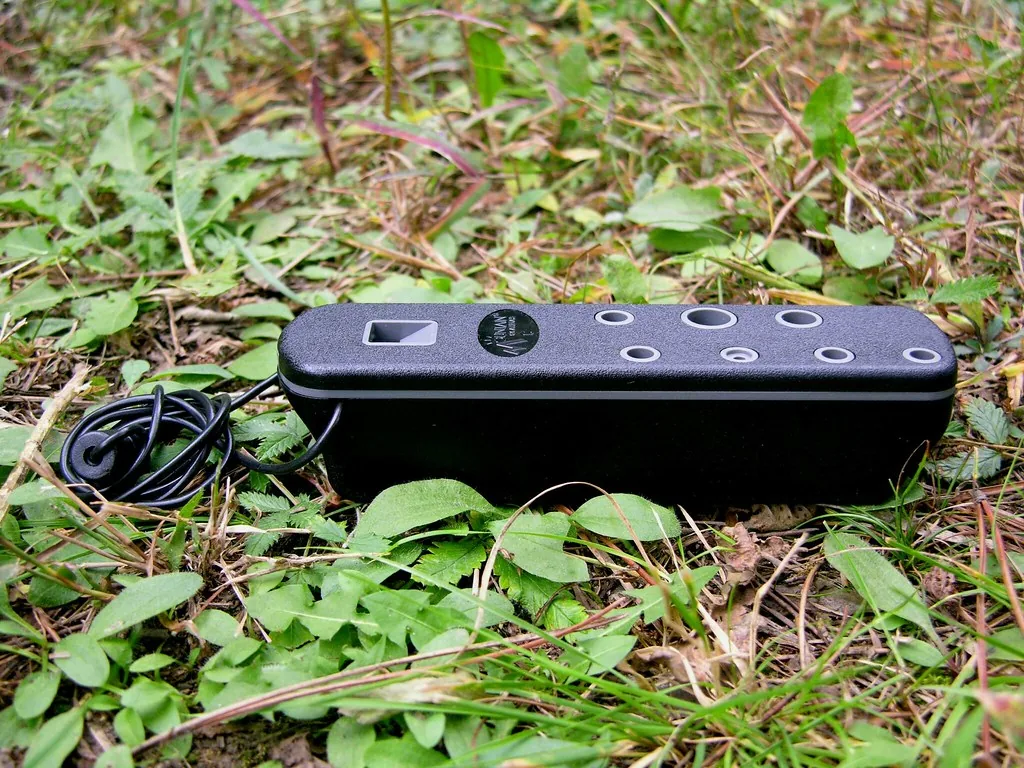
This small wind instrument fascinates with its pure tone and unique silhouette. It has endured through the ages and continues to captivate musicians worldwide.
For more than ten years, enthusiasts have been expanding their tonal palette with a two-chamber model. This design creates rich harmonies and provides a wide range.
For an amateur musician or a popular-culture enthusiast, this instrument offers an original means of expression. Practice helps maintain continuity between notes and smooth transitions.
Would you like to try one and compare different models? Browse a specialized selection of world instruments in this dedicated guide.
What is a double ocarina, what is it used for, and who is it for?
The multiple-cavity design changes how air produces pitch. The underlying principle remains that of a Helmholtz resonator: air vibrates against a beveled part of the mouthpiece to create sound.
Covering or uncovering the holes changes the pitch. Each opening adds another possible note. The model with two interconnected chambers offers a wider range than the classic version.
This innovation, popularized by Pacchioni in the 1980s, combines Italian craftsmanship with Asian influences. The result appeals to musicians seeking more registers, from bright sopranos to deeper basses.
By reading this article, you will learn how the models differ and how to choose one that suits your playing.
| Feature | Classic version | Two-chamber model |
|---|---|---|
| Registers | Soprano or alto | Soprano to bass |
| Range | Limited | Extended |
| Use | Learning, simple melodies | Performance, complex arrangements |
How multiple chambers work acoustically
Multiple chambers change how air resonates and shape the tone color. The principle remains simple: a cavity acts as a Helmholtz resonator, defined around 1850, whose size determines the pitch.
The Helmholtz resonator principle
Each chamber has its own volume. The larger the cavity, the lower the pitch. In 1987, Pacchioni used this principle to provide up to two octaves on a single model.
Managing the extended range
The chambers work as independent resonators. The musician alternates between them through breath control and precise fingering. The total volume affects the accuracy of the notes.
- Laser drilling: greater hole precision and better intonation.
- Breath control: essential for maintaining continuity between the soprano and bass registers.
- Design: the shape of the mouthpiece and neck directs air toward each chamber.

Mastering the fundamental playing techniques
Working on posture and breathing is essential for making progress on this instrument. Diaphragmatic breathing compensates for its higher air consumption, which can be up to 30% greater than that of a single-chamber model.
Finger placement must create a perfect seal over all 12 holes. Any leak changes the air column and alters the notes.
Hand positioning
Keep your wrists relaxed. Cover the holes firmly with your fingers without applying excessive pressure.
Breath control
Breathe deeply and control your exhalation. Holding the mouthpiece at an angle of about 45° optimizes the vibration of the air.
Transitioning between registers
Practice scales in eighth notes to smooth the transition from low to high notes. Synchronize your hands and breath: each uncovered hole changes the length of the air column.
- Tip: practice slowly, then gradually increase your speed.
- Record yourself to check your intonation and the continuity of your sound.
Comparison with other wind instruments
Comparing it with other wind instruments highlights its portability and gentle sound.
Volume and tone: this instrument reaches about 70 dB, compared with 85 dB for a concert flute. The result is a less projected, more intimate sound.
Weight and practical use: weighing only 80 g, it is extremely easy to carry. Air-column instruments such as the clarinet are heavier and bulkier.
Its globular resonator gives it a warm, rounded tone in the lower register, distinct from that of a recorder. This tone color explains its frequent use in film scores, such as that of The Last Samurai.
- Two available octaves, sufficient for short melodies.
- The clarinet offers three octaves but requires more learning.
- Ideal for musicians seeking an instrument they can learn quickly.

To learn more about the instrument and its uses, read this dedicated guide.
Criteria for choosing your first model
Choosing your first instrument requires balancing comfort, sound, and budget. Start by considering the size of your hands and the register that appeals to you: soprano, alto, tenor, or bass.
Matching the model to your skill level
For a beginner, choose a simple model. Three-chamber versions make fingering more complex and can be discouraging.
Ideal weight: aim for 200 to 300 grams. This weight provides good stability during daily practice.
Tuning: choose between 440 Hz for modern compatibility and 432 Hz for a warmer sound.
- Number of holes: 12-hole models are recommended for their accurate tuning and versatility.
- Shape and mouthpiece: test how the instrument feels in your hands to prevent neck tension and optimize finger placement.
- Range and chamber: select the range according to your tastes and the size of your hands.
| Criterion | Beginner | Intermediate |
|---|---|---|
| Weight | 200 to 300 g | 200 to 300 g |
| Holes | 12 holes | 12 to 14 holes |
| Chambers | 1 to 2 | 2 |

“A good first choice makes learning easier and sustains motivation.”
Care and longevity tips
Regular care significantly extends the life of your instrument, especially if it is made of ceramic.
After every session, dry the interior to remove condensation from the mouthpiece airway. This prevents hidden corrosion and preserves the sound.
Clean the holes every week with a small, soft brush. This routine removes residue and maintains the model’s intonation.
For deep cleaning, use white vinegar diluted to 10% in lukewarm water. Rinse thoroughly, then leave the instrument to air-dry away from sunlight.
Store the instrument in a humidity-controlled case. When properly protected, a terracotta instrument can remain in good condition for 10 to 15 years.

| Action | Frequency | Effect |
|---|---|---|
| Drying the interior | After every use | Prevents condensation and mold |
| Cleaning the holes | Weekly | Maintains intonation |
| Cleaning the chamber | Monthly | Preserves porosity and tone |
| Storage | At all times | Protects against temperature fluctuations |
“Simple, consistent care ensures years of playing and a stable sound.”
Conclusion
This instrument offers a surprisingly broad tonal palette, ideal for both simple melodies and elaborate pieces.
By following the advice in this article, you will be able to choose a good model, care for it regularly, and achieve a lifespan of 10 to 15 years.
Specialist forums, free sheet music, and regular practice complement this information. To learn more about reading tablature, consult this practical guide on how to read sheet music and tablature.
Recommended model rating: 4.6/5 based on 500 reviews, indicating widespread satisfaction among beginners and experienced musicians alike. The future promises innovations that combine tradition with modernity, allowing this instrument to remain relevant in contemporary music.