
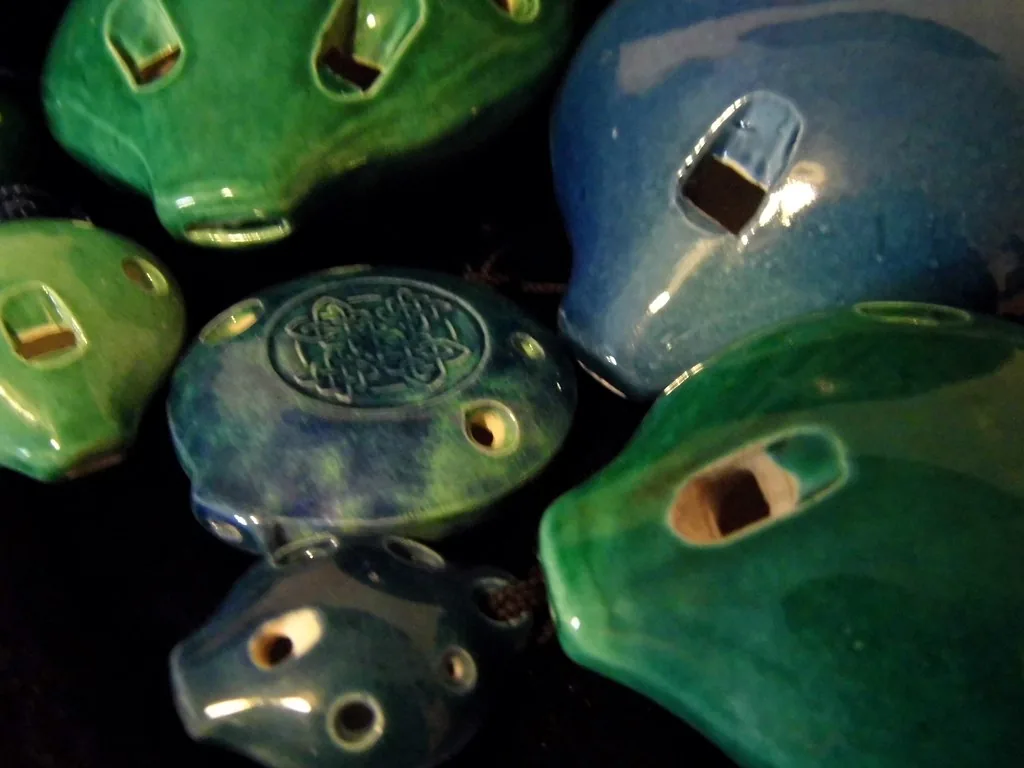
Welcome to a guide designed for beginners who want to master their new instrument quickly.
With more than five years of experience playing melodies on different models, I will explain in simple terms how to decipher each symbol and note.
This complete guide covers reading tablature, fingerings, and tips for choosing a suitable model.
You will learn to recognize note lengths, rests, and ties so you can play familiar tunes.
Goal: turn your first attempts into a smooth and rewarding practice, without unnecessary jargon.
Why Learn to Read Music for the Ocarina
Learning musical notation opens the door to varied and rewarding repertoires.
This universal language allows musicians to understand one another across borders. By mastering these symbols, you can play classical or modern works and share your ideas with other artists.
Access to the Global Music Repertoire
Knowing how to decipher sheet music gives you access to everything from Beethoven pieces to recent compositions for ocarinas. You are no longer dependent on a single video tutorial.
Developing Cognitive Abilities
Studies show that reading music stimulates memory and concentration.
This skill also improves coordination between your hands, eyes, and breath, while making your practice more independent.
- Easier sharing: notation makes it possible to play and exchange music with other instruments.
- Independence: choose your pieces without relying on a video.
| Benefit | Impact | Example |
|---|---|---|
| Access to repertoire | Wide variety | Classical and contemporary pieces |
| Sharing | Collaboration | Composing with other instruments |
| Cognition | Memory and concentration | Improved daily practice |
To go further, read this complete guide, which explains fingerings and essential symbols in detail.
Ocarina Sheet Music: How to Read Your First Notes
Before playing a melody, you first need to identify the type of material that accompanies your instrument.
There are three main formats: simple tablature, standard sheet music, and hybrid systems. Each format provides a different visual representation to make learning easier.
Tablature often shows which holes to cover. Standard sheet music uses the staff and rhythmic note values. Hybrid systems combine diagrams and notation to support gradual learning.

Why this choice matters: the material affects your learning speed and technical accuracy. A good instructional guide, often supplied with modern ocarinas, speeds up understanding.
“Understanding the symbols turns a simple representation into a harmonious melody.”
- Identify the type of material before you begin.
- Choose a guide suited to your level.
- Work through the symbols one at a time to build confidence.
To explore the subject in greater depth, follow this complete guide, which explains the formats and fingerings in detail.
Understanding the Structure of Simple Tablature
Starting with an overview of a tablature simplifies learning and prevents hesitation when you begin to play.
Visual Representation of the Holes
Ocarina tablature uses diagrams in which each black circle indicates a position to cover. These diagrams physically represent the instrument, making the notation intuitive.
Each note corresponds to a precise fingering diagram. This allows you to memorize the movements without first learning music theory.
Reading the Diagrams in Sequence
To produce the correct tune, follow the diagrams from left to right, as you would read text. This sequential reading turns the tablature into a logical series of actions.
- Tablature for 12-hole ocarinas often shows ten visible holes and two thumb holes.
- Careful reading instantly shows which note to play based on finger position.
“A clear diagram is worth a fingering lesson.”
Mastering Note Length and Rhythm
Controlling your breath and tempo takes a melody from approximation to mastery.
Breathing and sustain: breath control is a crucial technique for keeping a note steady and respecting the length shown on your tablature. When a horizontal dash appears, play the preceding note for two beats instead of one.
Phrasing slurs: horizontal braces indicate that several sounds should be played in a single continuous flow of air. This creates a smooth musical line without breaks.
Breath Control and Slurs
For each note, the position of your fingers must be precise to prevent air leaks that would affect sound quality.
- Multipliers let you repeat a sequence and save space on the tablature.
- Practice taking short breaths between phrases to maintain a steady rhythm.
- Segmenting your sounds helps give them a regular impulse and maintain a consistent tempo.

| Element | Action | Tip |
|---|---|---|
| Horizontal dash | Hold the note for 2 beats | Count quietly to stay precise |
| Brace | Play in a continuous flow | Practice without breathing between connected notes |
| Multiplier | Repeat a sequence | Practice the pattern with a metronome |
Read this complete guide to discover progressive exercises on note length and rhythm.
Using Standard Sheet Music to Improve
Moving on to standard staves opens up new rhythmic and harmonic possibilities for your instrument.
In 4/4 time, a whole note lasts four beats, a half note two beats, a quarter note one beat, and an eighth note half a beat. This reference helps you place each note and control your breath.
The augmentation dot adds half the original value. Mastering this symbol is essential for performing more complex rhythms and adding expression to a melody.
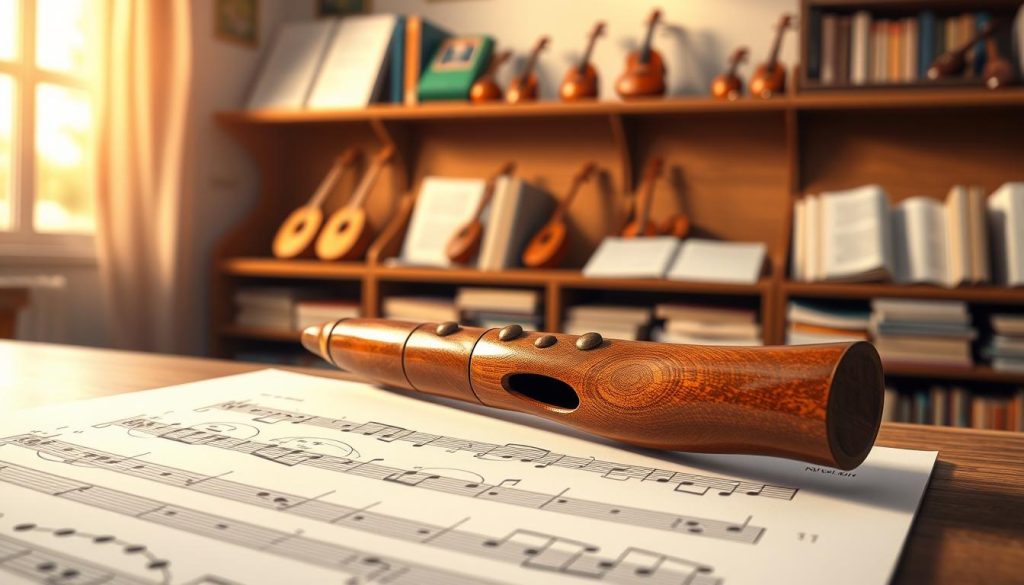
Unlike tablature, staff notation is universal. It makes reading music across different instruments easier and provides greater rhythmic accuracy.
“The staff gives you a shared language for playing with other musicians.”
- Synchronize your breath with rests and note values.
- Learn rhythmic figures one at a time.
- Practice with a metronome to stabilize the tempo.
| Element | Length | Practical advice |
|---|---|---|
| Whole note | 4 beats | Breathe before the measure |
| Half note | 2 beats | Count the second beat internally |
| Quarter note | 1 beat | Play with a clean attack |
| Eighth note | 0.5 beat | Divide the measure into sixteenth notes if necessary |
To learn more about moving from tablature to staff notation, read our complete guide.
Deciphering Hybrid Systems for a Smooth Transition
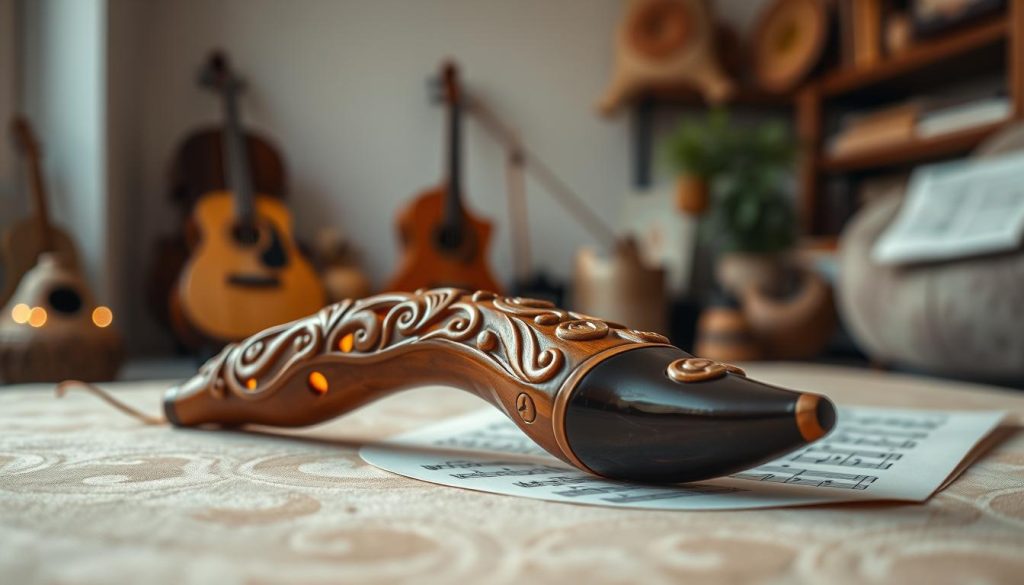
Placing a fingering diagram over the staff changes how you learn. A small illustration appears directly above the note. It guides your hand without interrupting the musical flow.
Key benefit: these systems combine the precision of notation with the visual clarity of tablature. They are perfect for beginners who want to become more independent.
- You see the fingering and rhythmic value at the same time.
- The movement becomes automatic while still respecting the length of the note.
- Several modern ocarina models support this hybrid format.
Pay attention to the key: fingering varies by instrument model. Adapt your reading when the range changes so you remain in tune and maintain a steady sound.
| Strength | Effect | Advice |
|---|---|---|
| Combined visual format | Faster learning | Follow the diagram, then remove it gradually |
| Breath control | Consistent airflow | Practice with a metronome |
| Compatibility | Transition to standard notation | Check the fingering for your ocarina |
“Combining movement and pitch makes memorization and musical expression easier.”
Choosing the Right Instrument to Make Learning Easier
Your choice of instrument directly affects playing comfort and the resulting sound quality.
Number of Holes and Range
A 12-hole model is recommended for following most tablature available online.
A standard alto generally covers one octave plus a few additional intervals. This makes common melodies easier to play.
Materials and Sound Quality
Ceramic provides rich harmonics and a stable tone.
Plastic is more impact-resistant and practical for outdoor playing.
Ergonomics and Handling
Good ergonomics make the holes easier to cover and help improve your technique.
Well-known brands such as STL, Songbird, Night by Noble, and Focalink/Noble provide reliable tuning and offer comfortable beginner models.
- Choose a 12-hole model to access a broad repertoire.
- Check the range (bass, alto, or soprano) according to the repertoire you want to play.
- Prioritize a natural grip to ensure accurate notes.
| Criterion | Benefit | Recommendation |
|---|---|---|
| Number of holes | Access to commonly available music | 12 holes |
| Material | Tone and durability | Ceramic for sound, plastic for strength |
| Ergonomics | Comfort and accuracy | STL / Night by Noble models recommended |
“Choosing the right instrument makes learning easier and practice more enjoyable.”
For a confident start, read this practical guide to learning your first notes quickly.
Managing the Key and Range of Your Flute
Understanding the range of your instrument prevents you from getting stuck on a passage that is too high or too low.
There are three common keys: C, F, and G. The key changes the fingering and may require you to transpose tablature written for a different key.
A model in C remains the most common. It makes available tablature easier to use and reduces the need for complex transposition.
- If the melody exceeds the instrument’s range, adapt it by moving it up or down an octave.
- Finger position remains consistent when two instruments are in the same key.
- Managing the air is crucial when moving from low to high notes without losing accuracy.
“Adapt the key instead of forcing the range: your musicality will be all the better for it.”
To discover practical exercises on transposition and range, follow this simple and useful guide: transposition exercises.
A Daily Routine to Improve Your Technique
Establishing a short but focused routine can transform your progress within a few weeks.
Devote 15 to 20 minutes a day to your ocarina. These regular sessions develop muscle memory and fingering accuracy.
Each session should include one specific technical focus. For example: breath control, transitions between notes, or maintaining correct finger position.
- Record yourself regularly to check that every note is clean and the intensity of the air remains steady.
- Use a metronome when practicing tablature to maintain a consistent tempo.
- Repeat simple scales: this is an effective technique for stabilizing your playing and building confidence.
“A short, focused repetition is better than a long, irregular session.”
| Length | Goal | Tip |
|---|---|---|
| 15–20 min | One technical focus | Record yourself and listen back |
| 2–3 times a week | Metronome practice | Increase the speed gradually |
| Every day | Scales | Change scales each day |
Follow these steps and adapt them to your own pace. With consistency, your instrument will respond better, your notes will be more accurate, and your tablature-reading skills will improve.
To go further, read this complete guide.
Conclusion
This conclusion brings together the practical keys to making rapid progress on your instrument.
By following this guide, you now have the reference points you need to approach tablature and play each note confidently.
Progress depends on regular practice and an instrument suited to your level. Every type of material, whether standard or hybrid, enriches your understanding and playing.
Mastery opens the door to a vast repertoire. Be patient, repeat the notes, vary your exercises, and try different instruments to find your sound.
Keep this article as a reference and return to it whenever you need a reminder. Your enjoyment of music will grow with every session.