
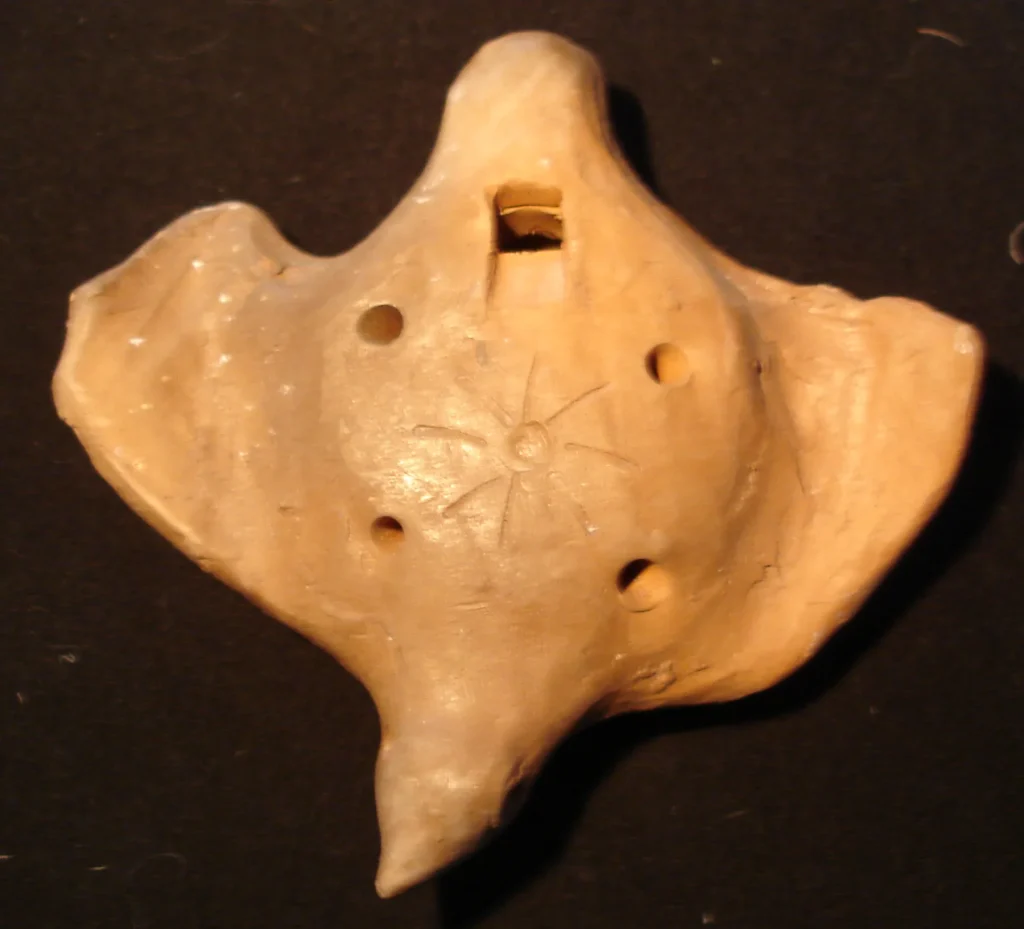
The title evokes a pivotal era in video games. Released in 1998, the software left its mark on a generation of players.
The musical mechanic provided by the ocarina changed the gameplay. It offered a new way to interact with the hero’s world.
Presented by the princess, this instrument transforms a simple quest into a true adventure. Mastering the object reveals secrets and moves the story forward.
Thanks to its innovative design, the saga transcended the boundaries of video games. Its influence endures in popular culture and over time.
To learn more about the instrument’s origins and significance, read this detailed overview of the ocarina, its definition and history.
Ocarina of Time: A Video Game Revolution
In 1998, one title redefined how players explored a three-dimensional world. Released for the Nintendo 64, the game introduced new mechanics and immersive gameplay.
Facing giants such as Final Fantasy 7, its release proved that cartridges could compete with CD-based consoles. Before that, Super Mario 64 had paved the way for 3D.
The transition to an open 3D world posed a major technical challenge for the team led by Eiji Aonuma. After a five-year wait following Link’s Awakening, fans encountered a transformed saga.
The title redefined the standards of 3D gaming and had a lasting influence on the production of video games around the world.
“The release confirmed the series’ central place in Nintendo’s history.”
- Release year: 1998
- Platform: Nintendo 64 (cartridge)
- Impact: a standard for 3D gameplay
| Year | Platform | Key innovation | Competition |
|---|---|---|---|
| 1996 | Nintendo 64 | 3D platforming (Super Mario 64) | PlayStation, Saturn |
| 1997 | PlayStation (CD) | Cinematic storytelling (Final Fantasy 7) | Nintendo 64 |
| 1998 | Nintendo 64 (cartridge) | Open 3D world, innovative gameplay | CD-based consoles |
For a more detailed analysis of the franchise’s reinvention, read this dedicated study of the series’ reinvention.
Link and His Ocarina: Why This Object Is Iconic
The first notes played during the adventure created lasting memories for millions of players. The instrument goes beyond being a mere game mechanic and acquires genuine emotional value.
A Generational Symbol
The power of the melodies creates an immediate emotional connection. Accessible and memorable, the tunes allowed anyone to replay famous themes within minutes.
This title made the game’s music simple and participatory. As a result, the saga became far more than entertainment for a generation of players.
An Icon of Popular Culture
The recurring musical phrases produce a powerful effect of nostalgia. Real musicians perform these tunes, and popular culture recognizes the instrument beyond the world of video games.
“Every note recalls a scene, a place and an emotion shared by millions of fans.”
- Influence on concerts and musical covers
- Presence at conventions and in fan culture
- Physical replicas and collectibles
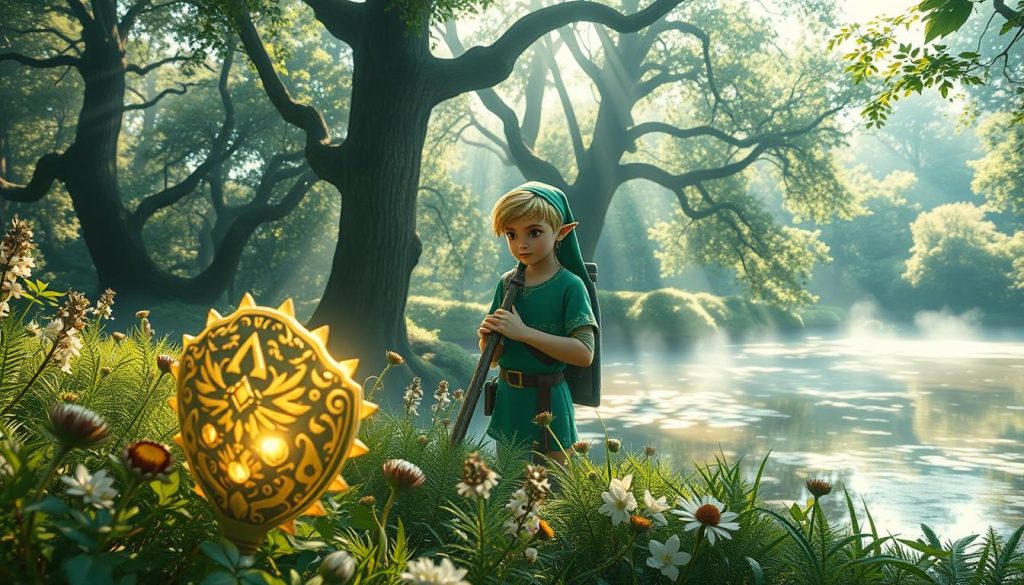
The Instrument’s Magical Origins in Hyrule
The Princess Zelda gives Link the instrument before fleeing the castle, setting a now-legendary quest in motion.
In the first dungeon, the Deku Tree reveals the item’s hidden powers. This discovery is a defining moment for the saga and the hero’s journey.
The Song of Time makes it possible to manipulate the environment, delivering a far richer gaming experience than a conventional action title. Each melody makes the gameplay interactive: doors, puzzles and ruins respond to the music.
The ability to travel between two eras—childhood and adulthood—changes the progression. The instrument occupies a central place in the world of Hyrule and proves that it is more than a simple accessory.
“Every melody transforms the surroundings, revealing new paths and new challenges.”
A Major Innovation in the Saga’s Gameplay
The ability to bend time transformed the way players explored each dungeon. Moving between two eras immediately alters the architecture of each location and the arrangement of its puzzles.
Through the Song of Time, the game mechanic introduces puzzles that demand thought and memory. They rely on visible cause-and-effect relationships and heighten the sense of discovery.
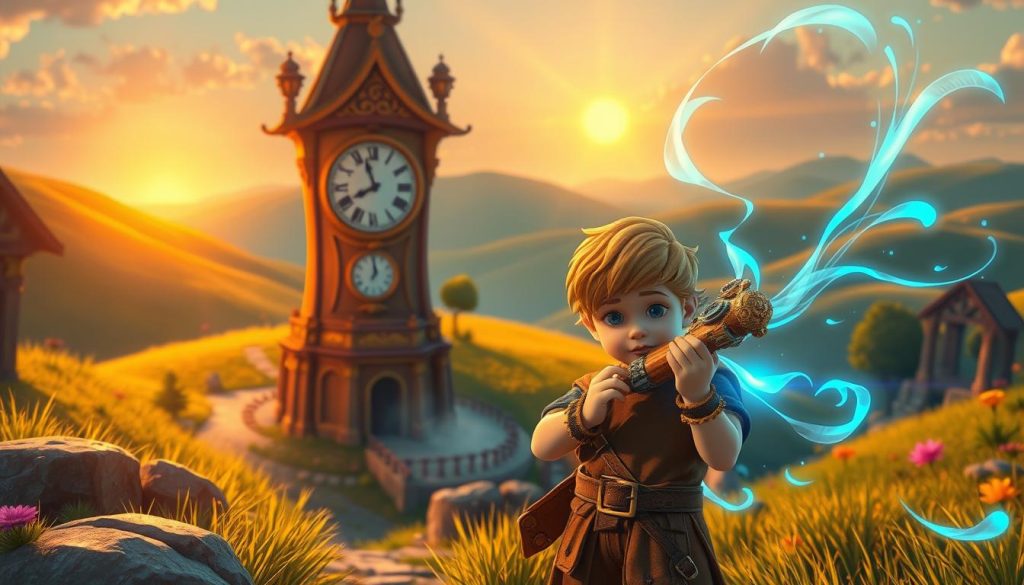
Manipulating Time and Space
The player can alter space and time to unlock blocked paths. This mechanic enriches the gameplay without sacrificing accessibility.
The game mechanics introduced here served as a model for other games in the series. The resulting sense of immersion remains a benchmark for game designers.
“An innovation that proves music can be a central pillar of gameplay.”
- Exploration reimagined through time
- Puzzles based on the Song of Time
- Lasting influence on later games
Koji Kondo’s Musical Genius
Kondo’s score gives the world a voice and shapes the player’s sense of time. His music transforms the title into a sensory experience. It supports the narrative and guides players through every stage of the adventure.

The Birth of Adaptive Music
Kondo composed 79 tracks totaling more than 2 hours and 10 minutes for the cartridge. This abundance allows the music to respond to the gameplay.
The melody changes tempo whenever Link fights or explores the castle. The result makes the world feel more vivid and immediate.
An Interactive Composition
The music is no longer mere decoration: it responds to the player’s actions. This interactive composition strengthens immersion from the first dungeon, the Deku Tree.
“The castle courtyard remains one of my favorite compositions.” — Koji Kondo
The Evolution of Kondo’s Style
Already acclaimed for Super Mario, he reworked his style for a more expansive saga. The approach combines memorable themes with adaptive variations.
- 79 tracks to vary the atmosphere
- Responsive tempo based on the action
- Narrative role linked to Princess Zelda
| Element | Data | Impact |
|---|---|---|
| Tracks | 79 | Thematic variety |
| Duration | 2 hr 10 min | A rich cartridge-based soundscape |
| Adaptation | Changing tempo | Greater immersion |
The Melodies’ Emotional Impact on Players
Each melody establishes a mood that transforms an ordinary scene into a memorable moment. The music accompanies key moments in the story and lends new intensity to the progression of the game.
The compositions’ artistic style creates total immersion. This approach makes the instrument far more than a simple accessory: it becomes the narrative heart of the saga.
Adaptive music strengthens the effect of every action. Over time, the tunes become etched in players’ memories and inspire lasting nostalgia.

- Melodies that leave their mark
- Sound-based interactivity that enriches the game
- An experience that is more than functional—almost sacred
A Cultural Legacy Beyond the Console
The instrument left a lasting mark on the saga and on perceptions of video games.
With 7.6 million copies sold, this title established standards later adopted throughout the Zelda series. Musical mechanics subsequently appeared in several games.
Influence on Later Titles
In 2011, Skyward Sword introduced the Goddess’s Harp, proving that the idea endured. Later installments incorporated other musical elements inherited from the original.
The title’s availability on the Virtual Console allows new generations to discover this source of inspiration. The Zelda saga has therefore evolved while preserving the spirit of this innovation.
“Its musical impact established standards for the franchise and for future games.”
| Element | Example | Impact |
|---|---|---|
| Sales | 7.6 million | Enormous cultural legacy |
| Reuse | Skyward Sword (2011) | Evidence of lasting influence |
| Accessibility | Virtual Console | Passing it on to new generations |
For a deeper examination of the music and its role in immersion, read this dedicated study of soundtrack structure.
The Thriving Market for Physical Replicas
The title’s popularity created a highly active market for ceramic replicas. Artisans offer models that faithfully imitate the original ocarina, down to its blue color and Triforce symbol.
Thanks to their craftsmanship, these pieces are often playable. Players can therefore perform the game’s melodies and extend the experience beyond the console.
The merchandise market proves that this instrument has transcended video games. The quality of its materials adds to its appeal among collectors: each example becomes a unique object appreciated around the world.
“Owning a replica means recovering a piece of your childhood and recognizing a cultural symbol.”
| Type | Material | Function | Target audience |
|---|---|---|---|
| Standard replica | Ceramic | Decoration | Collectors |
| Playable version | Fine ceramic / porcelain | Performing the tunes | Musicians and fans |
| Collector’s edition | Ceramic and metal blend | Collectible | Investors / enthusiasts |
To learn about authentic models and specialist makers, read this detailed overview of the playable replica. Its commercial success demonstrates fans’ deep attachment to the instrument.
The Mechanic’s Persistence in Recent Installments
Even on newer consoles, music remains central to the Zelda series. On the Nintendo 3DS, the system was adapted to take advantage of touch controls.
Adaptation and Legacy
In the Ocarina of Time 3D remake for Nintendo 3DS, the controls evolved. The melodies became clearer. The visual and audio quality was improved.
Skyward Sword follows the same principle: the musical game mechanic becomes a pillar of the experience. This evolution demonstrates the continuity of the game mechanics that structure exploration.
“Whenever the player uses the instrument, they renew their connection with exploration.”
- Availability: the Virtual Console made it possible to revisit this installment later.
- Influence: modern games reuse the idea of musical interactions.
- Longevity: the presence of instruments remains inseparable from the series.
| Element | Example | Impact |
|---|---|---|
| Remake | Ocarina of Time 3D | Adaptation to the touchscreen interface |
| Sequel | Skyward Sword | Preservation of the musical mechanic |
| Access | Virtual Console | Later rediscovery |
Conclusion
The release of this title redefined the conventions of video games.
Koji Kondo’s music, whose impact approaches that of the themes from Super Mario, forged a unique sonic identity. The union of melody and game mechanics created an immersive experience.
This innovation transformed the world of game design. The Zelda saga continues to influence creators, players and future games.
Ultimately, the instrument remains the symbol of an era in which music serves both action and story. Its legacy will endure for as long as new generations replay this game.