
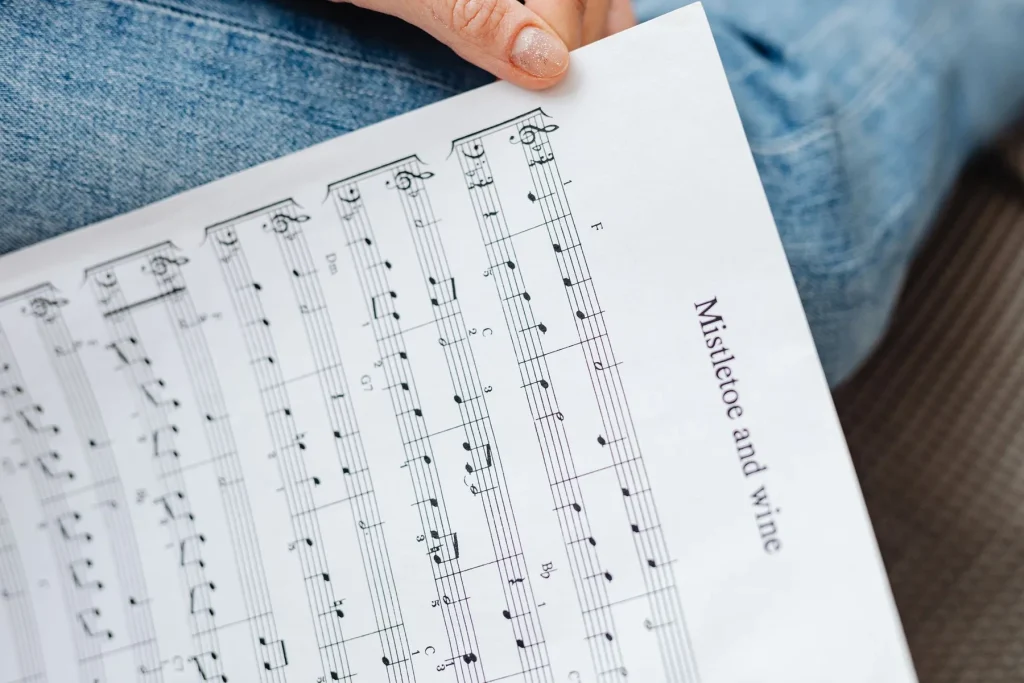
Reading harmonica sheet music may seem difficult to some people. But this practical guide aims to simplify this important step. Whether you are a beginner or already experienced, knowing how to read sheet music is crucial to making progress. The basics of harmonica sheet music, often considered complex, are actually easy to learn with the right method.
There are many resources for learning notes, rhythms, and playing techniques. This allows you to avoid overly complicated theoretical study, making the learning process more accessible.
Learning to play the harmonica becomes easier with practical methods. These methods focus on direct application without requiring extensive theoretical knowledge. By following clear steps, you will be able to read sheet music, improvise, and create music. Consult this resource to learn how to play the harmonica in one week.
Introduction to the Harmonica
The harmonica is a fascinating and accessible musical instrument. It allows beginners to get started quickly and discover a uniquely rich sound. Originating in folk music, it has adapted to many genres and become a universal instrument.
Beginners must master breathing to produce a high-quality sound. Resources such as books and online courses make learning the harmonica easier. For example, “Le Blues majeur – VolHarmonicaHit Diffusion” costs EUR 29.90, while “The Rockschool Harmonica Method – Beginner (2022)” costs EUR 16.75.
Whatever your age, the harmonica is accessible to everyone. One student even started at the age of 89. Despite challenges such as gray hair or joint pain, learning an instrument can improve memory and concentration.
Learning to play an instrument activates more areas of the brain than other activities. This improves intelligence. An introduction to the harmonica can therefore support personal development. Motivation is essential for making progress and thriving.
The Different Types of Harmonicas
The world of harmonicas is divided into two main categories: the diatonic harmonica and the chromatic harmonica. Each type has its own distinctive features. Understanding these differences is essential when choosing a harmonica, whether you are a beginner or an expert.
Diatonic Harmonica
The diatonic harmonica is perfect for beginners. It is easy to use and affordable. It is tuned to a fixed key and is well suited to blues, rock, country, and pop. The Hohner Marine Band and Hohner Special 20 models are highly regarded for their rich sound.
- Ease of use: ideal for beginners
- Pitch techniques: bending techniques for a more expressive sound
- Musical genres: mainly used in blues and folk music
Chromatic Harmonica
The chromatic harmonica can play every note in the chromatic scale. It is therefore ideal for jazz and classical music. Its button mechanism provides easy access to chromatic notes and offers a wide variety of musical possibilities.
- Versatility: suitable for jazz, classical music, and many other genres
- Ease of playing: a button mechanism provides access to chromatic notes
- Repertoire diversity: ideal for musicians seeking a broad expressive range

Sheet Music Reading Technique
Reading harmonica sheet music requires a good understanding of the elements of a score. These elements include the clef, notes, rests, and rhythm markings. Understanding them is crucial for playing a piece correctly.
Understanding the Basic Elements of a Score
Tablature is a simple way of writing music for the harmonica. It indicates the harmonica’s key and the holes to play. It can also represent groups of notes associated with particular techniques.
Harmonica-Specific Symbols and Notation
Sheet music contains harmonica symbols corresponding to techniques such as bending. Tremolos are marked to indicate a sustained note. Rhythm markings specify how long notes last, such as eighth notes or quarter notes.
Mastering this notation and these techniques helps you play a variety of pieces, from classics to modern melodies. Understanding these principles enables harmonica players to interpret and appreciate their music more fully.
How to Read Harmonica Sheet Music: A Practical Guide
Learning to read harmonica sheet music may seem difficult at first. But it is essential for discovering music. With tools such as the book “Harmonica For Dummies”, beginners can learn easily.
Start by understanding musical notes and symbols. Sheet music indicates which notes to play on the harmonica. With practice, you will play with greater accuracy.
Practical exercises are crucial. With methods such as D.E.R.I.V.E.S., you can learn quickly. This guide will help you improve and incorporate improvisation into your playing. Explore different genres to find your style.