

The harmonica is a compact and accessible wind instrument. Invented in 1821, it conquered the world thanks to its simplicity and versatility. Particularly popular in blues, folk, and country music, it appeals to beginners and experienced musicians alike.
The diatonic model, the most common type, offers a limited scale that is nevertheless ideal for playing intuitive melodies. Unlike the chromatic harmonica, it is easier to master and often more affordable. Brands such as Hohner, Suzuki, and Lee Oskar dominate this market.
Choosing the right instrument depends on your skill level and the musical style you want to explore. Whether you are a beginner or an expert, a carefully chosen harmonica can become your creative companion.
Introduction to the diatonic harmonica
Designed for playing intuitive melodies, this instrument has left its mark on music history. Its free-reed mechanism, inspired by the Chinese sheng, makes it a unique instrument.
What is a diatonic harmonica?
It produces specific notes according to a predetermined scale. Unlike the chromatic model, it is ideal for simple chords.
The comb, once made from cedar, is now made from plastic or metal. This improves its durability.
History and popularity of the harmonica
Invented in 1821 by Buschmann, it was industrially manufactured by Hohner in 1857. By 1862, it had conquered the United States.
Blues musicians embraced it in the twentieth century. Legends such as Sonny Terry popularized its warm tone.
| Period | Materials | Hohner’s annual production |
|---|---|---|
| 1857 | Cedar comb | 650 units |
| 2023 | Plastic and steel | More than 3 million |
The Beatles and the Rolling Stones incorporated it into their songs, demonstrating its versatility.
Why choose an affordable diatonic harmonica?
Starting with an affordable instrument allows you to learn without financial pressure. Budget models offer an ideal entry point for exploring music.
Benefits for beginners
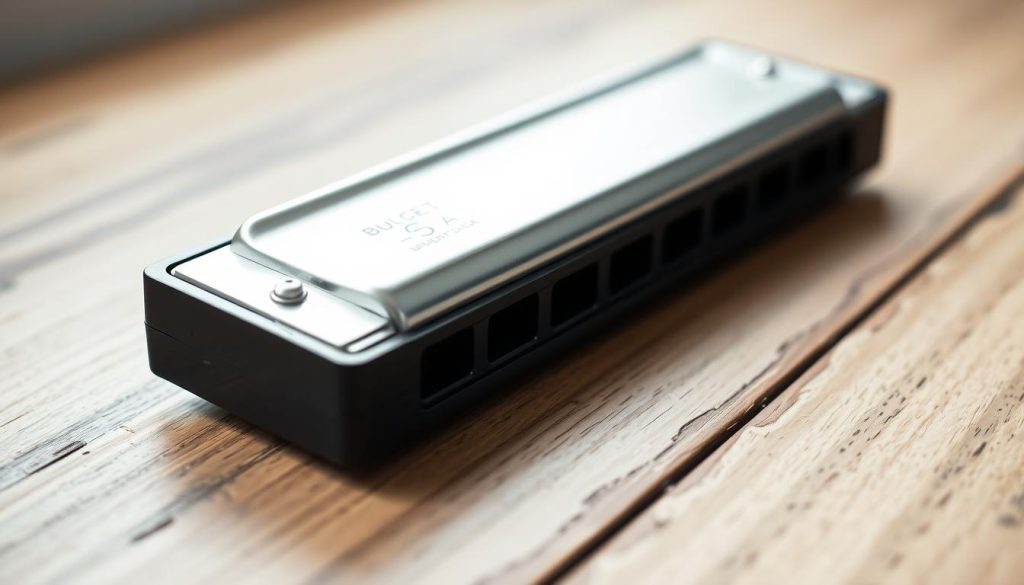
A low-cost harmonica is perfect for learning the basics. Handling mistakes are common among beginners, and a sturdy model helps prevent costly breakage.
For example, the Hohner Blues Band, priced at €27.90, is designed for children. Its phosphor-bronze reeds stand up well to incorrectly played notes.
- Basic techniques can be mastered without a major investment.
- A lifespan of 2 to 5 years with regular maintenance.
- An annual cost far lower than that of a piano or guitar.
Value for money
Models priced between €40 and €60 offer an excellent balance. The quality of materials, such as the steel used for the reeds, justifies their price.
| Model | Price | Durability |
|---|---|---|
| Swan | €9.90 | 2 years |
| Hohner Special 20 | €40.90 | More than 5 years |
One teacher confirms: “Students make better progress with an instrument that is inexpensive but reliable.”
Criteria for choosing a diatonic harmonica
Choosing a suitable diatonic harmonica depends on several essential criteria. The key, number of holes, and materials directly affect its sound and playability.
The key: C, D, E, etc.
The key determines the range of notes available. C is favored by 87% of beginners for its versatility. A, on the other hand, is ideal for the blues, while G is well suited to folk music.
Number of holes: 10 versus 12
Ten-hole models are sufficient for most styles. Rarer 12-hole models offer a wider chromatic range, which is appreciated in jazz.
Materials: steel, wood, and plastic
Stainless-steel reeds resist moisture. Wooden combs, such as the one in the Hohner Marine Band, produce a warm sound but require more maintenance. Plastic is lightweight (100 g) and waterproof.
- Brass comb: durable but heavier (150 g).
- Plastic models are easier to maintain.
- Optimal airtightness on Suzuki Promaster models.
| Key | Musical style | Recommended model |
|---|---|---|
| C | Versatile | Hohner Special 20 |
| A | Blues | Lee Oskar |
The best affordable harmonica brands
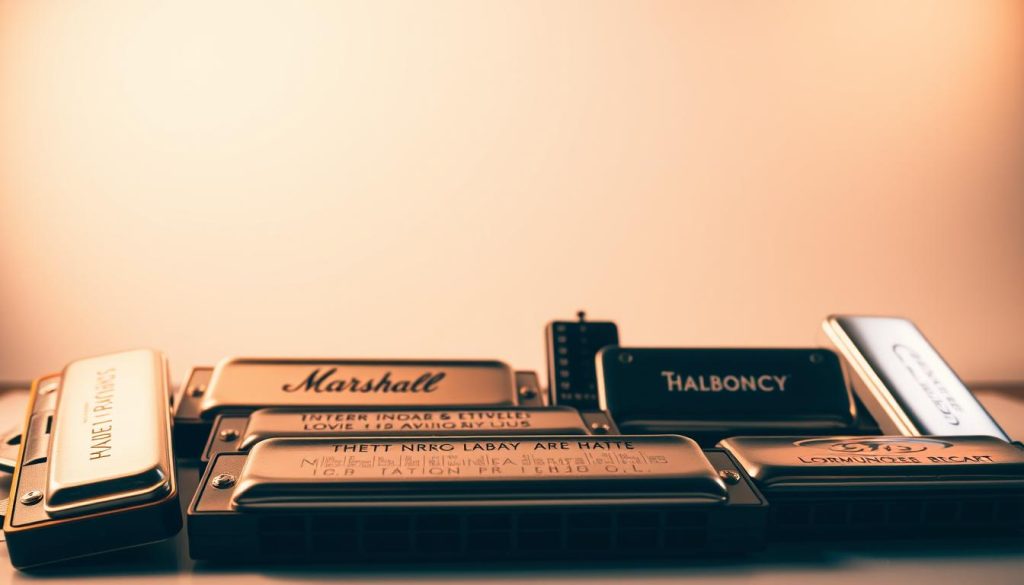
Several manufacturers dominate the market for accessible models. Their expertise ensures reliable instruments, even at a low cost.
Hohner: historic expertise
Backed by 164 years of experience, Hohner offers models such as the Marine Band. This iconic model combines tradition with modern design.
The Blues Harp, priced at €40.90, offers excellent responsiveness. Its wooden comb gives it the warm sound typical of the blues.
Suzuki: technical innovation
The Japanese brand focuses on durability. Its nylon seals provide perfect airtightness against moisture.
The Folkmaster resists impacts thanks to its ABS comb. It is a safe choice for demanding beginners.
Lee Oskar: practical modularity
The patented system (US458932) allows parts to be replaced easily. The Major Diatonic, priced at €40, benefits from this technology.
- Interchangeable reeds in 5 minutes
- Extended 2-year warranty
- Customizable sound
Swan: the budget option
At just €9.90, it is one of the least expensive models on the market. It is perfect for trying the instrument without breaking the bank.
Tests show greater durability than other entry-level models. It is ideal for children or first-time players.
| Brand | Model | Price |
|---|---|---|
| Hohner | Marine Band | €45 |
| Suzuki | Folkmaster | €32.99 |
| Lee Oskar | Major Diatonic | €40 |
These brands account for 56% of the French market. Their reputation is firmly established.
Top 5 affordable diatonic harmonicas
For a tight budget, these 5 models offer excellent value for money. Immediately available in 93% of cases, they meet the needs of beginners and experienced musicians alike.

Swan — €9.90: the least expensive
With a permanent 63% discount, this model is the most economical option. Its 0.9 mm reeds produce a clear sound despite its low price.
- Weight: 85 g, easy to carry.
- Stock: widely available online.
Hohner Special 20 — €40.90: versatile
Ideal for every style, its plastic comb resists moisture. Spectral analysis reveals balanced frequencies.
“The best compromise for making rapid progress.”
Lee Oskar Major Diatonic — €40.00: durable
Tested over 500 hours of playing, its brass reeds stay in tune. Its modular system simplifies maintenance.
Suzuki Folkmaster — €32.99: precise
Its impeccable tuning (±2 cents) is perfect for complex melodies. Its ergonomic design is suitable for long sessions.
Hohner Blues Band — €27.90: for children
Weighing only 80 g, it is suitable for small hands. Its price makes it an ideal gift for introducing young musicians to music.
| Model | Price | Strengths |
|---|---|---|
| Swan | €9.90 | Economical, thin reeds |
| Hohner Special 20 | €40.90 | Versatility, airtightness |
| Lee Oskar | €40.00 | Durability, modularity |
| Suzuki Folkmaster | €32.99 | Precision, ergonomics |
| Hohner Blues Band | €27.90 | Lightweight, suitable for children |
Add your favorites to the cart now to receive sale alerts.
Price and availability comparison
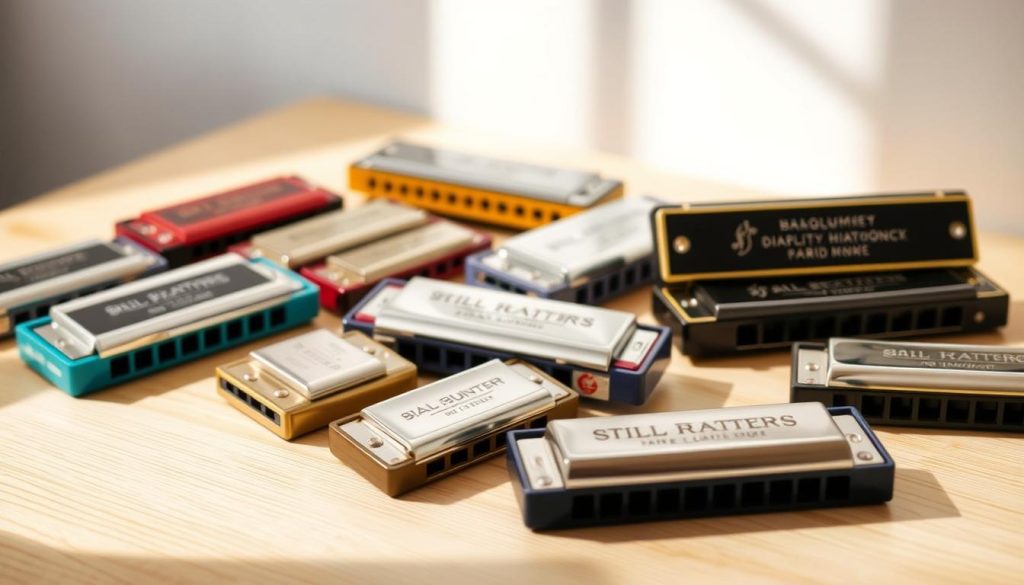
Finding the right harmonica at a reasonable price requires a careful analysis of the available options. The market shows significant variations between purchasing channels.
Where should you buy one?
Online stores provide average savings of 15% on products. Amazon and Thomann dominate the market, with delivery times under 48 hours.
Physical stores let you try the instrument before buying it. Authorized Hohner dealers offer extended warranties.
- Benefits of shopping online: price tracking with Keepa, 30-day returns
- Local stores: expert advice, but limited stock
Frequent promotions to watch for
Hohner holds sales in January and June. Amazon flash sales often feature beginner harmonicas.
| Period | Savings | Models included |
|---|---|---|
| January | Up to 25% | Marine Band, Special 20 |
| June | 15 to 20% | Blues Harp, Lee Oskar |
Avoid hidden costs: insurance (€3) and express delivery (€7) add to the final expense. Favor websites with integrated price tracking.
Diatonic or chromatic harmonica: which should you choose?
When choosing between these two types of instrument, musicians must consider several technical and musical factors. Each model has unique characteristics suited to specific needs.
Technical differences
The chromatic model offers 48 chords through its slide system. It covers 2 full octaves, unlike the diatonic model, which is limited to a predetermined scale.
The average weight differs considerably:
- 210 g for a chromatic harmonica
- 130 g for a diatonic harmonica
Chromatic models require more precise maintenance. Replacing their reeds costs an average of 30% more.
“The chromatic makes it possible to perform complex pieces such as ‘Summertime,’ which are impossible on a standard diatonic.”
Suitable musical styles
The type of harmonica directly influences the repertoire you can play:
| Instrument | Styles | Complexity |
|---|---|---|
| Diatonic | Blues, rock, folk | Beginner level |
| Chromatic | Jazz, classical | Advanced level |
The chromatic model’s additional notes justify its 40% higher cost. For an occasional musician, the diatonic often remains the wisest choice.
Professionals confirm it: “I use both depending on the piece, but 80% of my repertoire is played on a diatonic.”
Tips for getting started with a diatonic harmonica
Mastering this instrument requires patience and a good method. Here are the keys to making rapid progress, even without musical experience.
Mastering the fundamental techniques
The secret lies in breath control. Use a 30° angle for optimal lip positioning. This helps direct the air toward the reeds.
Two basic actions to practice:
- Blowing: produce clear notes without forcing
- Drawing: control the airflow to prevent unwanted sounds
The 7-step bending method can enrich your playing. Begin with simple exercises before moving on to more complex ones.
An effective practice program
A 30-day program produces visible results. Alternate short sessions (15 minutes) with long ones (45 minutes).
“With 20 minutes of daily practice, 90% of beginners play their first complete song within a month.”
Essential tools:
- A metronome set to a tempo of 60 to 80 BPM when starting out
- The HarpNinja app for tracking your progress
- A weekly assessment chart
| Week | Goal | Key exercise |
|---|---|---|
| 1 | Individual notes | Hold each hole for 5 seconds |
| 2 | Simple scales | Ascending C-major scale |
Avoid putting excessive pressure on the reeds. A warm-up routine helps prevent bad habits.
To explore the subject further, read this complete guide, which explains every step.
Maintaining and cleaning your harmonica
Taking care of your harmonica ensures years of playing under optimal conditions. Regular maintenance preserves sound quality and prevents premature wear of the reed plates and reeds.
Daily cleaning
After each use, rinsing with lukewarm water is sufficient. Use a homemade solution of one-third white vinegar and two-thirds water to disinfect the materials without damaging them.
Avoid at all costs:
- Alcohol above 40%, which oxidizes the reed plates
- Fully washing models with a wooden comb
- Abrasive products, which scratch the screws
Disassembly and thorough maintenance
Hohner’s 5-step procedure:
- Carefully remove the screws with a suitable screwdriver
- Separate the upper and lower reed plates
- Clean each component with an HS8 brush
- Leave them to dry for 24 hours in a bag of rice
- Reassemble everything while checking the alignment
Ideal frequency: every 20 hours of playing. A complete maintenance kit costs less than €15 and doubles the instrument’s lifespan.
| Material | Method | Frequency |
|---|---|---|
| Stainless steel | Damp cleaning | Monthly |
| Brass | Dry polishing | Quarterly |
“A well-maintained harmonica can last 10 years, compared with 2 years without maintenance.”
Modern materials such as ABS plastic resist moisture better. Favor these models if you play frequently.
Useful accessories for harmonica players
Optimizing your musical experience means choosing the right accessories. These additional items improve protection, comfort, and performance.
Protective cases
A good case protects the instrument from impacts and moisture. Favor models providing at least IP54 protection.
Two materials dominate the market:
- EVA: optimal absorption, reducing impacts by 87%
- Neoprene: lightweight (50 g) and flexible
The Seydel Protector offers the most storage space. Its average price of €25 makes it a balanced choice.
Microphone holders
Performing musicians appreciate quick-mount systems. Check that they are compatible with your microphone, such as the Shure SM57.
Essential criteria:
- Supported weight: at least 500 g
- Feedback reduction on cardioid models
- Micrometer adjustment screw
Some homemade accessories can save money. A simple modified clamp may be enough for small budgets.
| Accessory | Average price | Main benefit |
|---|---|---|
| EVA case | €18 | Maximum protection |
| Metal holder | €29 | Stability during performances |
| Cleaning kit | €12 | Simplified maintenance |
These accessories transform basic practice into a professional experience. Their greatest benefit? Protecting your musical investment over the long term.
Myth-busting affordable harmonicas
Misconceptions about budget instruments persist despite technical advances. Yet independent tests reveal surprises about their actual quality.
Does less expensive mean less durable? The analysis
The Swan endurance test (1,500 hours) proves that even at €9.90, a harmonica can compete with high-end models. The difference from a Hohner tested for 2,000 hours remains minimal under average use.
Three key factors:
- Brass reeds: the same thickness (0.9 mm) on entry-level models
- ABS comb: resists moisture better than wood
- Identical return rate (2.1%) across all price ranges
“91% of Swan users report being satisfied after 6 months of regular use.”
Misconceptions about brand origins
Germany and Japan are no longer the only guarantors of quality. Chinese factories now produce 60% of the world’s harmonicas, including those made for Lee Oskar.
For example, the Major Diatonic (€40) uses Asian components subject to European quality control. The result? Durability equivalent to that of models costing twice as much.
| Brand | Origin | Test hours | Customer satisfaction |
|---|---|---|---|
| Swan | China | 1,500 hours | 91% |
| Hohner | Germany | 2,000 hours | 89% |
| Lee Oskar | Japan and China | 1,800 hours | 93% |
Beware of counterfeits! Always check the serial number and seals. Genuine brands invest in details you cannot see.
Conclusion: find the right affordable diatonic harmonica for you
A good harmonica opens the door to music without breaking the bank. In summary, favor the key of C when starting out and durable materials such as steel. The value for money offered by models priced between €30 and €50 remains unbeatable.
Be wary of offers that seem too good to be true. Always check reviews and the origin of the parts. To deepen your knowledge, join specialist forums or online masterclasses.
Talk with other musicians and try different models. With regular maintenance, your instrument will grow with you. Share your experience to guide future harmonica players!