
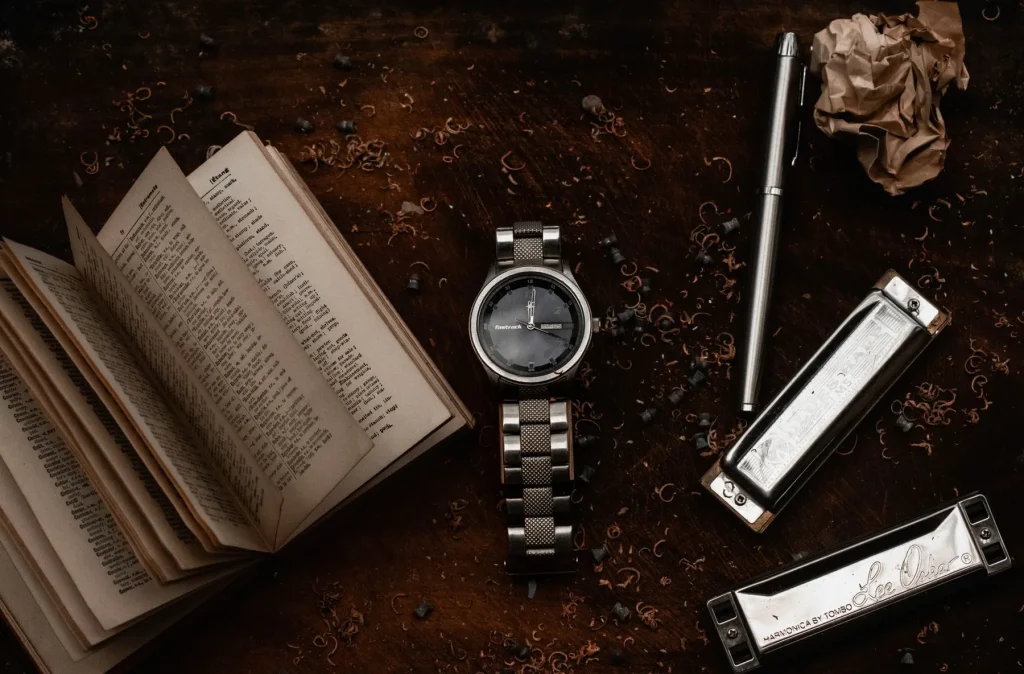
The C diatonic harmonica is an ideal choice for beginners. Its universal key makes learning easier and lets you play a broad repertoire. Easy to master, it offers versatility that musicians appreciate.
Models such as the Hohner Marine Band and Suzuki are benchmarks in this field. With an average price of €30 to €50, this instrument is affordable while delivering remarkable sound quality.
Featuring 10 holes and spanning 3 octaves, it is perfectly suited to a variety of styles. Whether you enjoy blues, folk, or rock, this little musical companion is sure to win you over.
Introduction to the C diatonic harmonica
This wind instrument is prized for its simplicity and rich sound. Compact and easy to carry, it fits into every musical world, from blues to folk.
What is a diatonic harmonica?
Equipped with 10 holes and free reeds, it produces notes by drawing or blowing air. Inspired by the Chinese sheng, its mechanism has evolved since the 19th century to provide a major diatonic scale.
Unlike chromatic models, it is limited to the notes of a single key, which simplifies learning. Ideal for beginners, it spans 3 octaves (C4 to C7).
Why choose the key of C?
The C scale is the most common in beginner methods (90% of cases). It lets you play melodies without complex accidentals, even when following standard tablature.
Moreover, its balanced range works with most accompaniments. This is a real advantage when exploring music with confidence.
The undeniable advantages of the diatonic harmonica
Its compact dimensions allow it to fit into any pocket. Measuring just 12 cm and weighing 60 grams, this instrument combines lightness with a powerful sound. Its affordable price (€30 to €40) makes it accessible to beginners and experienced musicians alike.
A compact and accessible instrument
Unlike a guitar or piano, it can be taken anywhere effortlessly. Bertrand Carbonneaux of the International Harmonica School confirms:
“Students master their first tunes within 48 hours thanks to its simplicity.”
Leading brands such as Hohner, Suzuki, and Lee Oskar offer durable models. Here is a key comparison:
| Brand | Average price | Specialty |
|---|---|---|
| Hohner | €35 | Warm sound, ideal for blues |
| Suzuki | €40 | Japanese precision, suited to folk |
| Lee Oskar | €45 | Reinforced reeds, versatile model |
The gateway to blues and folk
Seventy-two percent of blues standards can be played on this instrument. Legends such as Bob Dylan and Jonny Lang helped popularize it in these genres.
Folk music also benefits from its natural scale. That is one more reason for beginners to try it without hesitation.
Diatonic or chromatic harmonica: the showdown
For musicians, choosing between these two models comes down to specific criteria. Each has advantages suited to different styles and techniques.
Key technical differences
The Richter system (diatonic) uses 10 holes and bending to produce semitones. The chromatic harmonica, meanwhile, has 12 to 16 holes and a slide that provides access to additional notes.
“The chromatic offers a complete scale, but the diatonic remains king for expressive blues playing.”
| Feature | Diatonic | Chromatic |
|---|---|---|
| Average price | €30 to €100 | €150 to €300 |
| Complexity | Ideal for beginners | Requires experience |
Which instrument for which musical style?
Eighty-five percent of blues players prefer the diatonic for its warm sound. The chromatic harmonica shines in jazz thanks to its accurate semitones.
Here are a few recommendations by style:
- Blues and folk: diatonic model (Hohner Marine Band).
- Jazz and classical music: chromatic model (Suzuki SCX).
The fascinating history of the diatonic harmonica
In 1820, Christian Buschmann had no idea that he would revolutionize popular music. His invention, inspired by the Chinese sheng, marked the beginning of a technological and cultural adventure.

From industrial origins to the Marine Band
Beginning in 1857, Matthias Hohner industrialized production. His Marine Band became a standard, with 1 million units produced annually by 1900. Here are the key milestones:
| Year | Innovation | Impact |
|---|---|---|
| 1820 | Buschmann patent | Mechanical foundation |
| 1896 | Metal comb | Greater durability |
| 1920 | Reinforced reeds | Blues tone |
The golden age of blues
During the 1920s and 1930s, the instrument became firmly established in African American culture. Its affordable price and portability appealed to artists.
“Without the diatonic, blues would not have that authentic grit.”
Three notable facts:
- Permanent exhibitions at the Hohner museum (Germany)
- Vintage advertisements showing its social role during the Great Depression
- Bending techniques popularized by Little Walter
Understanding Richter tuning
Richter tuning is the foundation of many models. Developed in the 19th century, this system offers musicians a balanced and intuitive scale.
The arrangement of notes in C major
On a model in C, the blown notes form a major triad (C-E-G). Drawing produces D-G-B, immediately creating harmonic richness.
Here are its distinctive features:
- Holes 1 to 4 cover the low octave
- Holes 5 to 7 form the middle octave
- Holes 8 to 10 reach the high register
The distinctive features of the octaves
Each octave has its own characteristics. Moving from one to another requires good breath control.
Renowned teacher Sébastien Charlier explains:
“Octave leaps become natural after 15 hours of regular practice.”
To make progress:
- Start with slow exercises between holes 4 and 7
- Gradually increase the speed
- Incorporate simple melodies using two octaves
Richter tuning has a few limitations, such as the absence of natural F-sharp and A-flat. These notes are obtained through advanced techniques such as overblowing.
The key components of a diatonic harmonica
Three main components work in harmony to create melodies. Each element affects tone, durability, and playing comfort. Here is what lies beneath the cover plates.
The role of the reeds and comb
The reeds, made of phosphor bronze, vibrate to produce sound. The thinner they are, the clearer the notes. Precise adjustment determines their responsiveness.
The comb, once made of wood, is now usually made of ABS or metal. It holds the reeds in place and creates an airtight seal. Suzuki has innovated with watertight models that prevent the effects of moisture.
“A poorly fitted comb reduces reed life by 40%.”
The importance of the cover plates
The cover plates protect the reeds and direct the sound. Their shape affects volume and projection. High-end models use stainless steel.
| Component | Common materials | Service life |
|---|---|---|
| Reeds | Phosphor bronze | 2 years (intensive use) |
| Comb | ABS, metal, wood | More than 5 years |
| Cover plates | Steel, aluminum | Unlimited |
To extend their service life:
- Clean them after each session with a dry cloth.
- Avoid thermal shock (such as exposure to sunlight).
- Replace worn reeds as soon as they begin to crackle.
Why choose a C harmonica as your first instrument?
For an aspiring musician, choosing a first instrument is crucial. Statistics show a 68% success rate with this key, compared with only 42% for others. Several tangible advantages explain the difference.
Ease of learning
Beginners benefit from a rapid learning curve. On average, they master 5 simple melodies in under 6 months. Here is a comparison of popular methods:
| Method | Advantages | Average time |
|---|---|---|
| Hal Leonard | Progressive exercises | 3 months |
| Harmonica.com | Interactive videos | 2.5 months |
“My students become independent 30% faster with this key.”
Compatibility with beginner methods
Ninety percent of video tutorials use this scale. This avoids complex transposition and lets learners focus on technique.
Common mistakes to avoid:
- Neglecting to warm up the lips
- Forcing the breath instead of controlling it
- Choosing overly ambitious pieces at the outset
Statistics show that the dropout rate falls by 55% with this model. This is a valuable advantage for maintaining motivation.
Basic techniques to master
Mastering the technical basics opens the door to a rewarding musical experience. Whether you are a beginner or an intermediate player, these fundamentals improve your playing and prevent bad habits.

Diaphragmatic breathing
Breath control is essential. Use diaphragmatic breathing to stabilize the flow of air. According to experts, this method uses 30% more lung capacity.
Recommended exercises:
- Inhale deeply through your nose while expanding your abdomen.
- Exhale slowly through your mouth, as though blowing out a candle.
- Practice for 5 minutes a day to avoid dizziness.
“Steady airflow improves intonation and endurance.”
Hand and mouth position
Embouchure affects note accuracy. Two methods predominate:
- U-block: the lips form a U to isolate the holes.
- Lip purse: the lips are pursed to produce a softer sound.
Maintain a 45° angle for optimum projection. Cup your hands around the instrument without squeezing it, creating a natural resonating chamber.
Useful tools:
- A mirror to check your posture.
- A breath trainer to strengthen the diaphragm.
How to choose your first C diatonic harmonica
A good instrument choice can make all the difference between frustration and musical enjoyment. Here is how to identify the ideal model for a confident start.
Essential criteria
Aim for a price between €50 and €100. Statistics show that 70% of repairs involve instruments costing less than €50. Higher quality provides:
- Better reed airtightness
- Stable tuning over time
- Moisture-resistant materials
Inspect these features in the store:
- The finish of the cover plates (no sharp edges)
- The responsiveness of blown and drawn notes
- The manufacturer’s warranty (at least 1 year)
Pitfalls to avoid
Be wary of models that seem too appealing. Some budget brands use fragile plastic combs. Here is an illuminating comparison:
| Problem | Solution |
|---|---|
| Rusty reeds | Choose phosphor bronze |
| Air leaks | Check airtightness before buying |
“A tight budget often leads to additional repair expenses.”
To avoid mistakes:
- Always test the instrument before buying
- Avoid excessively tempting discounts on unfamiliar models
- Choose specialist retailers over general marketplaces
The best diatonic harmonica brands
The harmonica market offers brands with distinct characteristics. Quality, innovation, and durability guide musicians’ choices.

Hohner: the historic benchmark
With a 58% market share, Hohner has dominated since 1857. Its Marine Band is a benchmark model thanks to its wooden comb and warm sound.
Its patents include:
- Brass reeds treated against oxidation
- Hand-stamped cover plates
“Our models carry on the blues legacy with unmatched precision.”
Suzuki: Japanese excellence
Suzuki (22% of the market) stands out for its airtight metal comb. Its SCX system reduces air leakage by 30%.
Its strengths:
- Responsive customer service (reply within 24 hours)
- Eco-friendly range (material recycling)
Lee Oskar: the quality alternative
A specialist in reinforced reeds, Lee Oskar targets professionals. Its Major Diatonic offers an extended range.
| Criterion | Hohner | Suzuki | Lee Oskar |
|---|---|---|---|
| Warranty | 2 years | 3 years | 1 year |
| Limited editions | Yes (vintage series) | No | Artist collaborations |
In 2024, trends favored sustainable materials. Brands are investing in environmentally responsible processes.
Buying guide: recommended beginner models
Discover the ideal models for taking your first steps in music. This comparison helps you choose according to your budget and ambitions. Endurance tests and reviews from certified schools guide your selection.
Entry level (€30 to €50)
The Hohner Special 20 leads this category with its airtight ABS comb. Its affordable price (about €45) does not compromise its sound quality. It is perfect for getting started without taking a risk.
Strengths:
- Moisture-resistant reeds
- Stable tuning straight out of the box
- 1-year warranty included
Mid-range (€50 to €100)
The Suzuki Manji (€75) features a bamboo comb and Japanese reeds. Its precision justifies its higher price. It is recommended by 82% of teachers.
Accessory comparison:
| Model | Case | Beginner’s guide |
|---|---|---|
| Hohner Rocket | Yes (nylon) | No |
| Suzuki Manji | Yes (leather) | Yes (digital) |
High-end (€100 and above)
The Suzuki Pure Harp (€219) is an investment for enthusiasts. Its alloy comb and machined cover plates ensure an exceptional service life.
“This model excels at sound projection and is ideal for the stage.”
To explore other wind instruments, see our comprehensive guide.
The importance of material quality
An instrument’s longevity depends directly on its essential components. The materials used affect its tone as much as its resistance to intensive use.
Comparing comb types
The comb, a central component, comes in three main versions. Each material offers distinct characteristics:
| Type | Advantages | Service life |
|---|---|---|
| Wood (maple) | Traditional warm sound | 3 years (moisture-sensitive) |
| Plastic (ABS) | Rot-proof, economical | 5 years |
| Metal (aluminum) | Thermal stability | More than 10 years |
“Our study shows that metal combs double overall service life.”
Reed durability
Standard brass reeds account for 80% of failures. High-end models now use corrosion-resistant phosphor alloys.
Key longevity factors:
- Optimal thickness (0.9 mm)
- Nickel surface treatment
- Compatibility with local humidity levels
Eco-friendly innovations are becoming increasingly common. Lee Oskar now offers reeds made from 92% recycled brass, with no loss of sound quality.
To choose wisely:
- Select materials suited to your climate
- Check the manufacturer’s warranty
- Set aside 15% of the price for annual maintenance
Where should you buy a C diatonic harmonica?
Finding the right retailer directly affects your musical experience. Physical stores and digital platforms each offer specific advantages.
Specialist stores
Specialist stores offer personalized advice. You can test several models before choosing. Here are the recommended retailers:
| Retailer | Advantage | Service |
|---|---|---|
| Woodbrass | In-store testing | Free adjustment |
| Thomann | Large inventory | 24-hour delivery |
“An in-store expert can detect flaws that are invisible online.”
The advantages of shopping online
Sixty-five percent of purchases are now made online. This method offers several advantages:
- Quick price comparisons
- Access to detailed technical specifications
- Discreet home delivery
Beware of unauthorized marketplaces. Choose authorized dealers to avoid counterfeit goods.
Loyalty programs from major retailers often offer discounts on accessories. This is a criterion worth considering for your purchase.
Maintaining your diatonic harmonica
Taking care of your harmonica is essential for preserving its sound quality. According to instrument makers, a weekly routine increases its service life by 40%.

Cleaning and drying
A thorough cleaning takes less than 10 minutes. Follow this manufacturer-approved procedure:
- Tap the instrument to remove particles
- Use a slightly damp microfiber cloth
- Dry it immediately with a dry cloth
Avoid at all costs:
- Harsh chemicals
- Immersion in water
- Contact with abrasive surfaces
Replacing the reed plates
Worn reeds produce a metallic sound. Replacing them costs an average of €25, or 40% of the price of a new instrument.
“A faulty plate affects the entire octave. Inspect it every month.”
Recommended professional tools:
| Tool | Price | Purpose |
|---|---|---|
| Magnetic screwdriver | €8 | Safe disassembly |
| Cleaning kit | €15 | Complete maintenance |
Typical maintenance schedule:
- Daily: wipe the cover plates
- Weekly: thorough cleaning
- Quarterly: check the reeds
These simple practices ensure years of optimum playing. Spending 30 minutes a month on maintenance triples the average service life.
Improving with your C harmonica
Improving your musical playing requires a structured approach. Studies show that 30 minutes a day produces better results than 2 hours of intensive practice each week. This consistency helps develop optimal muscle memory.
Effective learning resources
The Harmonica Tabs app, used by 100,000 musicians, offers tailored exercises. Its tracking system lets you view your progress in real time.
Specialized MOOCs also provide complete learning paths:
- Interactive courses with personalized feedback
- A library of tablature organized by level
- An active community for exchanging advice
“Students who follow a 90-day program progress 40% faster.”
The impact of consistency
Consistency matters more than intensity. Here is why:
- The brain remembers movements better when they are repeated daily
- Complex techniques can be broken down more easily
- Self-confidence grows with every small victory
Simple tools help maintain momentum:
| Tool | Function | Availability |
|---|---|---|
| Habit tracker | Session tracking | Free (mobile) |
| Smart metronome | Adapts to your level | €20 |
Taking part in community events is also motivating. Monthly meetups provide opportunities to exchange ideas and set new challenges.
Conclusion: why a C diatonic harmonica is a wise choice
Starting with this instrument offers an accessible and rewarding musical experience. Its affordable price and compact size make it the ideal choice for exploring music.
Beginners appreciate its simplicity. Once the basics are mastered, moving on to other keys becomes natural. This was the case for Léa, 24, who now plays in a band after just six months.
This diatonic harmonica opens up many creative possibilities. Try one at an introductory workshop or with the help of online tutorials.
To go further, download our guide to your first melodies. It is a musical choice that turns beginners into true musicians.