
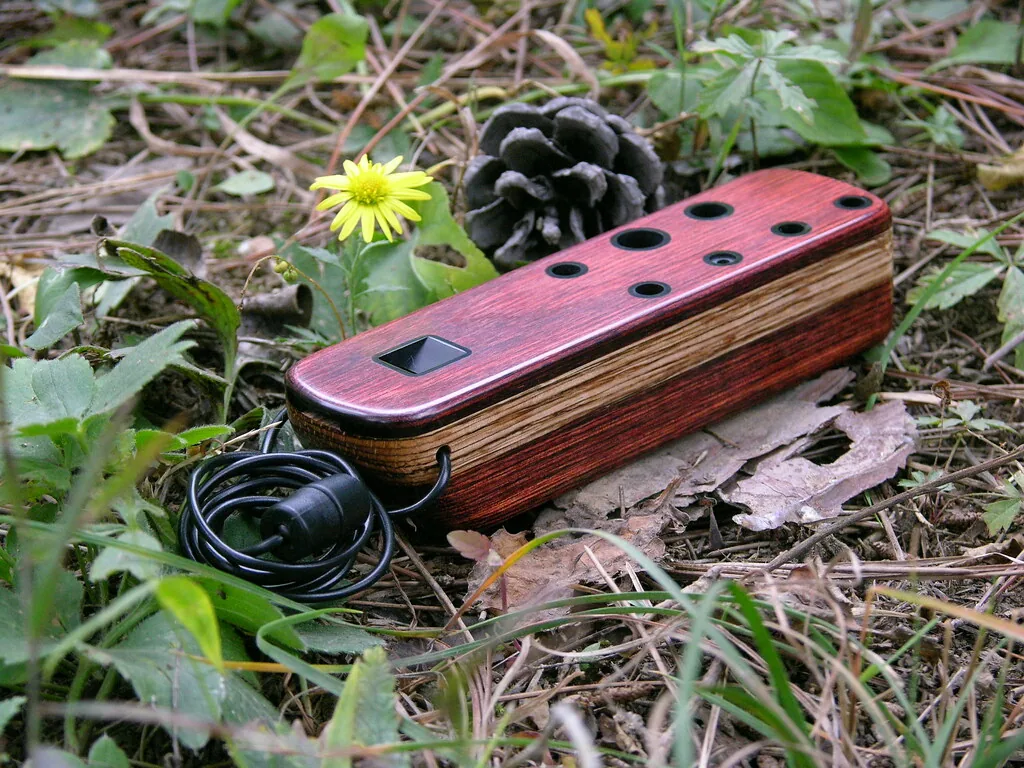
The ocarina is an ovoid globular flute without mechanical keys, classified among the woodwinds. Its name comes from the Bolognese dialect word ucaréṅna, meaning “little goose,” an image associated with its distinctive shape.
The sound produced by this object is often described as melancholic and deep. Its acoustic mechanism is based on the Helmholtz resonator principle, which explains the note’s unique tone color.
In this article, we will trace its development, from Neolithic remains to the place this musical tool occupies in popular culture today. You will discover why this type of wind instrument appeals to musicians and collectors in France and elsewhere.
What Is an Ocarina and Where Does This Instrument Come From?
Its ovoid silhouette conceals a surprising acoustic mechanism rich in nuance.
The ocarina is defined by an enclosed structure that creates a precise resonator. This design produces a round, clear tone. What distinguishes it from transverse flutes is this closed chamber.
In this article, we trace the stages of its development. We move from archaeological finds to current models. Every ocarina retains a sonic identity shaped by its materials and craftsmanship.
- Origin: several geographical centers documented by research.
- Development: technical innovations that improve tuning accuracy.
- Use: an object for music, collecting, and teaching.
| Feature | Effect on the sound | Example |
|---|---|---|
| Material (clay) | Warm timbre | Handcrafted models |
| Material (plastic) | Stable, brighter sound | Educational models |
| Multiple chambers | Extended range | Advanced ocarina |
Etymology and Meaning of the Name
The name itself evokes an image—that of a little goose—which inspired Bolognese craftspeople.

Ucaréṅna, a word from the dialect of Bologna, literally means “little goose.” Giuseppe Donati popularized the term in the nineteenth century as modern models became widespread.
Depending on the culture, this object has been given various names. The Aztecs, for example, called it the huilacapiztli. These names demonstrate the richness of regional approaches.
- Origin of the name: its goose-like shape gave rise to the name.
- Variants: local names reflecting different techniques and uses.
- Sound and range: internal resonance produces a distinctive tone, with a range often narrower than that of a modern flute.
Over the course of a few centuries, its shape influenced public perceptions. This small wind instrument remains associated with a melancholic sound and precise breath control.
The Ancestral Roots of the Globular Flute
Archaeological remains reveal that globular flutes have existed around the world for thousands of years. These objects show that people have sought a rounded sound for millennia.
Neolithic Discoveries
At Runik in Kosovo, an 8,000-year-old terracotta piece demonstrates the antiquity of these forms. In Egypt, fragments dated to 12,000 years ago attest to even older practices.
In China, the xun has been documented for more than 7,000 years. These finds confirm that several peoples fashioned similar objects to produce the same type of sound.
The Role of Ancient Rituals
In many cultures, these globular flutes were used in ceremonies. Mesoamerican models, often shaped like animals, accompanied prayers and offerings.
- Material: clay made it possible to vary the timbre.
- Holes: just a few holes were enough to play expressive notes.
- Function: a connection with the spiritual world, far removed from today’s recreational use.
The technical continuity is striking: the mouthpiece structure and shape still influence the projection and timbre of modern ocarinas. Today’s players and musicians therefore encounter a direct legacy of these ancient types in the current instrument.
The Influence of Mesoamerican and Asian Cultures
Aztec and Chibcha models demonstrate a degree of technical mastery that historians have often underestimated.
In 1527, Aztec musicians played eight-hole ocarinas before Charles V, astonishing the court with the refinement of their performance.
The Chibcha people of Colombia developed highly elaborate pieces between 500 BC and 1536. Some objects were made from precious metals and used in solemn ceremonies.

In Asia, the xun developed along a parallel path. Its deep sound enriched local traditional music.
These discoveries, some of which date back 12,000 years, reveal strong local adaptation. Shapes vary, while range changes according to material and size.
- Spread: regional exchanges and rituals helped globular flutes spread.
- Use: sounds imitating nature, sacred animals, and ceremonial pieces.
- Technique: increased complexity and a broader range enabling sophisticated melodies.
Giuseppe Donati’s Transformation of the Instrument
In 1853, Giuseppe Donati invented the modern ten-hole version in Budrio, transforming the instrument for local musicians.
Its little-goose silhouette and the arrangement of its holes made a chromatic scale possible. Thanks to this design, the piece was no longer regarded as a mere toy.
The Rise of the Budrio Group
In 1864, Donati founded the Gruppo Ocarinistico Budriese to promote ocarinas. The group spread the practice in France and around the world, training players and musicians.
Standardized clay construction ensured a consistent sound. The holes, mouthpiece, and standardized shape improved tuning accuracy and range.
- 1853: Giuseppe Donati creates the modern ten-hole ocarina.
- 1864: the Budrio group is founded to promote the instrument and provide training.
- Impact: its transition into a true instrument enjoyed by many musicians today.
Types and Diversity of Modern Models
The modern range includes different types designed for specific uses, from small pendants to multi-chamber models. Each version affects range, handling, and ease of play.

Transverse and Pendant Ocarinas
Transverse ocarinas often have what is known as a “sweet potato” shape. They offer a range of about an octave and a half, which is ideal for simple melodies.
Pendant ocarinas are smaller and convenient for beginners. Their reduced number of holes makes learning easier.
Multi-Chamber Models
Double- and triple-chamber versions extend the range across several octaves. A triple ocarina can perform complex pieces but requires finer hand coordination.
In 1928, Takashi Aketagawa added two holes to Giuseppe Donati’s version, creating the twelve-hole model popular today.
Choosing Materials
Traditional clay produces a warm timbre. Plastic provides good durability and stable pitch for learners.
| Type | Range | Advantage |
|---|---|---|
| Transverse | About 1.5 octaves | Versatile, easy to play |
| Pendant | About 1 octave | Portable, simple |
| Triple (multi-chamber) | More than 2 octaves | Wide range, demanding |
Learning to Play This Wind Instrument
Mastering air pressure remains essential for producing notes that are in tune and have a beautiful sound. Begin by blowing gently, then gradually adjust the force.
Beginners first practice simple melodies. Learn to cover the holes properly; an incomplete seal harms tuning accuracy.
A tuner helps when practicing scales, especially on a twelve-hole model or triple ocarina. Regular practice strengthens hand dexterity and muscle memory.

Choosing between clay and plastic affects the timbre. Check the quality of the mouthpiece to obtain a rich tone.
- Step 1: breathing exercises and mouthpiece placement.
- Step 2: simple scales while controlling the holes.
- Step 3: work with a teacher or use methods designed by experienced musicians.
Beyond making music, playing reduces stress and sharpens concentration. To learn more about its history and models, read this detailed introduction.
The Ocarina in Popular Culture and Film
Since the 1990s, a melody from a video game has brought this object back to the heart of global culture. The release of The Legend of Zelda: Ocarina of Time (1998) introduced its sound to millions of players.
In film, composers such as Ennio Morricone have used low-pitched versions—the arghilofono—to create distinctive atmospheres. These choices enhance the scenes’ emotional power.
Its appearance in animated series, recordings by groups such as The Troggs, and video games has broadened its audience. As a result, many players discovered the practice and began learning the globular flute.
A cultural symbol, the instrument crosses genres—from folk and rock to film music. Its melancholic timbre often supports the story being told on screen.
To explore its history and origins in greater depth, consult this resource on the ocarina: history and origins.
Conclusion
Its simple shape conceals a wealth of sound that continues to move listeners. The ocarina connects a history spanning thousands of years with modern accessibility. It remains one of the most appealing wind instruments for beginners and accomplished musicians alike.
In this article, we have explored its origins, technical developments, and cultural impact. The different models offer sonic and cognitive benefits: relaxation, memory training, and the pleasure of playing.
If you would like to get started, begin by choosing the right ocarina for your level. You will then discover a musical instrument capable of producing a sound that is both pure and expressive.