
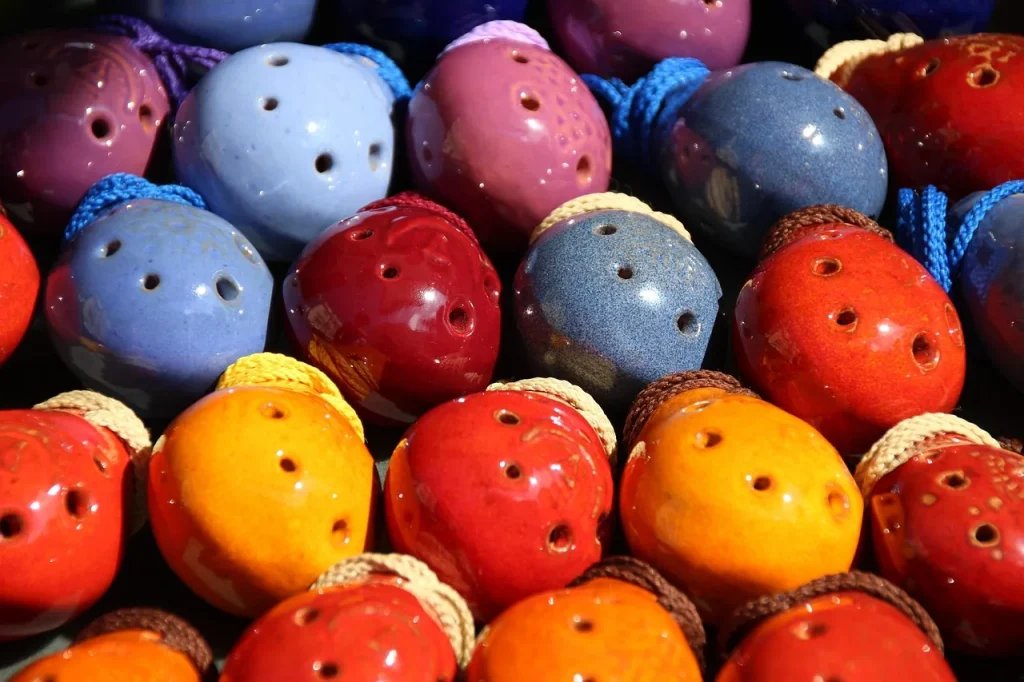
Start here: this simple guide will help you learn a tune in just a few minutes. The ocarina remains an accessible instrument, recommended by Musique de Terre for beginners.
Why choose this instrument? Regular practice improves memory and concentration. One study reports a 37% increase in cognitive abilities among trained beginners.
This guide explains the types of tablature and useful symbols. You will learn to read each note and follow the rhythm and fingerings.
We offer tips for avoiding common mistakes and maintaining good intonation. Coordinating breath and fingers turns practice into a pleasure.
Follow these tips to improve your fluency and accuracy. A ceramic soprano model remains an excellent starting point.
Introduction to the world of the ocarina
From ancient rituals to 19th-century drawing rooms, this instrument has endured through the ages.
The first ocarinas appeared among the Maya and Aztecs. They were used in sacred ceremonies and produced simple but expressive sounds.
In 1853, Giuseppe Donati popularized the ocarina in Europe. His standardization turned it into a recognized musical instrument accessible to the general public.
Shape and materials: the ovoid silhouette remains characteristic. Today, ocarinas are available in ceramic and plastic, each offering different tonal qualities.
Mastering melodies on this instrument provides a connection to a cultural heritage. Its ease of play opens the door to a wide range of repertoire.
To learn more about playing and recommended models, see this practical guide.
| Period | Role | Materials |
|---|---|---|
| Pre-Columbian civilizations | Rituals and symbols | Clay, stone |
| 19th century (Donati) | Spread throughout Europe | Standardized ceramic |
| Contemporary era | Education and recreation | Ceramic, plastic, wood |
Choosing the ideal model for beginners
Your initial choice of instrument affects how quickly you learn. A good model reduces fingering and intonation difficulties from the very first weeks.
Types by number of holes
There are several types of ocarina based on the number of holes. Four-hole versions suit children and complete beginners. Twelve-hole models offer a fuller range and are compatible with most tutorials.
- 4 holes: simple, limited, ideal for very young players.
- 6 to 8 holes: a good balance for learning fingerings.
- 12 holes: recommended—89% of online resources are designed for them.
The importance of key
The key determines the repertoire available to you. A soprano model remains versatile for standard tunes and music education in France.
Materials and quality: ceramic ocarinas offer a warm, rich sound. Plastic versions withstand impacts better and are well suited to travel.
Practical tip: invest in a good-quality model to make progress easier and preserve your enjoyment of playing.
Mastering sheet music and tablature
Reading sheet music changes how you visualize each hole and every breath. Notation indicates rhythm and fingerings. Understanding these signs makes melodies easier to perform and reduces mistakes.
Beginners often use color-coded tablature: 68% find it useful for memorizing positions. Others prefer hybrid formats (sheet music + tablature)—82%—because they provide two ways to read the notes and finger placement.
Deciphering simple tablature
Identify the symbols first: dots, clefs, and bars indicate the exact duration of each note. Braces indicate continuous breath in certain passages.
- Tablature shows which holes to cover for each note.
- Symbols specify duration and rhythm.
- Repeat bars allow you to play the same sequence several times.
- Practice difficult passages slowly, then increase the tempo.
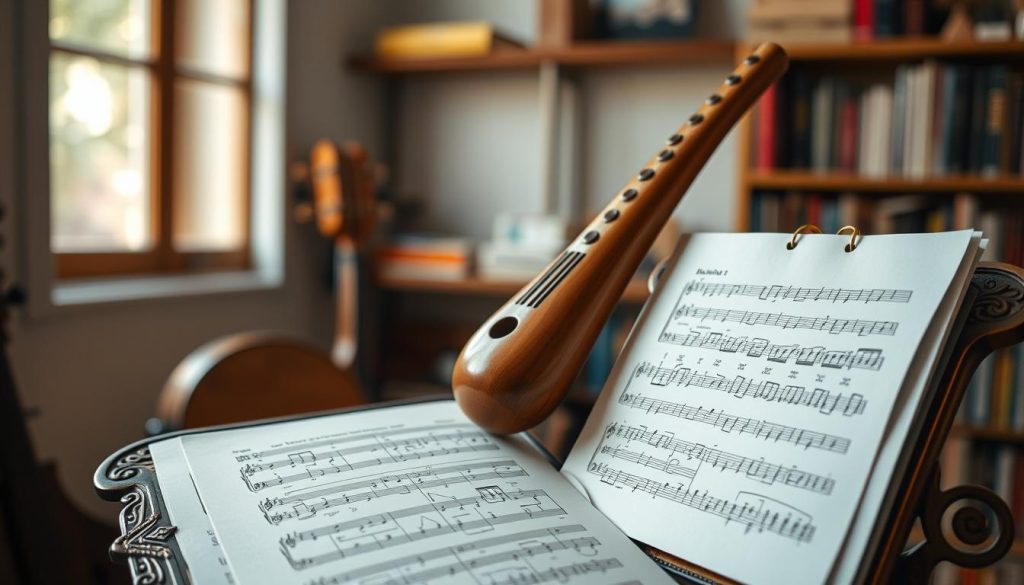
Tip: start with short musical phrases, repeat them three times, then combine them. To explore reading in more depth, see this practical guide to tablature.
Easy ocarina song: ideas for improving
Practicing a short melody helps strengthen coordination between breath and fingers.
Start with a familiar tune, such as “Frère Jacques” or a simple theme. These tunes help you learn fingerings and absorb notation symbols with ease.
By following a progressive method, 94% of musicians quickly reach a good level with Ocarina Method Book 1 and its CD. With regular practice, melodies such as “Scarborough Fair” can be played within three weeks.
Focus on every note and beat shown in the tablature. Avoid beginner mistakes by slowly repeating short passages, then increasing the tempo once your coordination is steady.
A few quick tips:
- Break the theme into short phrases.
- Practice breath control separately, then combine it with the fingerings.
- Review the tablature and symbols before playing.
To explore reading and tablature in greater depth, see this practical guide to tablature. With this approach, progress becomes faster and playing more enjoyable.
Essential techniques for fluid playing
Small adjustments to breathing and phrasing produce a cleaner sound.
Breath control
Breath control prevents wrong notes and stabilizes volume. The warm-air technique maintains steady air pressure on every note.
A simple exercise: blow gently toward a candle without extinguishing it. This method helps you regulate pressure and maintain a steady rhythm.
Managing phrasing
Phrasing organizes the beats and gives melodies meaning. Divide phrases into short segments and breathe between each group of notes.
Review the tablature and symbols before playing a passage. This clarifies the fingerings and reduces mistakes as the speed increases.
Using vibrato
Vibrato adds expressiveness and improves the perceived accuracy of a sustained note.
Begin with a slight modulation of your breath, then combine it with a tiny movement of the fingers. Practice slowly so the vibration remains controlled.
| Technique | Goal | Exercise |
|---|---|---|
| Warm air | Steady air pressure | Candle test—blow without extinguishing it |
| Phrasing | Rhythmic clarity | Divide the melody into short phrases |
| Vibrato | Expression and accuracy | Slow modulation of breath and fingerings |
To discover exercises tailored to the holes and tablature, see this four-hole guide, along with this complementary method devoted to a simple tune: beginner tutorial.
Daily exercises for greater accuracy
Short, regular repetitions quickly improve playing accuracy.
Recommended routine: 15 minutes of scales, followed by 10 minutes of simple pieces. Begin by warming up your fingers and breath before tackling fast passages.
Tip: use a metronome to practice rhythm and beats. Play the phrases shown in the tablature slowly, then increase the tempo in stages.
- Alternate legato and staccato following the Berbiguier method to improve note clarity.
- Practice fingerings daily to master every hole and reduce mistakes.
- Record yourself on video: regular monitoring encourages rapid progress (up to 80% in two months).
Goal: better breath control, more precise notes, and improved coordination. Ten to twenty well-focused minutes each day are enough to produce real progress.
Common mistakes to avoid while learning
Identifying common mistakes speeds up mastery and limits frustration. Many people give up when the key of a score does not match their instrument; this occurs in 35% of cases.
Pre-playing checklist: check your posture, embouchure, tuning, and air pressure. A quick check reduces mistakes by 40%.
Correcting intonation problems
Intonation depends on breath and finger placement. If a note sounds out of tune, check the air pressure first.
- Avoid clicking sounds: lift your fingers about 1 cm above the holes.
- If the key is unsuitable, choose a different score or transpose it.
- Identify rest symbols (quarter rests and half rests) to manage the beats more effectively.
- Mentally visualize complex passages before playing.

To review the fundamentals, see these beginner basics. A short, focused routine quickly corrects mistakes and supports progress.
Additional resources to expand your repertoire
Access to good sheet music completely changes the dynamics of your practice. Finding high-quality tablature sustains motivation and supports progress.
Platforms such as Part’Ocarina offer color-coded tablature and practical guides. They provide a variety of melodies and indicate practice times for each phrase.
Themed collections such as the “Zelda Songbook” bring together 15 famous themes. In just a few minutes, a familiar theme becomes a playable tune on a soprano model.
Beginner packs have a 72% satisfaction rate: structured method, accompaniment CD, and sound teaching quality. They remain useful for discovering different types of printed methods.
“A good guide turns a simple instrument into a tool for expression.”
- Choose clear sheet music to read the notes and rhythm.
- Alternate between themed collections and folk tunes for variety.
- Maintain a short, regular routine to track your progress.
Conclusion
Regular practice turns tentative attempts into confident musical phrases. This journey remains accessible with a good instrument and short exercises.
By reading the tablature and symbols, you learn to interpret the holes and rhythm. You will learn to follow the duration of each note and link simple melodies together.
Progress depends on your ability to correct mistakes and repeat methodically. Share your progress on forums and exchange tips with other players.
Every note you play brings you closer to lasting mastery and renewed enjoyment. For structured guidance, see this beginner’s guide.