
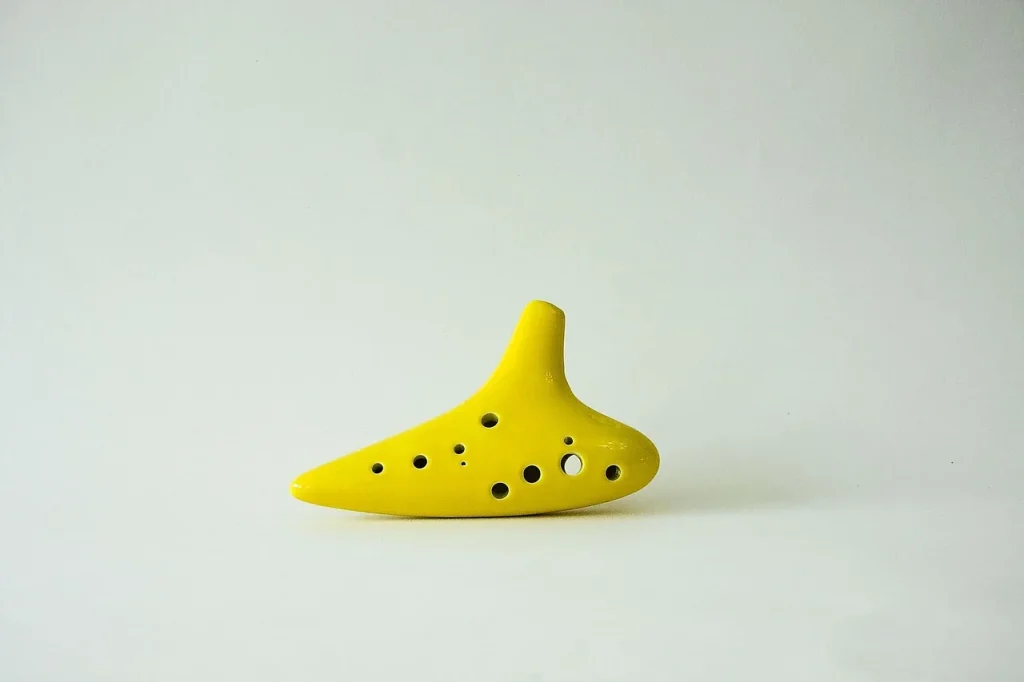
This guide presents a clear path for taking your first steps with this instrument. By following a progressive method, you will be playing tunes in no time.
78% of beginners master a simple tune within two weeks. A 12-hole model in C is easier to handle and speeds up progress.
Our website offers more than 300 scores, including iconic themes from Zelda and the Ballad of the Wind Fish. These resources make learning more motivating.
This guide covers the basics, from fingerings to simple tips for breathing properly. Every melody quickly becomes an accessible and relaxing pleasure.
Why choose the ocarina as a beginner
Easy to carry and simple to play, this instrument appeals to beginners who want to progress quickly.
Lightweight: weighing between 150 and 300 g, the instrument fits in a bag or pocket. This encourages practice on the go and turns short periods of free time into useful practice sessions.
Its popularity has soared on social media: TikTok searches have risen by 450% since 2022. These trends are encouraging many beginners to try the instrument.
“The tutorials are accessible and motivating: breath control comes quickly.”
- Easy to learn: you do not need extensive knowledge of music theory to get started.
- Effective tutorials: STL Ocarina videos have accumulated more than one million views.
- Daily practice: just a few minutes a day is enough to learn a tune.
In short, if you are looking for a portable instrument that is quick to learn and supported by an active community, the ocarina remains an excellent choice for beginners.
Choosing the right model for your first steps
The first ocarina you buy should make learning easier, not harder. A good choice reduces pitch errors and makes reading music more intuitive for beginners.
Comparison of ten-hole and twelve-hole models:
Comparison of ten-hole and twelve-hole models
The 12-hole model covers approximately 85% of available scores. It offers a wider range and makes both high and low notes easier to access.
A 10-hole ocarina remains suitable for simple tunes and players who prefer a more compact instrument.
The importance of key
To save time, choose an instrument in C: this is the standard key used by most methods and scores.
Models in F or G offer a warmer tone. Understanding each instrument’s range helps prevent mistakes when buying.
- Choosing a 12-hole model: versatile and suitable for most scores.
- Key of C: the standard for beginners and teaching methods.
- Example: the Ballad of the Wind Fish works well on a 10- or 12-hole model.
Ocarina Music: Easy Songs to Learn
Effective learning begins with reading your instrument’s tablature line. Tablature uses visual symbols that clearly show which holes to cover and the duration of each note.
It is read from top to bottom and then from left to right. This makes it easier to memorize melodies without first learning standard music notation.
Each line shows exactly which positions to cover. Duration symbols help you keep the correct time within the measure and play the tune accurately.
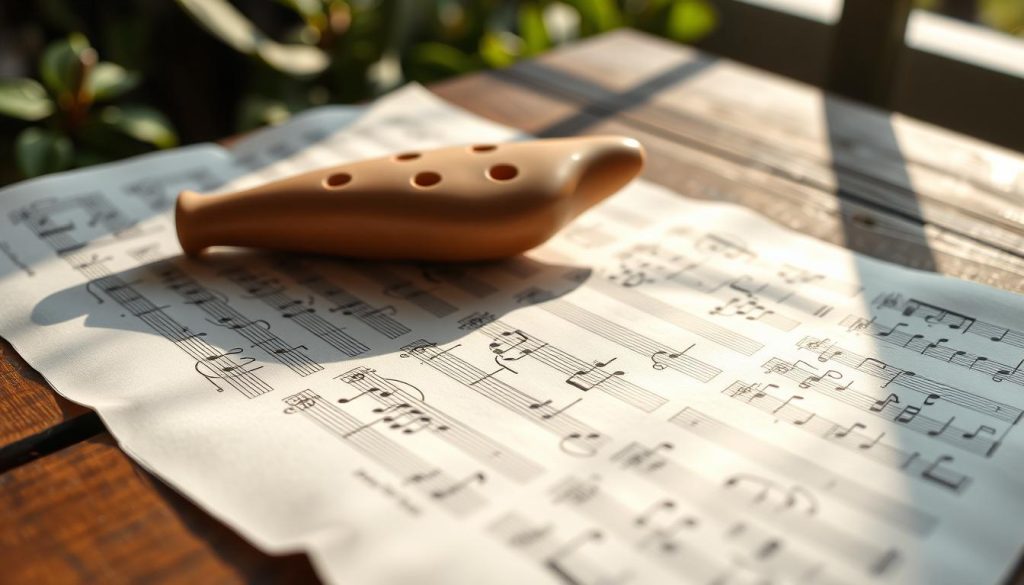
- Visualizing the holes makes a 12-hole model easier to play.
- You can play most popular themes by identifying the required range.
- The method makes learning fun and fast.
“Tablature turns reading into visible actions: it is ideal for beginners.”
For a step-by-step demonstration, consult a complete guide on how to read sheet music and tablature.
Mastering your grip and posture
Holding the instrument naturally improves accuracy and breath consistency. Adopt a relaxed position from your first session to prevent tension and play for longer.
Natural hand position
Keep your palms facing you. This position makes it easier to cover the holes without straining your fingers.
The DocJazz method recommends 15 minutes of scales each day. Note accuracy improves noticeably within three weeks.
- Mastering your grip: essential for consistent intonation on your instrument.
- Breath and fingering: synchronize them to prevent air leaks while playing.
- Ergonomic model: helps you maintain a stable and comfortable posture.
“A relaxed hand produces a purer sound and protects your fingers.”
| Aspect | Practical advice | Expected effect |
|---|---|---|
| Hand position | Palms facing you, fingers curved | Less tension and better hole coverage |
| Routine | 15 minutes of scales daily | Greater accuracy within 3 weeks |
| Breath | Control the attack and pressure | Accurate, stable sound |
| Choice of model | Choose an ergonomic model | More stable posture and lasting comfort |
To explore these techniques further and follow a complete method, consult the practical guide to mastering the instrument as a beginner.
Understanding the basics of breath and intonation
Controlled breath turns every note into a clean, stable sound. Mastering your breath is essential for producing a clear, consistent note on your ocarina.
Begin with diaphragmatic breathing exercises. 92% of players notice a clear improvement after 10 focused sessions. Work in short five-minute sets several times a day.

Use an electronic tuner to check your intonation. In addition, use a metronome to stabilize airflow and keep musical phrases in time.
- Breath: control the pressure to produce a stable note.
- Holes: covering them correctly prevents leaks and wrong notes.
- Metronome: it steadies the rhythm and improves intonation.
“Time spent working on your breath with a metronome ensures steady progress.”
| Goal | Exercise | Recommended duration |
|---|---|---|
| Sound stability | One long, steady breath on a single note | 5 × 2 min |
| Intonation | Check with an electronic tuner | After each session |
| Rhythm | Play a scale with a metronome at 60–80 BPM | 10 min |
For a detailed plan and practical exercises, consult a complete method that guides you step by step.
Deciphering tablature and sheet music
Understanding visual symbols helps you play without spending a long time learning standard music notation.

Reading visual symbols
The symbols indicate which holes to cover and how long to hold each note.
Annotated tablature reduces the learning curve by 40% for beginners.
Differences from standard music notation
Standard notation shows pitch and duration. Tablature shows the physical action.
This makes your instrument easier to play and gives you quicker access to a wider repertoire.
Using hybrid versions
Hybrid versions combine notation and diagrams. They are ideal for checking the range before playing a score.
Tip: follow the duration symbols: 90% of errors come from poor timing.
- Deciphering both tablature and standard scores broadens your repertoire.
- Check the range to prevent inconsistencies in key.
- Use varied resources to learn how to cover the holes accurately.
“Tablature turns reading into visible actions: it is ideal for beginners.”
Coordination exercises for making progress
Practicing eighth notes with a metronome develops steady breath and consistent notes.

Start at 60 BPM and gradually increase to 120 BPM. You can play short patterns and then extend the line across a complete octave.
Hand-eye coordination improves through regular scale practice. Keep a stable grip to remain accurate when changing holes.
- Breath and fingers: synchronize them to produce smooth melodies.
- Use a metronome: begin slowly and speed up once your playing is clean.
- Examples from tablature and a simple score help you memorize symbols and durations.
“Short, repeated exercises build lasting intonation.”
To learn the fundamental techniques, consult a practical guide to basic techniques and, for reusable tablature templates, discover our recommended tablature for beginners.
Essential resources for beginners
To get off to a good start, rely on trustworthy resources organized by level. This will help you choose suitable scores and progress without frustration.
Recommended YouTube channels
STL Ocarina offers hundreds of scores organized by level. It is a wealth of resources for saving time and expanding your repertoire.
David Erick Ramos analyzes 12 movie themes with integrated tablature. His videos show the line and duration, making visual learning easier. MuseScore offers more than 1,200 free scores to supplement your practice sessions.
- Combining standard scores and tablature helps you understand notation without relying solely on music theory.
- Regular practice: make sure you cover the holes properly to improve finger coordination.
- Choosing a suitable model improves accuracy and makes the lines easier to read.
| Resource | Content | Benefit | Access |
|---|---|---|---|
| STL Ocarina | Scores organized by level | Saves time | Videos and guides |
| David Erick Ramos | 12 movie themes | Integrated tablature | Step-by-step tutorials |
| MuseScore | 1,200 scores | Expands your repertoire | Free downloads |
For a guide explaining how to learn a song step by step, discover the guided method.
Correcting common technical errors
Identifying and correcting technical flaws speeds up progress and helps preserve your ocarina’s intonation.
Uneven breath produces wrong notes. Practice short breath-control exercises and use a metronome to stabilize the tempo.
Condensation reduces intonation accuracy by approximately 30%. Before each session, warm the instrument to 22°C. This procedure stabilizes the ocarina and limits shifts in range.
Mentally visualizing the fingering improves accuracy: 73% of musicians make progress this way. Imagine the line and the movement before covering the holes to reduce errors in duration and notation.
- Breath control: sets of 5 × 1 min on one note.
- Use a metronome: start at 60 BPM and then increase gradually.
- Grip: check your posture to prevent air leaks.
“Focused practice quickly corrects technical flaws.”
| Problem | Solution | Effect |
|---|---|---|
| Condensation | Preheat to 22°C | Stable intonation |
| Uneven breath | Exercises and metronome | Tempo and accuracy |
| Incorrect fingering | Visualization and repetition | Fewer duration errors |
To explore breath control further, discover practical guides to breathing techniques.
Conclusion
This final section summarizes the keys to turning your first notes into genuine melodies.
This guide encourages beginners to follow a progressive method, complete short exercises, and use trustworthy resources. By combining practice and patience, intonation improves quickly.
Remember to use tablature and standard scores to expand your repertoire and tackle your favorite themes.
To go further, consult a guide on how to read sheet music and tablature and follow advice from communities such as STL Ocarina.
Make steady progress, share your achievements, and explore different ocarinas to find the one that suits you.