

Learning these tunes is a little adventure that recalls the epic moments of Nintendo’s saga. This short guide aims to give you clear, simple starting points so you can begin without fear.
The flute used in the game features short, repetitive patterns. These phrases are ideal for becoming familiar with breath control, fingering and rhythm.
We will explain why you should begin with six-note themes and how these patterns develop into complete melodies. For more historical and musical context, see this detailed article.
Zelda Music on the Ocarina: Which Songs Should You Start With?
Short musical lines allow for quick and motivating progress. They provide clear patterns for practising breath control and fingering on a 12-hole instrument.
Selection criteria: rhythmic simplicity, useful repetition and patterns that isolate hand positions. These elements help students memorize fingerings without frustration.
Each selected melody encourages steady progress. Begin with short tunes, then add rhythm and ornamentation as you become more comfortable.
| Criterion | Beginner | Intermediate | Teaching benefit |
|---|---|---|---|
| Length | 4 to 8 bars | 8 to 16 bars | Progressive memorization |
| Rhythm | Steady | Varied | Breath control |
| Fingering complexity | Fixed positions | Rapid changes | Skill development |
For additional historical information and analysis, see this article. It provides useful context for the tunes being studied.
Discovering the Magic of the Ocarina in the World of Hyrule
Every note you play reveals a fragment of the kingdom and its legends.
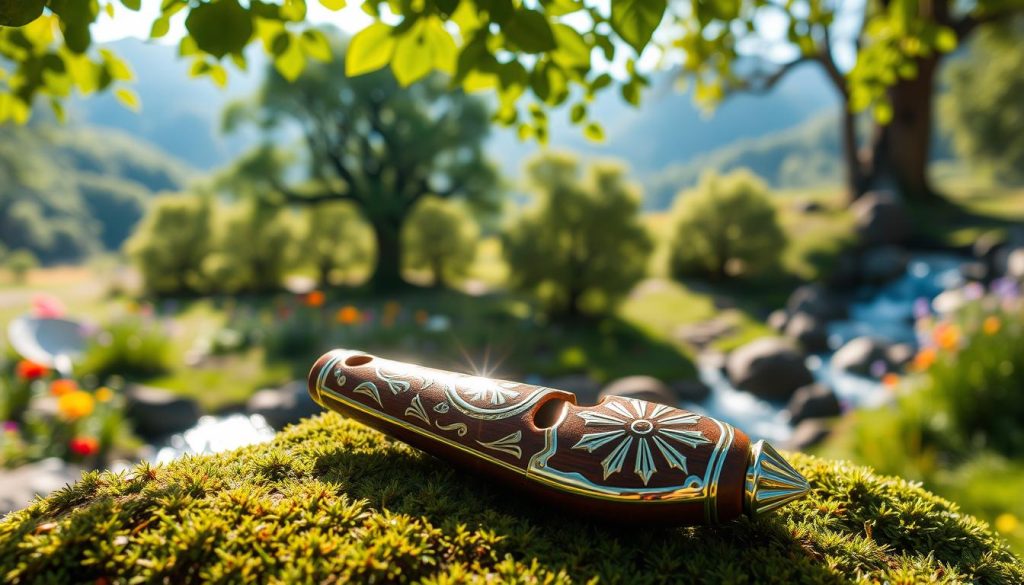
The Ocarina, an Ancient Instrument
A wind instrument with a gentle sound, the ocarina immediately creates a sense of calm.
Its ease of use helps players focus on accurate notes and breath control.
Why Choose Themes from the Saga
The themes support the story: they transport the player to the Temple of Time, the Sacred Forest Meadow or Kakariko Village.
The Song of Healing, for example, transforms spirits into masks and has a direct use in the game.
| Location | Musical function | Practice focus |
|---|---|---|
| Temple of Time | Learning key melodies | Repetition and memory |
| Forest Temple | Listening to timbres | Breath control |
| Kakariko Village | Simple patterns | Note accuracy |
To explore more tunes and delve deeper into these themes, see this list of the best music.
Selecting Your First Melodies
Selecting a few key melodies makes daily practice more motivating. These short tunes provide clear reference points for breath control, fingering and memory.
Zelda’s Lullaby for Gentleness
The lullaby is learned from the princess. Its slow melodic line helps develop expression and accurate intonation.
Saria’s Song for Immersion
Saria’s Song, learned in the Sacred Forest Meadow, immerses the player in the world of the forest. It encourages concentration and smooth connections between notes.
Song of Storms for Practice
The Song of Storms is taught by the windmill man in Kakariko Village. It is ideal for learning to maintain steady breath and notes.
- Song of Time: useful in the Temple of Time for opening passages.
- Epona’s Song: a cheerful tune learned at the ranch to call your mount.
These melodies form a solid foundation for progressing through the game and exploring the castle or cavern. To learn about files and releases, visit this page about the game’s French-language version.
Mastering Breathing and Fingering Techniques
A steady stream of air is essential for producing clear, sustained notes. Breathe from your diaphragm and keep your back straight to generate power without tension.
Precise fingering: place each finger over its hole and check that no air is leaking. To play the Song of Storms or Zelda’s Lullaby, repeat each position slowly before increasing the speed.
Kakariko Village provides a peaceful setting for practising these movements, far from the turmoil of the final battle. The Temple of Time, meanwhile, lets you hear the resonance and adjust the clarity of each note.
“Play with your heart, but practise with discipline: that is how this melody comes to life.”
- Practise high notes in the Ice Cavern to manage breath pressure.
- Test your concentration at Hyrule Castle or in the desert to maintain accurate intonation under difficult conditions.
| Technique | Goal | Recommended location |
|---|---|---|
| Diaphragmatic breathing | Sound stability | Temple of Time |
| Fixed fingering | Note accuracy | Kakariko Village |
| Dynamic control | Expression and nuance | Hyrule Castle / Cavern |
For a practical beginner’s guide to the ocarina, follow progressive exercises and repeat them whenever you want to teleport to a temple or explore a new area.
Adding Zelda Themes to Your Relaxation Routine
A repeated melody becomes a mental cue that invites you to slow down and breathe.

Creating a Soothing Acoustic Bubble
Playing the Song of Storms every morning or evening helps mask distracting noise. This simple practice supports heart-rate coherence and reduces stress within minutes.
The Song of Healing transforms spirits and evokes masks. Practising it near an open window or in the forest enhances the melody’s effect.
Establish a short daily session. Even three minutes a day is enough to foster a lasting sense of inner peace.
“Use the game as a relaxation aid: repeating a melody calms the mind and strengthens the heart.”
- Morning: balance the heart and prepare for the day.
- Evening: release tension after battle or an intense day.
- In nature: play near a temple, beside water or in the forest for complete immersion.
| Use | Benefit | Recommended time |
|---|---|---|
| Song of Storms | Masks noise and encourages concentration | Morning / Evening |
| Song of Healing | Relaxing effect and transformation of spirits | Quiet evening |
| Temple and village themes | Grounding and breath regulation | Before meditation or after battle |
The Influence of Classical Composers on Your Pieces
The simplified compositional approaches of the old masters shed light on how we play these tunes. They provide models of structure and melodic economy that are useful when practising the instrument.

Erik Satie’s Minimalist Approach
Erik Satie, particularly in his Gymnopédies, favours slowness and repetition. These characteristics help players practise sustaining long notes and developing expression.
Maurice Ravel’s Pentatonic Scales
Maurice Ravel uses pentatonic scales in Miroirs (1906) that recall certain equestrian themes. These simple intervals make it easier to develop the ear and improve memorization.
Key points:
- Satie emphasizes duration and simplicity, which are ideal for practising breath control.
- Ravel offers harmonic colours that enrich melodies and rhythmic awareness.
- These models connect the temple of classical music with that of video games, inspiring the learning process.
“Every melody becomes a bridge between music history and legend, revealing an unexpected grace.”
| Composer | Characteristic | Teaching benefit |
|---|---|---|
| Erik Satie | Minimalism, repetition | Sustaining notes, emotional control |
| Maurice Ravel | Pentatonic scales, colour | Harmonic ear, equestrian patterns |
| Folk tradition | Rhythmic repetition | Memorization and fluency |
To explore the lullaby and its fingerings in greater depth, see this lullaby tutorial. It connects classical practices with practical exercises to help you progress in a temple of creativity.
Progressing to More Complex Melodies
Moving on to more demanding tunes requires precise coordination between breath and fingering. Pieces such as the Bolero of Fire (Death Mountain Crater) or the Serenade of Water (Ice Cavern) require greater mastery of transitions and tempo.
The Nocturne of Shadow, learned in Kakariko Village, is a genuine technical challenge. It demands highly accurate finger placement and breath control to keep the notes in tune.
The Prelude of Light, discovered in the Temple of Time, lets you teleport to key locations in the game. The Requiem of Spirit, learned in the desert, opens access to the Spirit Temple and requires endurance.

Practical advice: begin by reviewing the Song of Time and Epona’s Song as foundations. Practise in the Ice Cavern or the Sacred Forest Meadow to refine your ear. Every time you repeat these melodies, you strengthen your memory of the sequences and your ability to succeed at Hyrule Castle during the final battle.
- Practise fast passages slowly before increasing the speed.
- Use quiet places in the village or forest to practise without stress.
- For additional exercises, see this practical tutorial.
Conclusion
Every tune you study leaves a mark that supports your musical progress. Learning Saria’s Song or Zelda’s Lullaby is truly enjoyable. These simple pieces strengthen the heart and mind while refining your breath and technique on the ocarina.
Whether you repeat a melody in the forest, beside the water or in the desert, each setting adds its own colour. Playing in Kakariko Village or in front of the castle changes the atmosphere and your concentration.
Mastery of the sword and the instrument symbolizes the hero’s journey. Between fire and wood, keep practising, persevere and turn every session into a magical moment far from battle.