
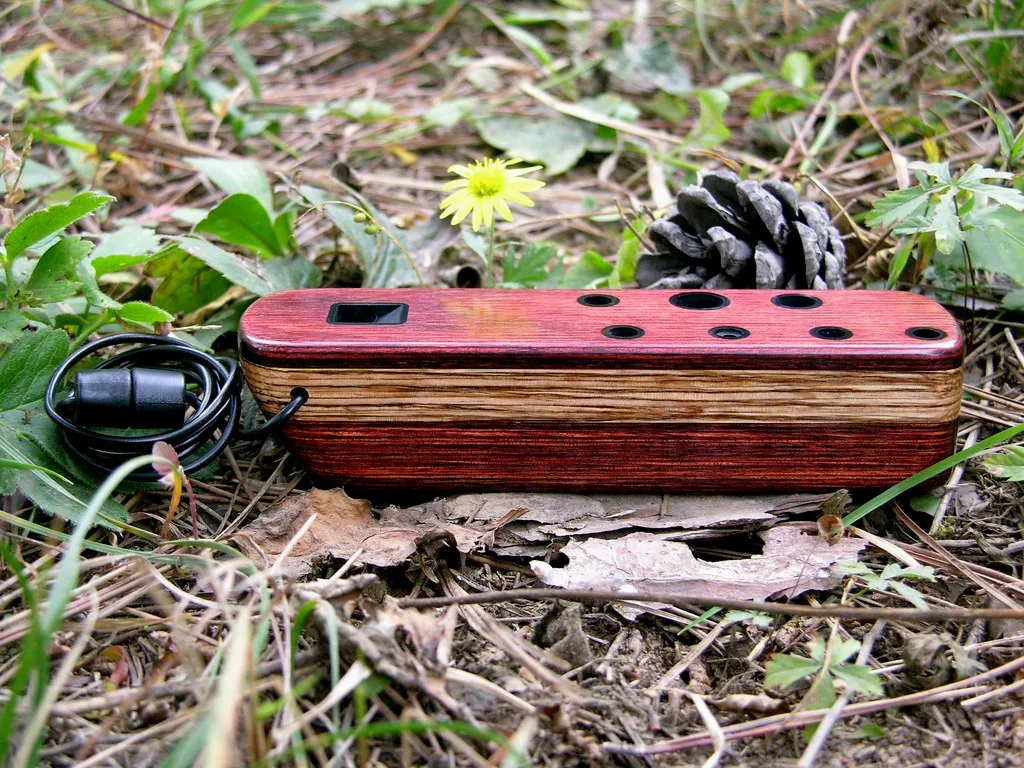
An ancient, simple and captivating instrument. This article provides a clear guide to choosing and playing an ocarina. Its origins date back more than 12,000 years, while the term comes from Italian and was popularized by Giuseppe Donati in the 19th century.
Why does this choice appeal to so many players? Ceramic models offer a warm acoustic quality. Easy to carry, these small instruments suit beginners and experienced musicians alike.
This guide explains the essential criteria: finish, tuning accuracy and available types. For a first purchase, choose a six-hole diatonic model and consult practical resources, such as this beginner’s guide, to make rapid progress.
Understanding the appeal of the terracotta ocarina
This small instrument carries thousands of years of musical tradition within it.
Its lineage dates back more than 12,000 years and can be found in many cultures. This long history explains its cultural value, which attracts enthusiasts of music and ancient objects.
Giuseppe Donati modernized the ocarina in the 19th century by giving it its present form. His work created a unique sonic experience that still appeals to modern players.
Easy to approach as a wind instrument, it allows beginners to play melodies within a few hours. Understanding how air vibrates inside the chamber helps you appreciate the richness of the resulting tone.
- Its historical appeal spans more than 12,000 years.
- The version modernized by Donati remains popular with musicians.
- Its easy handling makes learning quick and rewarding.
To explore how it works and its history in greater depth, consult this detailed guide to ocarinas, which is useful when choosing your first model.
Terracotta ocarina: benefits, sounds and tips for choosing well
Choosing a suitable model begins with understanding how the material affects its tone and durability.
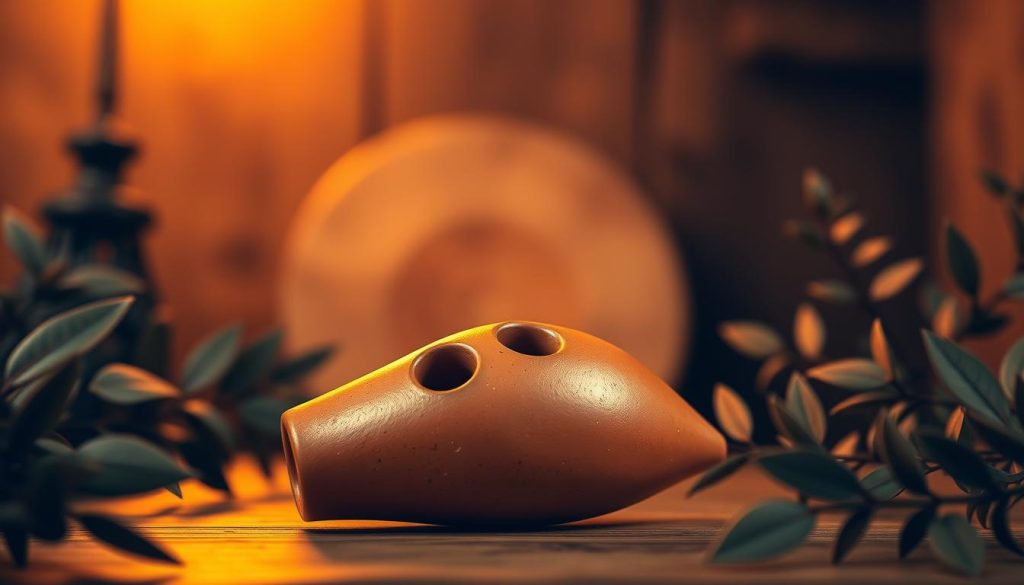
Acoustic qualities
Ceramic provides clear projection and warm resonance. This material produces pure notes and a broad range, making it useful for learning.
The size of the instrument and the precision of its mouthpiece affect playability and intonation. Check its tuning accuracy before purchasing.
Durability and appearance
Terracotta remains vulnerable to impacts, but with proper care it retains its sound quality for a long time.
- Check the material and number of holes to match the complexity of the playing technique.
- Match your budget to the desired level: a good first ocarina can sometimes justify a higher price.
- Controlling the breath through the mouthpiece ensures a stable note and makes learning easier for beginners.
Comparing materials: why choose terracotta
Differences in material directly affect projection and harmonic richness.
Ceramic stands out for its superior clarity and tuning stability. It suits studio use and demanding musicians, despite being vulnerable to impacts.
Wood produces a warm, organic tone. It requires humidity control (45 to 55%) to preserve its quality and tuning stability.
Plastic offers a good compromise for travel or children. Its low price makes it accessible, although its harmonic richness is often more limited.
Ceramic, plastic and wood
- Sound quality: ceramic remains the benchmark for note purity.
- Durability: plastic is best for portable use.
- Expression: wood offers a warm palette but requires maintenance.
| Material | Strength | Limitation | Recommended use |
|---|---|---|---|
| Ceramic | Clarity, stability | Fragile, expensive | Studio, performance |
| Wood | Warm tone | Sensitive to humidity | Expressive performance |
| Plastic | Durable, affordable | Reduced harmonics | Travel, learning |
To refine your choice when buying, compare your intended use, budget and protection against impacts. For a detailed analysis of wood and ceramic, consult this comparison.
Analyzing ocarina types by number of holes
The number of openings on an ocarina directly affects the range of notes you can produce.
Models with 4 or 6 holes are well suited to beginners. They are easy to handle and provide a limited range that makes learning your first tunes easier.
A 12-hole instrument can play across a chromatic range of about 1.5 octaves. This represents around 13 notes, plus accidentals, making it ideal for more complex melodies.
Multichamber ocarinas, designed for advanced musicians, offer an extended range of 2 to 3 octaves. These models require greater mastery of breath and fingering.
How it works: air enters the chamber and vibrates; precisely closing the holes changes the pitch. This wind instrument can play expressive phrases depending on the precision of the player’s breath.
Choosing the right number of holes shapes your progress: start simply, then increase the complexity as your technique develops.
- More holes = more notes and possibilities.
- Fewer holes = quicker learning for beginners.
- Multiple chambers = a broad range for advanced playing.
Sound differences between soprano, alto and bass
Registers vary according to size and range. The difference in size changes the tone color and note range. This affects the role of each instrument in a duet or ensemble.
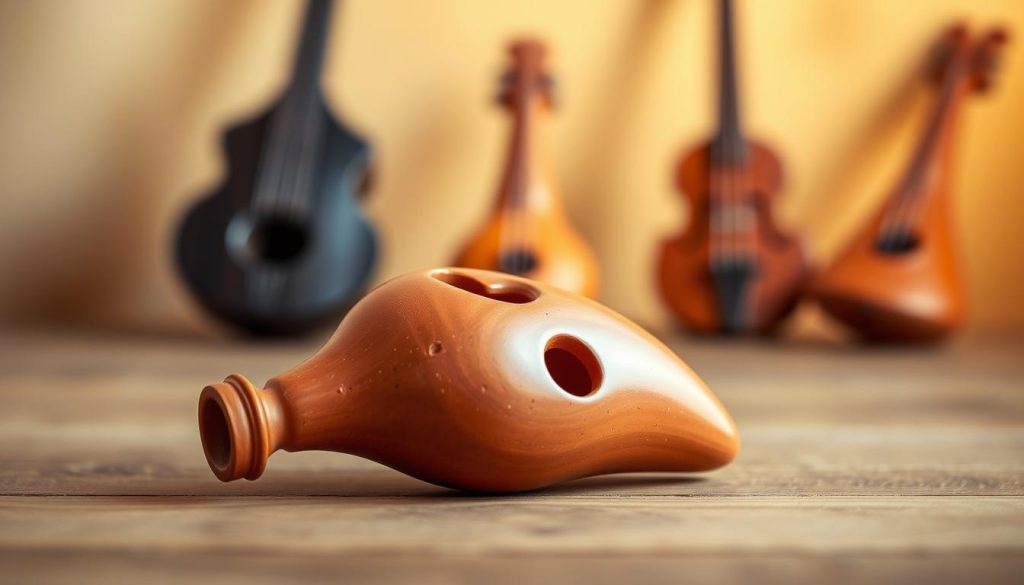
The versatility of the alto
The alto in C is very well balanced. It is a versatile choice for beginners because it can play a broad repertoire.
Its size provides a gentle, forgiving range. The fingerings remain accessible, and accurate tuning is easy to maintain.
The precision of the soprano
The soprano produces higher, more penetrating notes. It requires more precise breath control to stay in tune.
“The soprano demands precision: the slightest change in breath alters the pitch of the note.”
- The range changes dramatically according to the type.
- The soprano emphasizes high, clear notes.
- The bass register provides rich low notes to accompany the music.
- Each type can play melodies according to its range and octaves.
Ergonomic criteria for ideal handling
Hand shape directly affects comfort and precision. Check hand size before any purchase to prevent fatigue while playing.
An instrument that is too wide makes it difficult to cover the holes. This complicates fingering and slows learning. Test your finger reach: each fingertip pad should cover its opening without strain.

- Weight distribution: choose a balance that prevents the hands from twisting.
- Access to the holes: it should remain comfortable during long sessions.
- Supporting surface: the fingers should rest naturally without slipping.
| Criterion | Why it matters | How to test it |
|---|---|---|
| Hand size | Allows the holes to be covered without strain | Simulate the fingering with your hands |
| Weight | Reduces fatigue during practice | Hold the instrument for 5 minutes |
| Shape | Ensures a stable grip | Check the natural position of your hands |
“Testing the grip before buying makes all the difference to your progress.”
To play better, choose a model suited to the musician’s hand size. Small adjustments help the ocarina become a true extension of the hands.
Budget and value for money in today’s market
Knowing how much to spend is the first step toward finding the best value for money. In the French market, a range of 20 to 60 euros is generally enough to obtain a reliable beginner model.
Within this budget, you can find ceramic or plastic instruments suitable for learning. These models provide acceptable quality and a useful range for the first few months.

Identifying reliable brands
Choose recognized brands. STL Ocarina and Songbird Ocarina offer reliable ocarinas with good value for money.
- For beginners, choosing a well-known brand reduces the risk of unstable tuning.
- Models designed for ensemble playing often offer a better range, which justifies a higher price.
- After a few years of practice, investing more opens up broader sonic possibilities.
“A clear budget and reliable brands ensure a stress-free learning experience.”
Tips for starting with your first instrument
Breath quality and posture are the foundations of playing. Breathe from the diaphragm to stabilize the airflow and avoid airy notes.
Articulate each attack with your tongue as though saying “too”. This technique gives the attack greater definition and produces a clear note.
To learn to play, begin with simple scales. Practice slowly, then increase the speed. Regular repetition improves finger dexterity over the holes.
When purchasing, prioritize ease of handling. A good first ocarina makes learning easier and playing more enjoyable.
“Blow gently into the mouthpiece to avoid shrill sounds and produce a pure note.”
- Relaxed posture to support breathing.
- Controlled breath from the diaphragm.
- Clear articulation to shape the notes.
- Regular practice, even for just 10 minutes a day.
This guide is intended for beginners who want to play melodies quickly without sacrificing accurate tuning or musical enjoyment. Set a reasonable budget and prioritize playing comfort to make steady progress.
Maintenance techniques for preserving resonance
The longevity of the tone depends as much on care as on the material. Regular maintenance preserves quality and prevents dirt from accumulating and muffling the notes.
Cleaning after use
Gently wipe the mouthpiece with a soft cloth after each use. This removes moisture and preserves the clarity of the sound.
For more thorough cleaning, use a soft brush and lukewarm water; avoid abrasive products that could damage the surface.
Protection against impacts
Always store your instrument in a padded case. A single impact can crack fragile ceramic or affect its tuning.
Transport: choose a hard case for travel and avoid placing the instrument on a hard floor.
Managing humidity
Wooden instruments require humidity control between 45% and 55% to prevent cracking over the years.
For plastic or ceramic models, storage in a dry, ventilated place is generally sufficient.
“Learning to care for your instrument is an integral part of the musical experience.”
| Action | Frequency | Impact |
|---|---|---|
| Wipe the mouthpiece | After each use | Preserves note quality |
| Thorough cleaning | Monthly | Prevents dirt buildup |
| Store in a case | At all times | Protects against impacts |
| Monitor humidity (wood) | Continuously | Prevents cracks and warping |
Where to buy your instrument without making a mistake
Finding the right retailer can radically change your musical experience. Choose specialist websites or recognized instrument makers to ensure quality and accurate tuning upon delivery.
Beware of overly attractive deals on general marketplaces. They sometimes conceal poorly adjusted instruments or low-quality materials.
Before any purchase, check the return policy, warranty and availability of demonstration videos. A reputable seller provides recordings so you can hear the notes and evaluate the range.
Beginners should choose a shop that offers advice on size, the number of holes and the various types. Good brands provide consistent tuning accuracy and durable materials.
- Knowing where to buy helps you avoid counterfeits and protects your budget.
- A specialist provides a better experience with ceramic instruments.
- Always check the price, but do not sacrifice quality.
“Buying from a professional means investing in reliable sound and lasting support.”
For a practical comparison before your purchase, consult this buying guide, which helps you choose according to range, price and use.
Conclusion
In conclusion, investing time in your choice ensures a satisfying sonic and tactile experience.
Ceramic provides remarkable tonal quality and excellent durability. Its range lets you explore many registers, while its size and holes determine your playing comfort and learning experience.
Consider the price, material and ergonomics before making a purchase. Regular maintenance extends the instrument’s life and preserves its tuning accuracy.
Choose according to your musical preferences. To hear an example of an authentic ceramic sound, listen to this authentic ceramic sound.