
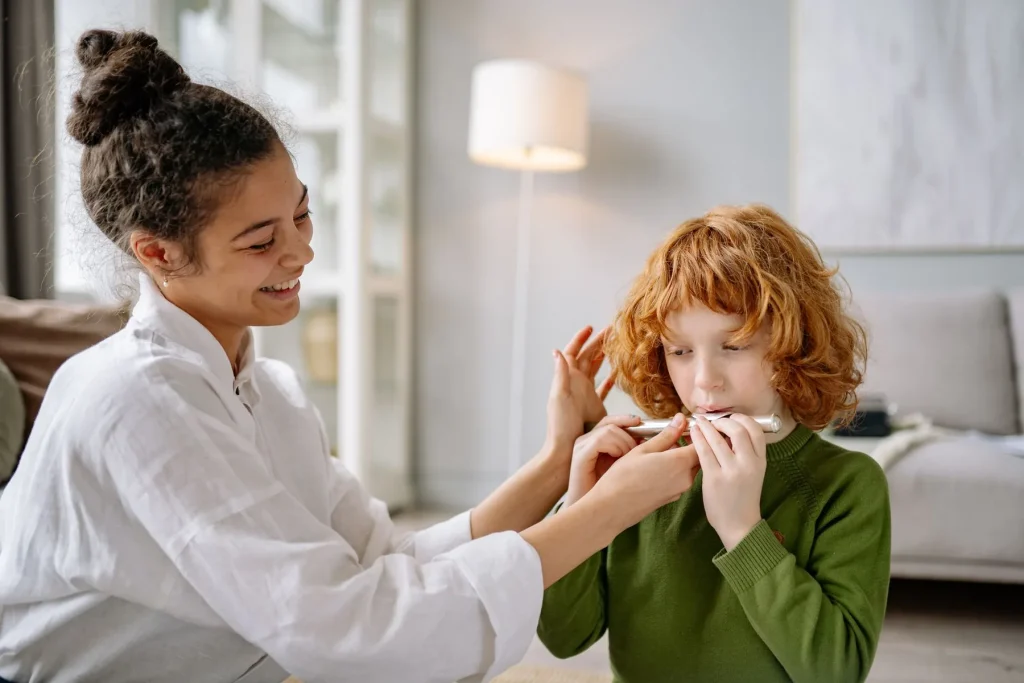
The harmonica is perfect for introducing children to children’s music. This fun instrument is lightweight and easy to carry. It is designed for small hands, ensuring a secure grip.
Its rounded edges make the experience safe and enjoyable. The harmonica stimulates creativity and musical sensitivity. It is an essential tool for music education.
Learning to play the harmonica is easy, making music fun and educational.
Why choose the harmonica for children?
The harmonica is perfect for children because it is lightweight and easy to carry. It is ideal for young musicians, whether at home or while traveling. This children’s musical instrument makes music fun and accessible.
Children can easily learn to play the harmonica. It allows them to discover the world of music without difficulty.
Harmonica prices vary by model:
| Model | Price incl. tax | Price excl. tax |
|---|---|---|
| 4-hole harmonica | €14.90 | €12.42 |
| 10-hole harmonica | €29.90 | €24.92 |
| 24-hole harmonica | €33.50 | €27.92 |
| Set of 12 harmonicas | €161.00 | €134.17 |
Starting music at an early age offers many benefits. Singing or playing the harmonica stimulates the brain. It improves listening, memory, and attention.
Moreover, playing the harmonica helps children manage their emotions more effectively. Music releases hormones that promote well-being. The harmonica is therefore an essential tool for their development.
The benefits of learning the harmonica
Learning the harmonica enriches children’s musical experience. This instrument is easy to handle. It supports cognitive development and awakens the senses.
Children learn to concentrate and recognize different sounds. This strengthens their ability to appreciate music. They are encouraged to explore melodies, supporting their musical awareness.
Cognitive and sensory development
Music education strengthens children’s cognitive development. The harmonica stimulates attention and listening. These skills are essential for processing information.
By playing, children learn to associate sounds with notes. This improves their musical understanding. The harmonica also enriches their musical vocabulary and encourages creativity.
Improving fine motor skills
Playing the harmonica improves fine motor skills. This is due to the coordination between the hands and mouth required to produce sounds. Children learn to control their breathing.
This aspect of music education demonstrates the importance of coordination. It is crucial for making progress in music.

The children’s harmonica: a fun and educational instrument
The harmonica is an educational instrument that is fun for young children. It is lightweight and easy to hold, and measures 13 × 2.8 × 2 cm. It is part of Janod’s Gioia collection, whose prices range from €19.99 to €42.99 and which is intended for children aged 18 months to 3 years.
As an educational instrument, the harmonica helps children learn music. It develops their coordination and sense of rhythm. It is perfect for playing with other children, which strengthens their confidence.
Musical discovery activities such as the harmonica stimulate musical curiosity. They also contribute to children’s sensory and motor development. The harmonica is essential for awakening a passion for music from an early age.
An introduction to the harmonica for beginners
For young musicians, there are harmonica models designed especially for them. Color-coded, 4-hole beginner harmonicas make learning fun. This helps children associate colors with notes, further increasing their motivation.
The 10- and 24-hole models are perfect for those who want to progress. They provide more notes and melodies.
Models suitable for young musicians
Here are the main types of harmonica for beginners:
| Model | Level | Target audience | Features |
|---|---|---|---|
| 4-hole harmonica | Beginners | Children | Color-coded, easy to play |
| 10-hole harmonica | Beginner to intermediate | Children and teenagers | More notes, varied melodies |
| 24-hole harmonica | Intermediate to advanced | Young people and adults | Wide range, creative freedom |
Basic techniques for getting started
To play the harmonica, certain basic techniques must be learned. Children need to know how to hold the instrument and position their lips correctly. They must also learn to control their breathing.
Practicing simple scales and familiar melodies is essential. This strengthens their musical memory and confidence. By focusing on basic exercises, they will progress quickly and enjoy playing the harmonica.

For more information about harmonica models and basic techniques, click here: harmonica for beginners.
Integrating the Montessori method into music education
The Montessori method helps children learn music creatively. It allows young learners to discover the harmonica at their own pace. This helps them become more independent.
Using this method, children learn to play the harmonica through experimentation. They discover different sounds and techniques. This enriches their love of music. Music education and Montessori principles work well together.

The following table presents the benefits of combining Montessori and learning the harmonica:
| Aspects | Montessori method | Music education |
|---|---|---|
| Independence | Emphasis on self-directed learning | Free exploration of sounds |
| Engagement | Interactive activities | Instrument practice |
| Creativity | Encouragement of individual expression | Musical improvisation |
| Social interaction | Collaboration between peers | Group playing |
The harmonica is a perfect instrument for applying Montessori principles to music education. It helps children improve their musical skills and enrich their education.
Children’s music: the harmonica as an educational tool
The harmonica is an important educational tool for children. It helps them learn music and develop a sense of rhythm. Children can therefore express their musical creativity from the outset.
Brands such as Moulin Roty have designed harmonicas with particular attention to safety and quality. This model is intended for children aged 3 and over and measures 13 cm in length. The instrument is made of metal and complies with European safety standards.
It is colorful and appealing, making music education fun for children.

Harmonica workshops give children the opportunity to progress quickly. They can play short pieces and perform in public. This shows that music is a powerful educational tool.
Music enriches learning in meaningful ways. Playing the harmonica stimulates creativity and helps children understand the world more effectively.
| Feature | Details |
|---|---|
| Price | €14.90 |
| Shipping time | 2 to 3 weeks |
| Length | 13 cm |
| Material | Metal |
| Number of holes | 16 |
| Recommended age | From age 3 |
| Brand | Moulin Roty |
| Safety standards | Complies with European safety standards |
The harmonica is an excellent tool for music education. To learn more, discover the Moulin Roty children’s harmonica.
Conclusion
The children’s harmonica is a fun and educational instrument. It entertains children and helps them learn music. They can start playing at a very early age and discover music interactively.
This instrument offers benefits for cognitive development and motor development. It helps children improve their psychomotor skills. Moreover, playing the harmonica can strengthen self-confidence and facilitate social inclusion.
Studies show that the harmonica is useful in education. It contributes to children’s personal development. To learn more, visit this page about the importance of music in education.