
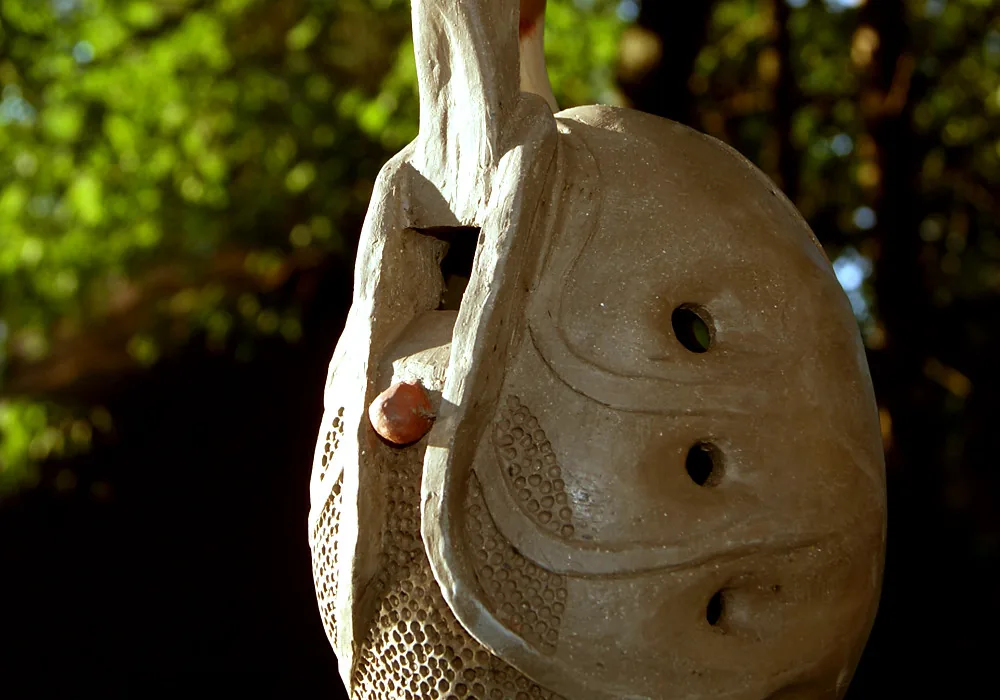
Are you new to the ocarina? This article explains, step by step, how to decipher tablature and play famous melodies. I share more than five years of experience to make learning simple and fun.
The method uses visual cues and hole diagrams to produce each note. Tablature then becomes a clear guide, even for beginners who have never studied music theory.
You will learn to identify which holes to cover, control your breath, and link transitions together. Progress is immediate: just a few exercises are enough to play your favorite tunes.
For a practical exercise and simplified tablature, see this hands-on “Happy Birthday” tutorial, which uses a level-based approach to help you progress quickly: progressive tablature and exercises.
Why learn to read sheet music for the ocarina
Reading sheet music gives you the freedom to play melodies in every style. By mastering this skill, you gain access to a vast repertoire, from classical works to modern themes.
Practical benefit: knowing how to follow sheet music makes it easier to communicate with musicians and strengthens your credibility when collaborating with other instrumentalists.
Independent learning reduces reliance on tutorials and stimulates memory and concentration. These cognitive benefits also have a positive effect on everyday life.
- Use a variety of resources to structure your progress.
- Include regular exercises to correct common mistakes.
- Combine tutorials and practice for lasting learning.
| Goal | Benefit | Recommended resource |
|---|---|---|
| Expand your repertoire | Play more melodies | Targeted sheet music and tutorials |
| Play in a group | Musical communication | Standardized sheet music |
| Progress independently | Better memory | Regular exercises |
To go further, read this detailed guide, which offers suitable resources and exercises.
Zelda Ocarina Tabs: How to Read Them Without Knowing Music Theory
Start by identifying the visual diagrams corresponding to each finger position. These drawings show exactly which note to play and which fingering to use. Tablature simplifies reading: one symbol = one position.

The basics of notation
Ocarina notation uses boxes or circles that show which holes to cover. Each symbol corresponds to a fingering. This makes the traditional staff unnecessary for a beginner.
- Clear: one symbol = one note.
- Precise: the tablature also indicates the required breath pressure.
- Practical: you reproduce the melody without complex theory.
The role of rhythm
Rhythm determines the length of each breath and the separation between notes. By following the rhythm, you avoid choppy playing and give each tune greater expression.
“Koji Kondo structured his themes for Ocarina of Time very clearly, making them easier for players to learn.”
In this article, we will see how to apply these principles to progress quickly.
Understanding simple tablature for beginners
Simple tablature turns a drawing into a guide for each finger position.
These diagrams represent the instrument and show which holes to cover. Black = covered, white = open. This visual representation makes learning easier and lets beginners read the music immediately.
The most common ocarina has 12 holes. Each opening changes a note’s pitch. You therefore need to pay close attention to the fingering and the position of your fingers.
- Read from top to bottom, then from left to right, as you would a book.
- For each box, the tablature shows the exact fingering to use.
- Through repetition, you develop muscle memory that makes performing a melody easier.
There are three types of documents for this instrument: simple tablature, hybrid tablature, and traditional sheet music. When starting out, choose tablature; it remains the most accessible way to begin playing quickly.
For a practical guide and step-by-step examples, see our tablature tutorial.
The distinctive features of adapted traditional sheet music
Traditional notation provides a precise language for transcribing a melody and its rhythm for a monophonic instrument.

A 4/4 measure is often used as the foundation. It clearly defines the length of rests and notes. A whole note lasts four beats; a quarter note, one beat; eighth and sixteenth notes have shorter values.
Deciphering duration symbols
Key points:
- Traditional ocarina sheet music remains a simplified adaptation: you can play only one note at a time.
- Beams group eighth notes together to make them easier to read without changing their total duration.
- A note’s position on the staff indicates its pitch and must correspond to the fingering of your wind instrument.
- Breath must be controlled precisely: poor breath management makes the score difficult to perform.
“Respecting rhythmic values is essential to preserving the musical intention.”
To learn more, consult a practical resource about adaptations and exercises: adapted sheet music and exercises.
Mastering hybrid tablature to improve
Hybrid tablature combines visual cues and notation to make every melody more accessible.
This approach combines the precision of sheet music with the clarity of tablature. For beginners, it is an ideal tool for associating each note with a hole diagram.
Benefit: you learn musical structure without being overwhelmed by theory.
Finding these documents can be inconvenient, but the learning benefits make it worthwhile. The adjustment period is shorter, allowing you to play complex themes sooner.
By mastering this tablature, you will be able to convert an entire score into fingerings and play any melody with confidence.
- Visualize each note with a hole diagram.
- Follow the staff for rhythm and duration.
- Progress more quickly toward independent reading.
| Strength | Impact | When to use it |
|---|---|---|
| Visual clarity | Faster learning | Beginners and quick refreshers |
| Note-to-fingering correspondence | Better memorization | Transcribing sheet music |
| Manageable complexity | Play long melodies | Movie and video-game themes |
To find examples and exercises, consult an ocarina tablature guide or explore complementary visual approaches in an illustrated guide.
The importance of key and the number of holes
The key and number of openings directly determine what your instrument can play.

Differences between keys
The common keys are C, F, and G. Each key requires precise fingerings to produce the correct note. Using the same finger movements, an instrument in C will not produce the same pitches as a model in G.
Choosing the right model
The 12-hole ocarina is the most widespread. It offers enough range to play much of the repertoire and makes it easier to use published tablature.
- Your ocarina’s key affects how faithfully you can reproduce the melody.
- The number of holes affects the range of available notes.
- For beginners, choose a model in C; this makes finding sheet music easier.
Before playing, always check the key specified by the tablature. For additional practical help, consult this beginner’s guide, which helps you choose the right instrument and understand fingerings.
Tips for improving your breath control and fingering
Improving your breath control and fingering turns a hesitant melody into a smooth phrase. This short guide presents simple techniques and routines that are easy to incorporate.
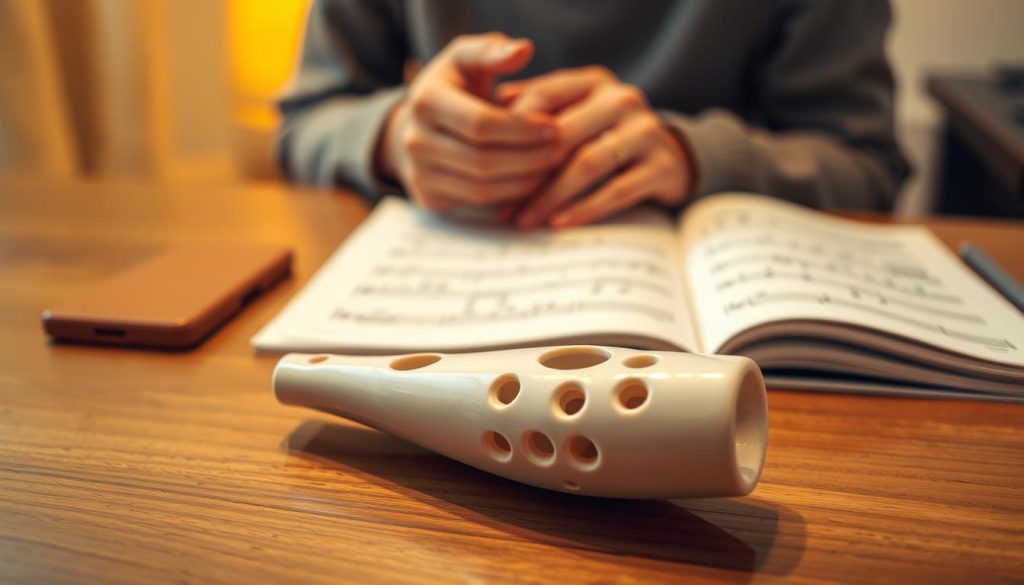
Breathing exercises
Practice diaphragmatic breathing exercises for five minutes a day. Inhale slowly, then exhale while controlling the pressure.
Tip: avoid choppy breathing; your phrasing will become steadier.
Finger placement
Rest your fingers gently so they cover the holes completely. Excessive pressure causes leaks and wrong notes.
- Practice fast scales for ten minutes to improve your agility.
- Focus on clean transitions between notes.
Using a metronome
A metronome is essential for improving rhythm. Start slowly, then increase the speed without sacrificing sound quality.
“Adjusting the air pressure changes everything: more expression, less uncertainty.”
For structured tutorials, follow David Erick Ramos or STLocarina: their videos are especially helpful for beginners learning to coordinate breath, fingering, and rhythm.
Maintaining your instrument for lasting tuning accuracy
A few small habits after each session prevent moisture buildup and ghost notes.
After each use, wipe the inside with a microfiber cloth to remove residue. This prevents condensation in the holes and preserves the accuracy of every note.
For ceramic models, avoid thermal shock. Keep your ocarina somewhere with a stable temperature between 15°C and 25°C to preserve its structure and accuracy.
Targeted cleaning: if you notice moisture in the holes, use a dry swab or pipe cleaner to remove deposits. Weekly maintenance is enough for ceramic instruments, while monthly cleaning is sufficient for plastic models.
During practice, use a metronome to check that your airflow and pressure remain constant. Stable technique helps maintain the instrument and keeps its notes accurate.
- Store the instrument away from moisture and major temperature changes.
- Regularly check the condition of the holes and the instrument’s surface.
- By caring for your ocarina, every score and tablature will remain clear.
Conclusion
In conclusion, the visual method and regular practice make learning accessible to everyone. An ocarina lets you hear each note immediately and progress without complex theory. This approach especially helps beginners stay on track.
Practice in short sessions, compare several tablatures, and check the holes to improve your tuning accuracy. Use suitable tutorials and models to gain confidence and precision.
Also explore more complete scores and explanatory videos. To expand your resources, consult our tablature guide, which brings together exercises, tablature, and practical advice.