
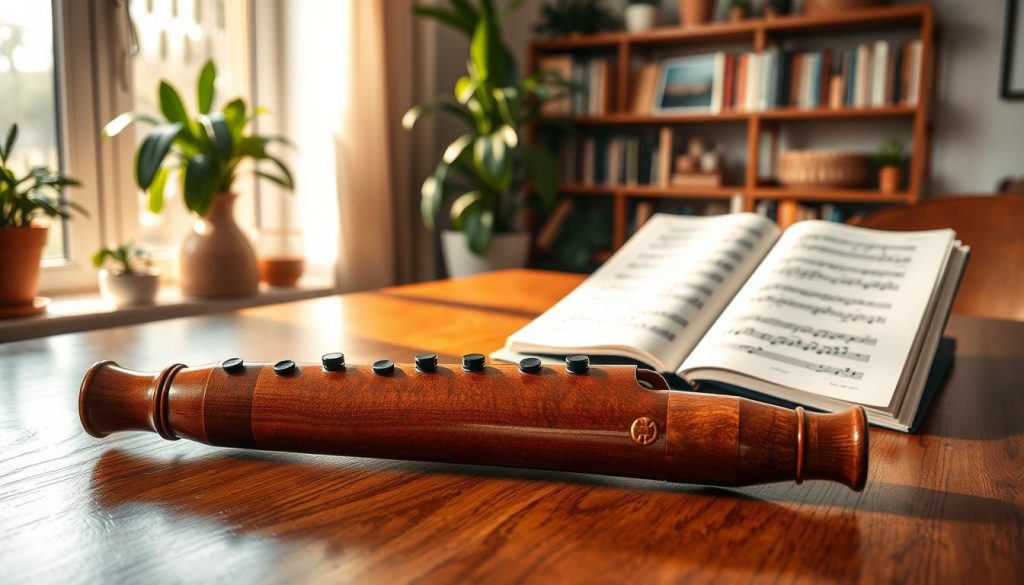
The ocarina is a wind instrument that requires precise fingerings to reproduce each melody faithfully.
This article guides you step by step through understanding the basics and reading tablature with confidence.
I draw on more than five years of experience to share a simple method.
You will learn to identify the holes, control your breath, and memorize patterns.
Reading tablature progressively makes this instrument easier to learn.
To explore the process step by step, consult this useful resource: how to read ocarina tablature.
With just a few minutes of practice each day, even a casual player can improve.
Follow the steps presented here to develop greater fluency and expression.
Why learn Zelda melodies on the ocarina
Playing iconic melodies turns practice into an emotional experience.
The lullaby, composed by Koji Kondo in 1991, left its mark on video game history. Its ocarina version became more popular after 1998, when the series introduced the instrument in a major game.
Learning this melody creates an immediate connection with its musical universe. Fans recognize it from the very first note, sometimes after hearing it thousands of times.
Why follow this guide:
- Understand the structure of a simple melody.
- Play the lullaby accurately and expressively.
- Combine technique and interpretation for an authentic performance.
Mastering these tunes makes playing genuinely enjoyable. In France, many amateur musicians use them to reconnect with their personal video game culture.
“This melody remains an essential classic for gamers and musicians.”
Zelda sheet music for ocarina: tips before you play
Choosing a suitable ocarina makes learning easier and immediately improves intonation.
Choosing the right instrument
A 12-hole model remains the most commonly recommended option for beginners. It covers most available sheet music and lets you tackle several melodies without changing instruments.

Checking the key
Before starting this melody, check the key of your instrument. An incorrect key throws off everything that follows and makes the notes inaccurate.
Also make sure that the holes are fully covered. An air leak changes a note’s pitch and makes playing more difficult.
| Criterion | Recommendation | Effect on playing |
|---|---|---|
| Number of holes | 12 holes | Lets you play most sheet music |
| Key | Tune beforehand | Accurate notes |
| Seal | Check that the holes are fully covered | Clear, precise sound |
| Practice | 10–15 min/day | Progressive mastery of the lullaby |
- Follow a simple guide to reading sheet music.
- Practice each note slowly, then speed up.
By practicing regularly, you will turn isolated notes into fluent, expressive playing.
Understanding the different music notation systems
Notation systems for wind instruments provide precise cues for every note and breath.
Simple tablature is read from top to bottom and then from left to right. Each diagram corresponds to a note that must be held for a certain length of time. Vertical bars or spaces indicate rests or moments when you should breathe.
Unlike a piano, this instrument cannot play simultaneous chords. That makes sheet music easier for beginners to read.
Deciphering simple tablature
The basics depend on the symbols: each shape defines the duration of a note. Learn the note values (quarter note, half note, and so on) and count the beats.
Practicing sight-reading allows you to interpret new pieces and multiple passages quickly and confidently.
Learning these systems is an essential part of your training; it opens the door to thousands of pieces.
- Read slowly, then speed up.
- Identify the rests so you can breathe more effectively.
- Compare different scores to understand their variations.
| Element | Meaning | Effect on playing |
|---|---|---|
| Direction | Top → bottom, left → right | Natural reading order for the notes |
| Bars/spaces | Rest or breath | Better tempo management |
| Values | The note’s shape indicates its duration | Accurate timing and musical phrasing |
| Polyphony | Not applicable (one sound at a time) | Emphasis on the melody |
For tablature and practical examples, consult a reference chart and a simple tutorial such as this tablature resource, or see a suitable melody guide here.
Mastering breath control and fingering
Air management affects every note and musical phrase on this instrument.

Breath control
Breathe slowly and control the airflow. A steady breath produces a clear sound, especially on high notes.
Practice short phrases and observe the rests. This helps stabilize intonation and dynamics.
Precise fingerings
Clean fingerings are the foundation of a fluent melody. Cover every hole completely to prevent air leaks.
Dividing the piece into small sections makes it easier to connect the notes and reinforces muscle memory.
Using vibrato
Vibrato adds emotion to this melody without departing from the tablature. Begin with a slight variation in airflow, then adjust it.
- Tip: play the sheet music slowly, then increase the tempo gradually.
- Compare passages adapted from piano and adjust your breath for each note.
Control of breath and fingering turns reading into genuinely expressive playing.
| Element | Action | Effect |
|---|---|---|
| Breath | Controlled breathing | Clear sound, stable intonation |
| Fingering | Cover the holes cleanly | Smooth transitions without leaks |
| Vibrato | Slight variation in airflow | Expression and warmth |
| Segmentation | Practice in sections | Better memorization |
Exploring the series’ iconic themes
Iconic themes offer a range of melodies that are ideal for practicing expression and fingering. There are now 16 alternative tablature versions of the lullaby, evidence of its immense popularity.
As you explore the games’ repertoire, you will discover secret passages and tunes that have marked generations. The magic often lies in simplicity: a single note can evoke a memory.

Consult the available sheet music to vary the themes, from Epona’s Song to the Song of Time. Every time you return to these melodies, you strengthen your connection to their musical universe while improving your dexterity.
Recommended practice: work through one passage slowly, then follow it with the closest alternative version to vary the fingerings.
“These simple tunes turn learning into enjoyment and shared memories.”
- Alternate between sheet music and tablature to understand each note more clearly.
- Try several versions to find the one that suits your level.
| Element | Advantage | When to use it |
|---|---|---|
| Original version | Melodic authenticity | Faithful performances |
| Alternative version | Simplified fingerings | Beginners and variations |
| Annotated sheet music | Accurate notes | Rhythmic and technical practice |
| Free transcriptions | Creative adaptation | Interpretation and improvisation |
To expand your library, explore this selection of resources and scores featuring the best music.
Establishing an effective practice routine
A 30-day practice plan quickly improves accuracy and musical memory.
Begin every session by tuning: set a tuning reference to 442 Hz and check the intonation of every note. This stabilizes the tone and makes breath control easier.
Improving with daily goals
Set yourself three short goals: warm-up (5 min), practice a difficult passage (10 min), and read suitable sheet music (10–15 min).
- Days 1–10: learn the basic notes and become familiar with the tablature.
- Days 11–20: connect the slow passages while increasing the tempo.
- Days 21–30: play the complete melody and vary the dynamics.
Practical advice: include an exercise on the piano or another instrument to develop a better sense of timing and melody. Regularly practicing selected sheet music helps correct air leaks and complex fingerings.
Consistency turns repetition into mastery.
| Element | Duration | Goal |
|---|---|---|
| Warm-up | 5 min | Breathing and note accuracy |
| Focused practice | 10 min | Difficult passages, tablature |
| Reading | 10–15 min | Play this melody fluently |
For simple scores and guided progress, discover easy sheet music to accompany this program.
Conclusion
In summary: regular practice turns a sequence of notes into a lively, recognizable melody.
Mastering the ocarina remains a rewarding experience that connects you with the magic of video game themes and traditional tunes.
This article has given you tools for deciphering each tablature and practicing every note methodically.
Persevere: by repeating the same notes and varying your exercises, you will become more technically comfortable and move toward an expressive performance.
To complement your practice, consult a useful reference containing scales and tablature through this link: reference sheet and tablature.