

This guide takes you step by step through learning an iconic theme from the series. It is intended for beginners and experienced musicians who want to turn their instrument into a vehicle for emotion.
In this article, we explore the fundamental techniques for mastering your ocarina and faithfully reproducing the most famous themes. The method is structured to make progress easier from the very first notes.
Learning requires patience, but our clear approach makes the effort rewarding. You will find practical advice, simple exercises, and reference points for improving your accuracy and expressiveness.
Follow our tips to perfect each melody and discover the joy of playing themes that have shaped video game history. The detailed plan will guide you toward quick, tangible results.
The Musical World of Zelda and the Ocarina
The series’ soundscape turns simple tunes into genuine keys to the story. Since Ocarina of Time (1998), the ocarina has served as a narrative tool for manipulating the game world.
The Narrative Importance of the Songs
Each tune plays a specific role. The Song of Time and the Song of Storms alter water, open passages, and trigger events.
Places such as the Temple of Time and Kakariko Village take on greater meaning when these melodies resonate. The short themes act as emotional landmarks for the player.
Koji Kondo’s Legacy
Koji Kondo composed simple, memorable motifs such as Zelda’s Lullaby and Saria’s Song.
This legacy turns the ocarina into an essential instrument for touching fans’ hearts. The melodies evoke the series’ shadows, woods, windmill, and spirit.
| Function | Example | In-game effect |
|---|---|---|
| Opening passages | Song of Time | Unlocks doors and changes time |
| Changing the environment | Song of Storms | Stirs the sea and reveals secrets |
| Emotional landmarks | Zelda’s Lullaby / Saria’s Song | Strengthens immersion and the player’s memories |
Preparing Your Instrument and Playing Posture
Good technique begins with a stable instrument and controlled posture.
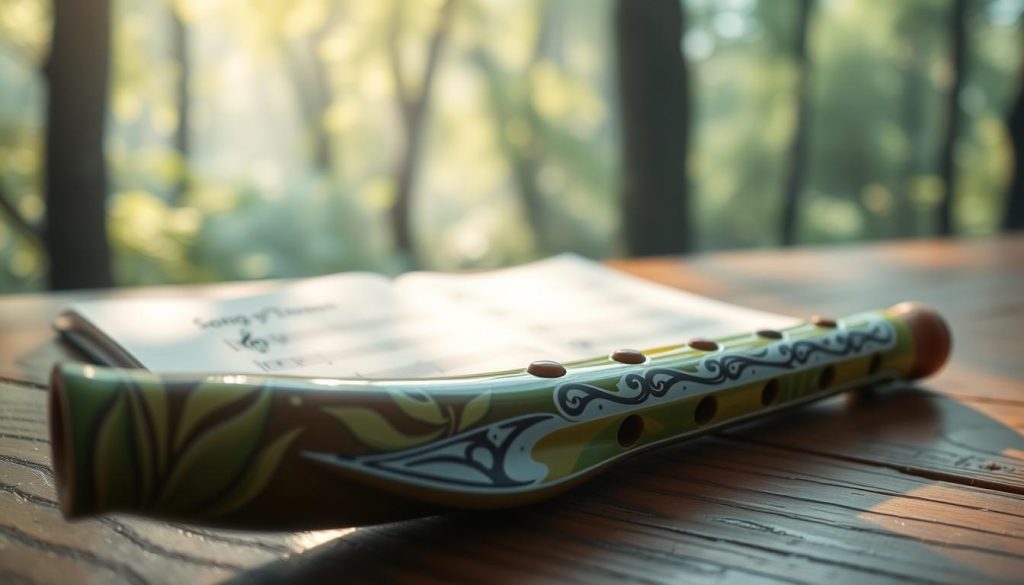
Choose a 12-hole ceramic ocarina for reliable intonation and a clear tone. This type of instrument makes fingering practice easier and helps you progress more quickly.
About 68% of wrong notes come from poor finger placement. Cover the holes without pressing too hard to prevent air leaks and preserve the accuracy of every note.
Keep your back straight: posture regulates your breath. A steady air column helps you sustain long notes and stabilize your playing.
Train your breathing by repeating simple tunes, such as a lullaby, before tackling complex themes. This builds control and confidence.

| Aspect | Recommendation | Effect |
|---|---|---|
| Type | 12-hole ceramic ocarina | Stable intonation, clear tone |
| Finger placement | Cover the holes without pressing too hard | Fewer leaks, better notes |
| Posture & breath | Straight back, controlled breathing | Steady air column, stable sound |
| Maintenance | Empty out moisture after every session | Longer life, better sound quality |
To explore the basic techniques in greater depth, consult our detailed guide and improve your playing quickly.
How to Play a Zelda Melody on the Ocarina
A good instrument makes fingering and sustaining notes easier. Choose a model capable of covering every required pitch.
Choosing the Ideal Ocarina
Choose a 12-hole instrument: it provides the range required for the A ▼ ▲ A ▼ ▲ pattern learned from Guru-Guru at the windmill in Kakariko Village.
This theme, associated with the Song of Storms, is used to drain the well and open routes in the Temple of Time. Accurate intonation is crucial to achieve these effects.
Consistent fingering ensures clean transitions between notes. Work slowly, then increase the speed to stabilize your airflow and pulse.
| Feature | Recommendation | Practical effect |
|---|---|---|
| Type | 12 holes | Full melodic range |
| Material | Ceramic or resin | Stable tone, easy maintenance |
| Fingering | Precise placement | Clear notes, fewer leaks |
| Use | Rhythmic patterns (A ▼ ▲ A ▼ ▲) | Control over time and storms |
Whether you are in the shadows or the woods, every theme you learn enriches your repertoire and your understanding of the series’ mechanics.
To find classic tunes and their variations, consult our ocarina sheet music.
Mastering the Song of Storms Step by Step
Progress in learning the Song of Storms depends on a firmly established rhythm and controlled breath.
Establishing the Rhythmic Pulse
Start with a metronome set to a slow tempo. Count the pattern and increase the tempo by only 5 bpm once the transitions are clean.
Repetition creates muscle memory. Practice in short sessions to establish the rhythm without tiring yourself.
Working on Breath and Articulation
Maintain constant air pressure to keep every note stable. Attacks should be short and precise.
“Steady breathing turns breath into expression.”
Fingering Exercises
Repeat the fingerings slowly, then combine fast passages with long notes. Daily practice improves accuracy.
| Goal | Exercise | Effect |
|---|---|---|
| Establish the rhythm | Metronome + 5 bpm increases | Clean transitions |
| Breath control | Long notes and short attacks | Stable notes |
| Fingering | Daily repetitions | Opening the well / routes |
For suitable tablature and more exercises, consult our resource and adapt the patterns to the Temple of Time or Kakariko Village.
Tips for Enriching Your Musical Interpretation
Refining your interpretation requires precise movements and attentive listening.
Follow a 30-day program to structure your practice. Combine breathing, rhythm, and accuracy exercises each day.
Add controlled vibrato to long notes. Vibrato brings this melody to life without compromising its intonation.
Use a tuner to even out the notes on your ocarina and check the holes before every session.

Occasionally play in a reverberant room to simulate the acoustics of the Temple of Time. This helps you work on phrasing and breath.
- Gentle articulation: say “da” or “du” to avoid harsh attacks.
- Exercise program: breathing, slow fingering, short scales, then gradual acceleration.
- Tuner: even out the notes, including in fast passages.
“Regular practice turns technical patterns into phrases that touch the heart.”
| Goal | Method | Effect |
|---|---|---|
| Expression | Vibrato on long notes | More warmth in the airflow |
| Intonation | Tuner before the session | Consistent notes across the instrument |
| Acoustics | Play in a reverberant room | Better phrasing, temple simulation |
To understand how music influences a player’s feelings, discover our article about music and gaming. Adapt this advice to your instrument and observe rest days to protect your musician’s heart.
Understanding Sheet Music and Tablature to Make Progress
Reading a staff turns symbols into musical phrases and accelerates your progress. Drawing on more than five years of experience, the author emphasizes that learning to read sheet music is essential for accessing a vast repertoire.
Unlike the piano, the ocarina cannot layer several notes at once. This simplicity makes reading easier and allows you to focus on rhythm and accurate intonation.
Tablature shows the correspondence between notes and fingerings. It is perfect for beginners learning where to place their fingers over the holes.
Understanding duration symbols—quarter notes, eighth notes, and rests—allows you to perform this melody accurately, especially when reproducing the patterns associated with the Temple of Time or storms.

Reading also improves memory and concentration. By mastering sheet music and tablature, you become more independent and can play any tune without relying on a video tutorial.
- Tip: practice in short phrases.
- Compare the sheet music and tablature to understand the fingerings better.
- Consult our guide to reading ocarina tablature.
| Skill | Tool | Effect |
|---|---|---|
| Reading staves | Standard sheet music | Access to a vast repertoire |
| Practical fingering | Tablature | Faster learning |
| Rhythm | Duration symbols | Accurate playing |
| Memory | Regular reading | Musical independence |
Conclusion
Thanks to this guide, your fingers and breath will become more precise, turning this melody into an expressive ritual.
By stabilizing your breath and fingering, you can revive the atmosphere of Kakariko Village or the windmill, restore the water in the well, and open hidden routes in the Temple of Time with the Song of Storms and the Song of Time.
The theme connects time with the spirit of the series: Zelda’s Lullaby, Saria’s Song, and Koji Kondo’s motifs enrich both your repertoire and your musician’s heart.
With regular practice, your instrument becomes a tool for paying tribute. Keep exploring the games and learn to read tablature so that you can master every note and tune.